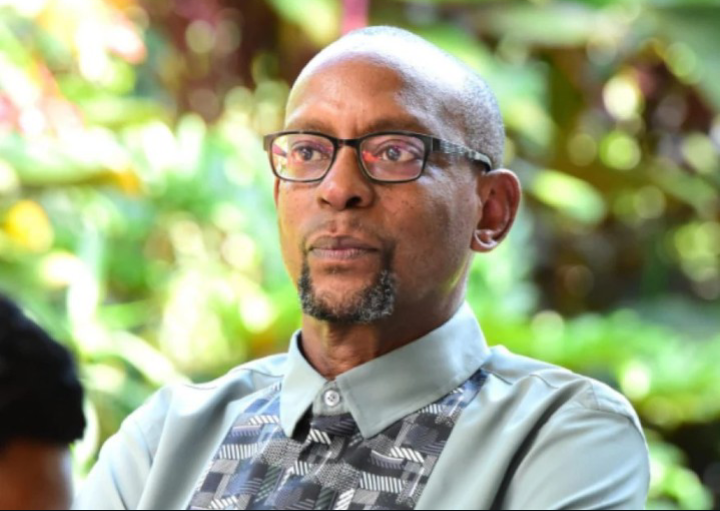
Who is Frank Ireri?
Today let’s talk about Frank Ireri Biography: In the narrative of Kenya’s corporate evolution, few stories resonate as powerfully as that of Frank Marangu Ireri, a man whose quiet determination and strategic vision reshaped one of East Africa’s oldest financial institutions. His passing on October 26, 2025, at the age of 63 after a courageous battle with cancer marked not just the loss of a banking executive, but the departure of a transformative leader whose influence extended far beyond quarterly earnings into the fundamental question of how Kenyans could access home ownership. In an industry often characterized by aggressive personalities and headline-seeking executives, Ireri stood apart through disciplined leadership, ethical consistency, and an unwavering belief that finance should serve a higher purpose than mere profit accumulation.
Frank Ireri Biography
Frank Ireri Nairobi Roots and Academic Foundation
Born and raised in Nairobi during a period when Kenya was still finding its economic footing after independence, Frank Ireri grew up in an environment where ambition met limited opportunity, where education represented the primary pathway to social mobility, and where corporate careers were still being defined by pioneering professionals. His formative years in the capital exposed him to both the possibilities and limitations of post-colonial Kenya, shaping a worldview that would later inform his approach to making financial services more accessible.
His academic journey led him to the University of Nairobi, one of East Africa’s premier institutions, where he pursued a Bachelor of Commerce degree with specialization in accounting. The University of Nairobi during this period produced many of Kenya’s future corporate leaders, creating networks and relationships that would prove valuable throughout professional careers. The commerce program provided rigorous training in financial principles, business operations, and quantitative analysis—foundational skills that would underpin his later work in banking and corporate leadership.
Beyond his undergraduate degree, Ireri pursued professional qualification as a Certified Public Accountant, earning his CPA designation and joining the Institute of Certified Public Accountants of Kenya. This professional credential represented more than academic achievement; it signaled commitment to ethical standards, technical competence, and the self-regulation that defines professional accounting practice. The CPA qualification would prove instrumental in his career trajectory, opening doors in auditing firms and financial institutions that valued the rigorous training and ethical frameworks CPA professionals brought to their roles.
His educational pursuits didn’t end with initial qualifications. Recognizing that leadership requires continuous learning and exposure to evolving best practices, Ireri later completed executive leadership programs at two prestigious institutions: Harvard Business School, whose executive education programs attract senior leaders from around the globe, and Strathmore Business School in Nairobi, which has emerged as a premier provider of business education in East Africa. These programs provided exposure to cutting-edge management thinking, case studies from diverse international contexts, and networking opportunities with fellow executives facing similar challenges.
He earned an MBA degree, adding strategic management frameworks and broader business perspectives to his technical financial expertise. This combination of technical accounting credentials, banking experience, and strategic management education created a unique skill set particularly suited for leadership roles requiring both operational excellence and visionary thinking.
Building Blocks: Frank Ireri Early Career Journey
Frank Ireri’s professional journey began in the mid-1980s within the auditing profession, traditionally seen as the training ground for financial executives due to its emphasis on accuracy, ethical standards, and comprehensive understanding of business operations. He started as an Audit Assistant at Deloitte Haskins and Sells, working under their Kenya partnership known as A.F. Ferguson and Company. This position, though junior, provided invaluable exposure to diverse businesses, their financial systems, control environments, and management challenges. Audit work taught him to see patterns, identify weaknesses, ask probing questions, and understand the relationship between financial statements and operational realities.
His auditing career also included time at Arthur Andersen, another major international accounting firm with operations in Kenya. These experiences in Big Four accounting firms instilled discipline, attention to detail, and appreciation for robust processes that would characterize his later leadership style. The audit profession’s emphasis on independence, objectivity, and professional skepticism shaped his approach to governance and risk management throughout his subsequent banking career.
From auditing, Ireri transitioned into consulting, joining Murdoch, McCrae and Smith as a Management Consultant. This move represented a shift from examining past financial performance to advising on future strategic directions, from reviewing existing systems to designing improved ones, and from independence to collaboration with management. Consulting broadened his perspective beyond financial statements to encompass organizational effectiveness, operational efficiency, and strategic positioning.
In 1989, Ireri made the pivotal career move into banking by joining Citibank Kenya, one of the most prestigious international financial institutions operating in Kenya. He entered as Country Financial Controller, a senior position responsible for the bank’s financial management, regulatory reporting, internal controls, and compliance frameworks. Citibank, with its global standards and sophisticated systems, provided training ground in international banking practices, risk management methodologies, and the governance structures that multinational banks employ.
His tenure at Citibank honed skills in financial management within highly regulated environments, dealing with multiple stakeholders including local regulators and international headquarters, and maintaining the stringent standards that global banks require. The experience exposed him to best practices that would later inform his transformation efforts at Housing Finance.
Ireri’s career trajectory then took him to Commercial Bank of Africa, where he served as General Manager for Finance and Operations. This position represented significant expansion of responsibilities beyond pure finance into operational management, requiring understanding of banking operations, technology systems, human resources, and customer service alongside financial oversight. Commercial Bank of Africa, though smaller than Citibank, provided opportunity to see banking from a more comprehensive perspective and influence broader aspects of institutional operations.
He later joined Barclays Bank of Kenya, part of the British multinational banking group with extensive African operations, where he held senior positions across multiple functions. His work extended to Barclaycard Africa, the credit card division, providing experience in consumer finance, payment systems, and retail banking products. These roles at one of Kenya’s largest banks exposed him to scale, complexity, and the operational challenges of managing retail banking networks serving hundreds of thousands of customers.
This diverse career foundation—from auditing to consulting, from multinational to regional banks, from financial control to operational management—created comprehensive understanding of banking from multiple angles. By the time opportunity arose to lead Housing Finance, Ireri brought two decades of experience across different financial institutions, roles, and business challenges.
The Housing Finance Challenge: A Mission of Transformation
In July 2006, Frank Ireri assumed the position of Managing Director at Housing Finance Company of Kenya Limited, accepting leadership of an institution at a critical juncture. Founded decades earlier with a specific mandate to promote home ownership through mortgage lending, Housing Finance had become synonymous with residential mortgages in Kenya. However, by the mid-2000s, the institution faced an existential challenge: relevance in a rapidly evolving banking sector.
Kenya’s banking landscape had transformed dramatically. Aggressive commercial banks were expanding product offerings and branch networks, new digital challengers were emerging, and customer expectations were rising. Housing Finance, with its narrow focus on mortgage lending and conservative approach, struggled to compete. The institution’s single-product strategy limited revenue diversification, its traditional operational model seemed outdated compared to more nimble competitors, and its brand, while recognized, felt staid rather than dynamic.
Ireri recognized that incremental adjustments wouldn’t suffice. The institution needed fundamental transformation touching strategy, operations, culture, and brand identity. He articulated a vision that would guide his twelve-year tenure: transforming Housing Finance from a niche mortgage lender into a comprehensive financial services group capable of competing effectively across multiple banking segments.
This vision wasn’t merely about diversification for its own sake. Ireri understood that sustainable home ownership required more than mortgage products. Customers needed savings accounts to accumulate deposits, transaction accounts for managing household finances, insurance products to protect assets, and construction financing for building homes. By offering integrated financial services, Housing Finance could better serve customers across their entire home ownership journey rather than only at the mortgage origination point.
The transformation began with strategic clarity. Ireri worked closely with the board and executive team to refine the company’s vision, establishing clear objectives that balanced growth ambitions with risk management requirements. He emphasized that becoming a diversified financial group required more than launching new products; it demanded building institutional capabilities, strengthening governance frameworks, upgrading technology systems, and cultivating a performance-oriented culture.
Operational diversification followed strategic articulation. Under Ireri’s leadership, Housing Finance expanded beyond residential mortgages into commercial lending, supporting businesses and developers rather than only individual homeowners. The institution began offering savings accounts, current accounts, and other banking services, transforming from a specialized lender into a retail bank serving broader customer needs. This diversification reduced dependence on the cyclical residential property market and created multiple revenue streams.
Capital raising innovations marked another dimension of Ireri’s transformation strategy. He led Housing Finance into capital markets, issuing corporate bonds to diversify funding sources beyond traditional deposits and institutional borrowing. These bond issuances demonstrated capital markets confidence in the institution’s transformation and provided longer-term funding better matched to mortgage lending timelines. The bold move into capital markets positioned Housing Finance as an innovative player willing to leverage sophisticated financing instruments.
The most visible manifestation of transformation came in 2014 when Ireri oversaw restructuring into HF Group, a holding company structure with separate subsidiaries for banking, insurance, and real estate operations. This wasn’t merely cosmetic rebranding but fundamental reorganization reflecting the institution’s evolution from single-purpose lender to diversified financial services group. The HF Group structure provided clearer governance, allowed specialized management for different business lines, and positioned the organization for further expansion.
Cultural transformation paralleled structural changes. Ireri articulated his leadership philosophy plainly when he said, “I knew I had to rebrand the institution and introduce a new culture of accountability.” He worked to shift organizational mindset from conservative risk aversion to balanced risk-taking, from product-centric thinking to customer-focused service, and from hierarchical rigidity to performance-based meritocracy. This cultural evolution proved as important as structural changes in enabling transformation.
His attention to governance and risk management strengthened institutional foundations. He implemented robust risk management frameworks appropriate for a diversified financial institution, enhanced compliance systems to meet regulatory requirements across multiple business lines, and promoted transparency in decision-making and reporting. These governance improvements weren’t merely about regulatory compliance; they reflected Ireri’s conviction that sustainable institutions require ethical foundations and disciplined processes.
For several years, the transformation appeared remarkably successful. HF Group expanded its loan book significantly, opened new branches extending its geographic reach, launched innovative products that attracted customers, and increased its market presence. Industry observers praised Ireri’s strategic vision and execution capabilities, viewing HF Group as a case study in successful institutional transformation. The bank’s ambition and innovation contrasted sharply with the conservative image it previously carried.
Frank Ireri Leading Through Storm: Challenges and Controversies
However, the latter part of Ireri’s tenure brought significant challenges that tested both the transformation strategy and his leadership. By 2015, Kenya’s property market began cooling after years of rapid growth, reducing demand for mortgages and lowering property values that served as loan collateral. This market shift disproportionately affected institutions like HF Group with substantial exposure to real estate lending.
The government’s controversial introduction of interest rate caps in 2016 further squeezed banking margins. The cap limited what banks could charge borrowers while not correspondingly limiting deposit rates they paid, compressing the interest margin that constitutes banks’ primary revenue source. For HF Group, emerging from transformation with still-developing diversified revenue streams, the rate cap hit particularly hard.
Financial performance deteriorated sharply. Profits that reached nearly one billion Kenya shillings in 2016 plummeted to just 126 million shillings by 2017, representing an 86 percent decline in a single year. This collapse in profitability raised serious questions about institutional viability and the sustainability of the transformation strategy. Investors grew concerned, the share price declined, and the institution faced intensified regulatory scrutiny.
Public controversy emerged around executive compensation. In 2017, disclosures revealed that Ireri’s total remuneration exceeded 64 million shillings—nearly half of HF Group’s entire net profit that year. This revelation sparked heated public debate about appropriate executive pay at struggling institutions, questions about board oversight of compensation decisions, and broader discussions about income inequality within Kenyan corporations. The compensation controversy contrasted sharply with Ireri’s reputation for prudence and created reputational challenges for both him personally and the institution he led.
Behind the scenes, more serious concerns emerged. Reports surfaced alleging that HF Group had understated its non-performing loans, potentially masking the true extent of credit quality deterioration. Former insiders raised questions about loan approval processes and whether adequate due diligence had been conducted on certain large exposures. These allegations, whether ultimately substantiated or not, damaged investor confidence and complicated the institution’s efforts to stabilize.
The accumulation of challenges—deteriorating financial performance, executive pay controversy, allegations about loan quality—created untenable pressure. In 2018, with approximately six months remaining on his contract, Ireri took medical leave to undergo specialized cancer treatment abroad. During his absence, discussions occurred about the institution’s leadership direction and whether contract renewal was appropriate given circumstances.
In what was announced as a planned retirement rather than dismissal, HF Group confirmed in late 2018 that Ireri would step down in March 2019 after thirteen years as Managing Director. Robert Kibaara was named as his successor, tasked with stabilizing the institution and addressing the challenges that had accumulated during the final years of Ireri’s tenure.
The conclusion of his Housing Finance leadership lacked the celebration that might have accompanied a triumphant departure. Instead, it occurred quietly, without fanfare, marking an anticlimactic end to a tenure that had included both remarkable achievements and significant difficulties. The mixed ending shouldn’t obscure the transformation he led—taking a struggling niche lender and converting it into a diversified financial group—even if that transformation proved difficult to sustain through adverse market conditions and strategic challenges.
Beyond Banking: Frank Ireri Broader Corporate Leadership
While Housing Finance defined Frank Ireri’s highest-profile role, his corporate leadership extended across multiple organizations through board positions and advisory roles that reflected his reputation for integrity and strategic thinking. These positions demonstrated that his influence transcended any single institution, touching various sectors where his financial expertise and governance experience proved valuable.
He served as Chairman of the Kenya Pipeline Company, the state corporation responsible for petroleum product transportation across Kenya and the broader East African region. This role placed him at the intersection of energy policy, logistics infrastructure, and public sector governance. Former President Uhuru Kenyatta later praised Ireri’s stewardship of Kenya Pipeline, noting that “instead of making it his cash cow”—a reference to the corruption that sometimes afflicts state corporations—”he turned it around into a wealth-creation entity that remitted billions of shillings to the exchequer.” This tribute highlighted Ireri’s ethical approach to public sector leadership, prioritizing institutional performance over personal enrichment.
His chairmanship of the Kenya Institute of Bankers placed him at the head of the professional body responsible for banking sector development, training standards, and professional certification. This position reflected peer recognition within the banking community and provided platform for influencing industry standards, ethical frameworks, and professional development across Kenya’s financial sector.
Ireri’s passion for affordable housing extended beyond his professional role at Housing Finance into personal commitment through Habitat for Humanity Kenya, where he served as Chairman of the Board. Habitat for Humanity’s mission of building homes in partnership with marginalized families aligned perfectly with Ireri’s conviction that every Kenyan deserved access to decent housing. His leadership of this organization demonstrated that his interest in housing transcended commercial banking to encompass genuine social commitment.
He also chaired Habitat for Humanity International’s operations in Africa, expanding his housing advocacy to a continental level and connecting Kenyan initiatives with broader African and global Habitat efforts. This international board position exposed him to housing challenges across diverse contexts and best practices from various countries facing similar affordability challenges.
His board membership at AMREF Health Africa, one of Africa’s largest health-focused NGOs, reflected commitment to development issues beyond his core finance expertise. AMREF’s work in health systems strengthening, community health, and medical aviation provided opportunity for Ireri to contribute governance skills and strategic thinking to social development objectives. His simultaneous service on both AMREF Health Africa and AMREF Flying Doctors boards demonstrated sustained engagement with this organization’s mission.
He served as Director at Avenue Group Limited and as Non-Executive Director at Flame Tree Group Holdings from 2014, positions that kept him connected to commercial enterprise and property development sectors adjacent to his housing finance expertise. These directorships provided additional platforms for applying governance experience and financial acumen to growing businesses.
Most recently, he joined the Board of Directors at Centum Real Estate, the property development subsidiary of Centum Investment Company, one of Kenya’s leading investment firms. This position, which he held at the time of his death, kept him engaged with real estate development and investment strategy, sectors central to his professional identity and passion for expanding housing access.
He also held membership at Madison Who’s Who, an organization recognizing executive achievement, and maintained active participation in various professional associations throughout his career. These affiliations kept him connected with peer networks, emerging trends, and continuing professional development opportunities.
Frank Ireri Personal Dimensions: Family, Values, and Character
Behind the corporate titles and professional achievements stood a man whose personal values and character fundamentally shaped his leadership approach and life choices. Those who knew Frank Ireri personally consistently emphasized certain qualities that defined him beyond his professional accomplishments.
He was the devoted husband of Angie Ireri, with whom he built a family life that provided foundation and meaning beyond corporate responsibilities. Together they raised two daughters, Lian Waithera and Ella Gathoni, who survive him. Family relationships mattered deeply to Ireri, providing perspective and grounding amid the pressures and demands of senior executive roles.
His family background included being the son of the late Dr. Dunstan and Peninah Ireri, and son-in-law of the late William and Mary Kimemia. These family connections situated him within extended networks that provided support, identity, and continuity beyond individual achievement.
Colleagues and those who worked under him consistently described Ireri’s “quiet strength”—leadership exercised not through loud assertion or charismatic performance but through steady presence, thoughtful decision-making, and moral consistency. In a corporate culture that often rewards extroversion and self-promotion, Ireri’s understated approach stood out precisely because of its rarity and authenticity.
His personal discipline became legendary among those who knew him. He typically began his day at 5:30 AM with prayer and planning, using early morning hours for reflection, preparation, and setting daily priorities before engaging with the inevitable demands that would arise once the workday began. This discipline reflected belief that leadership requires preparation and that personal habits shape professional effectiveness.
His hiring philosophy revealed character priorities. He famously stated, “When hiring, I look at attitude first, then competence.” This wasn’t about dismissing competence as unimportant but rather recognizing that skills can be taught while fundamental attitudes, integrity, and work ethic prove much harder to instill. He believed that building strong teams required selecting people with the right values and character, then developing their capabilities through training and mentorship.
He was known for mentoring young professionals, viewing talent development as leadership responsibility rather than optional activity. Former Kenya Medical Supplies Authority Chairman Irungu Nyakera shared a poignant tribute after Ireri’s death: “I was only 28 years old, but Frank believed in me and gave me a chance that shaped my career. His trust, mentorship, and leadership left a lasting mark.” This willingness to take chances on young talent, to invest in their development, and to trust them with responsibility exemplified Ireri’s approach to building organizational capacity.
His impatience with unnecessary bureaucracy revealed pragmatic orientation. He once remarked, “I hate red tape. It’s boring and a waste of time.” This wasn’t about avoiding proper process but rather about eliminating pointless procedures that consumed energy without adding value. He believed in efficient systems that served purposes rather than bureaucracy for its own sake.
Mohammed Hersi, a celebrated Kenyan hotelier, shared a story illustrating Ireri’s ambition for societal impact beyond banking. While still Managing Director at Housing Finance, Ireri articulated an aspiration to train one million young Kenyans to become professional artisans in the building industry—plumbers, masons, tile layers, electricians. He recognized that Kenya’s construction sector suffered from shortage of skilled tradespeople, limiting both housing quality and employment opportunities. This vision of vocational training at massive scale reflected thinking beyond his immediate corporate responsibilities to broader economic development needs.
The Cancer Battle: Frank Ireri Courage in Adversity
Frank Ireri’s final years were marked by a courageous battle with cancer that ultimately claimed his life but demonstrated remarkable resilience, grace, and concern for others facing similar struggles. His approach to this devastating illness revealed character dimensions that professional life only partially illuminated.
He first took medical leave from Housing Finance in 2018 to undergo specialized cancer treatment, initially seeking care abroad before continuing treatment in Kenya. Rather than allowing illness to define his final years or withdrawing completely from public life, Ireri continued participating in activities that mattered to him, serving on boards including Centum Real Estate, maintaining professional connections, and supporting causes he believed in.
Those who interacted with him during this period consistently noted his optimism and refusal to succumb to self-pity despite facing a life-threatening disease. He lived with cancer rather than being defeated by it, maintaining positive outlook and finding meaning in each day despite uncertainty about the future. This resilience inspired others facing similar health challenges.
Perhaps most remarkably, Ireri became a source of hope and encouragement for others dealing with cancer. Former President Uhuru Kenyatta’s moving tribute at Ireri’s funeral revealed that Kenyatta himself had faced health challenges, and that Ireri provided crucial emotional support during that difficult period. “I will miss his counsel,” Kenyatta said. “He really held our hands and told us not to worry—that this thing will come to pass; it will go.” Even while fighting his own battle, Ireri found strength to reassure and encourage others, demonstrating selflessness that transcended personal suffering.
Kenyatta’s revelation that Ireri supported him through cancer concerns added poignant dimension to their friendship and highlighted Ireri’s character. Rather than dwelling on his own mortality, he focused on giving hope to others, sharing what he learned from his experience, and helping them navigate the fear and uncertainty that cancer diagnosis brings.
Until his final weeks, Ireri continued attending board meetings when health permitted, maintained connections with colleagues and friends, and engaged with family. A Centum Real Estate executive noted, “He never let illness define him. Frank remained optimistic and committed until the end.” This determination to live fully despite illness reflected the same discipline and resilience that characterized his professional life.
On Sunday, October 26, 2025, Frank Ireri died at Nairobi Hospital, where he had been receiving treatment. He was 63 years old—young by contemporary standards, with potentially many productive years still ahead. His passing occurred at home with family nearby, marking the end of his courageous fight.
Frank Ireri Legacy and Lasting Impact
As Kenya’s business community absorbed news of Frank Ireri’s passing, tributes poured in from across the corporate, political, and social sectors, revealing the breadth of his impact and the respect he commanded. These tributes, coming from diverse sources, painted a composite picture of his multifaceted legacy.
Centum Real Estate issued a formal statement expressing deep sadness at losing “a respected member of the Centum Real Estate Board” whose “leadership, kindness, and steady presence left an enduring impact on all of us.” The tribute emphasized qualities beyond mere competence—the human dimensions of leadership that Ireri exemplified.
Joshua Oigara, former CEO of KCB Group (one of Kenya’s largest banks), described Ireri as “a gentleman banker who led with quiet integrity and long-term vision.” This characterization captured essential elements: the courteous professionalism (“gentleman banker”), the ethical consistency (“quiet integrity”), and the strategic orientation (“long-term vision”) that defined Ireri’s approach.
James Mwangi, CEO of Equity Group Holdings (Kenya’s third-largest bank by assets), offered similar assessment: “Frank represented a generation that understood both structure and empathy in leadership.” This tribute highlighted the balance Ireri achieved between systematic approaches (“structure”) and human connection (“empathy”), recognizing that effective leadership requires both dimensions.
Habitat for Humanity Kenya issued a statement emphasizing his contribution to their mission: “Frank’s contribution to affordable housing in Kenya will be remembered for generations.” This tribute acknowledged that his impact on housing access extended beyond commercial banking into genuine social contribution through nonprofit leadership and advocacy.
The diverse organizations where Ireri served—from state corporations to commercial banks, from professional associations to nonprofit organizations—each lost a board member who brought not just expertise but integrity, not just analysis but wisdom, and not just oversight but genuine engagement with institutional missions.
His tangible legacy at HF Group remains complex and contested. Supporters point to the transformation he led: taking a struggling single-product mortgage lender and converting it into a diversified financial services group with multiple business lines, expanded geographic reach, and enhanced capabilities. Critics emphasize the challenges that emerged in his final years: deteriorating financial performance, questions about loan quality, and difficulties sustaining the transformation amid adverse market conditions.
The fair assessment likely incorporates both perspectives: Ireri accomplished remarkable institutional transformation that required vision, courage, and execution capabilities, but the transformation proved difficult to sustain and encountered serious challenges that complicated the narrative of unqualified success. Whether future historians judge his HF Group tenure as ultimately successful or as an ambitious project that fell short depends partly on how the institution evolves in subsequent years and whether his foundational changes enable eventual success.
Beyond any specific institution, Ireri’s legacy includes demonstrating that banking leadership can embody ethical consistency, that corporate executives can maintain integrity even when surrounded by shortcuts and compromises, and that financial institutions can pursue both profit and social purpose. In a sector occasionally marred by scandals and self-dealing, his clean reputation across nearly four decades stands as testament to character.
His intellectual legacy includes the example of corporate leadership engaging seriously with social challenges beyond immediate business interests. His work on affordable housing policy, his advocacy through Habitat for Humanity, his vision for vocational training in construction trades—these activities demonstrated belief that business leaders bear responsibility for contributing to broader societal development, not merely maximizing shareholder returns.
For young professionals entering Kenya’s banking sector, Ireri’s career offers a compelling model despite its complicated conclusion. His journey from audit assistant to bank CEO demonstrates what becomes possible through competence, integrity, and sustained effort. His emphasis on attitude over mere credentials in hiring suggests pathway for those who lack connections but bring strong work ethic and values. His mentorship of younger colleagues illustrates that career success should include paying forward opportunities received.
Remembering Frank Ireri: Frank Ireri Funeral and Final Tributes
The outpouring of respect following Frank Ireri’s death culminated in funeral services held on Friday, October 31, 2025, at Karura Community Chapel in Nairobi. The attendance reflected the breadth of his impact and the genuine affection he inspired across Kenya’s corporate and political leadership.
Former President Uhuru Kenyatta delivered the most emotionally resonant eulogy, describing Ireri as “my friend, confidant, and encourager in the journey of life—a man with whom we shared a lot.” Kenyatta’s tribute went beyond conventional platitudes to reveal personal friendship, shared experiences, and mutual support during difficult times. His public acknowledgment that Ireri supported him through health challenges added intimate dimension to their relationship and demonstrated the trust Ireri inspired even among the nation’s most powerful figures.
The funeral service preceding cremation provided opportunity for family, friends, colleagues, and acquaintances to pay final respects, share memories, and find collective consolation in loss. Prayer services had been held at Ireri’s home on Tuesday and Wednesday evenings prior to the funeral, allowing those closest to him to gather in more intimate settings for remembrance and spiritual comfort.
The choice of cremation reflected personal or family preferences and marked departure from traditional Kenyan burial customs that typically involve interment in rural ancestral lands. This decision, like many aspects of Ireri’s life, demonstrated willingness to chart his own course rather than automatically following conventional paths.

Frequently Asked Questions about Frank Ireri
What was Frank Ireri’s role in transforming Housing Finance?
Frank Ireri served as Managing Director and later Group Managing Director of Housing Finance (subsequently renamed HF Group) from July 2006 until December 2018, leading the institution through its most significant transformation period. When he assumed leadership, Housing Finance was struggling to remain relevant as a specialized mortgage lender in an increasingly competitive banking sector dominated by larger commercial banks and emerging digital challengers. Ireri developed and executed a comprehensive transformation strategy that diversified the institution beyond residential mortgages into commercial lending, retail banking services, insurance products, and real estate operations. He oversaw the 2014 restructuring that created HF Group as a holding company structure with separate subsidiaries for different business lines, symbolizing the evolution from niche lender to diversified financial services group. His transformation emphasized strengthening governance frameworks, implementing robust risk management systems, promoting performance-oriented culture, and leveraging capital markets through corporate bond issuances. While his tenure concluded amid challenges including deteriorating profits and questions about loan quality, his fundamental achievement involved reimagining what Housing Finance could become and executing the structural, operational, and cultural changes necessary to pursue that broader vision
What were Frank Ireri’s educational qualifications and professional credentials?
Frank Ireri built an impressive educational foundation combining technical financial expertise with strategic management capabilities. He earned his Bachelor of Commerce degree with specialization in accounting from the University of Nairobi, one of East Africa’s premier institutions, providing rigorous training in financial principles and business operations. He qualified as a Certified Public Accountant, earning his CPA designation and joining the Institute of Certified Public Accountants of Kenya, which represented commitment to professional ethical standards and technical competence beyond academic credentials. He later completed an MBA degree, adding strategic management frameworks and broader business perspectives to his technical financial expertise. Recognizing the importance of continuous learning, Ireri participated in executive leadership programs at Harvard Business School, whose executive education attracts senior leaders globally, and at Strathmore Business School in Nairobi, a premier provider of business education in East Africa. He also achieved Fellow status with the Kenya Institute of Bankers, recognition of distinguished contribution to the banking profession. This combination of academic degrees, professional certifications, and executive education created comprehensive skill set spanning technical accounting, banking operations, risk management, and strategic leadership.
What positions did Frank Ireri hold outside of Housing Finance?
Beyond his primary role leading Housing Finance, Frank Ireri held numerous significant positions demonstrating his broader influence across Kenya’s corporate landscape. He served as Chairman of the Kenya Pipeline Company, the state corporation responsible for petroleum product transportation, where former President Uhuru Kenyatta later praised his ethical leadership in turning the organization into a profitable entity serving public interest rather than personal enrichment. He chaired the Kenya Institute of Bankers, the professional body responsible for banking sector development and training standards, positioning him to influence industry-wide professional development. His passion for affordable housing extended into nonprofit leadership as Chairman of Habitat for Humanity Kenya and chairman of Habitat for Humanity International’s Africa operations, organizations dedicated to building homes in partnership with marginalized families. He served on the boards of AMREF Health Africa and AMREF Flying Doctors, contributing governance expertise to health-focused development work. Additional board positions included Centum Real Estate, where he served until his death, Flame Tree Group Holdings as Non-Executive Director from 2014, and Avenue Group Limited. These diverse roles spanning state corporations, professional associations, nonprofit organizations, and commercial enterprises demonstrated versatility and reflected the trust placed in his judgment, integrity, and strategic thinking.
How did Frank Ireri die and what was his age?
Frank Marangu Ireri died on Sunday, October 26, 2025, at Nairobi Hospital in Kenya after a prolonged and courageous battle with cancer. He was 63 years old at the time of his death. His cancer diagnosis first became publicly known in 2018 when he took medical leave from his position at HF Group to undergo specialized treatment, initially seeking care abroad before continuing treatment in Kenya. Despite the severity of his illness, Ireri approached his cancer battle with remarkable resilience, maintaining optimistic outlook, continuing board service when health permitted, and even providing emotional support and encouragement to others facing similar health challenges including former President Uhuru Kenyatta. Rather than allowing cancer to define his final years, he continued engaging with professional responsibilities, maintaining family relationships, and participating in causes he believed in until his health no longer permitted. His passing was mourned across Kenya’s business, political, and social sectors, with tributes emphasizing not just his professional achievements but his character, integrity, mentorship, and the quiet strength he demonstrated throughout both his career and his final illness. His funeral service was held on Friday, October 31, 2025, at Karura Community Chapel in Nairobi, followed by cremation.
What was Frank Ireri’s leadership philosophy and style?
Frank Ireri’s leadership philosophy centered on several core principles that consistently guided his approach across different organizations and circumstances. He believed fundamentally in character over credentials, famously stating when hiring that he looked “at attitude first, then competence,” recognizing that while skills can be taught, fundamental integrity and work ethic prove much harder to instill. He exercised what colleagues described as “quiet strength”—leadership through steady presence, thoughtful decision-making, and moral consistency rather than charismatic performance or self-promotion. His personal discipline became legendary, beginning each day at 5:30 AM with prayer and planning, reflecting belief that leadership requires preparation and that personal habits shape professional effectiveness. He emphasized accountability and governance, articulating that he needed to “rebrand the institution and introduce a new culture of accountability” at Housing Finance, recognizing that sustainable success requires ethical foundations and disciplined processes. He demonstrated impatience with unnecessary bureaucracy, stating “I hate red tape. It’s boring and a waste of time,” preferring efficient systems that served purposes rather than procedures for their own sake. He prioritized mentorship of young professionals, viewing talent development as leadership responsibility and giving opportunities to younger colleagues like Irungu Nyakera who later credited Ireri’s trust as career-shaping. His leadership balanced structure with empathy, systematic approaches with human connection, and long-term vision with operational excellence, qualities that made him effective across diverse organizational contexts.
Conclusion
Frank Marangu Ireri’s life and career embody both the possibilities and complexities of corporate leadership in contemporary Kenya. His journey from accounting firm audit assistant to Managing Director of a major financial institution, his transformation of Housing Finance from struggling niche lender into diversified financial services group, and his extensive board service across multiple sectors demonstrate what becomes possible through competence, integrity, and sustained dedication.
Yet his story resists simple categorization as unqualified success. The challenges that marked his final years at Housing Finance—deteriorating financial performance, questions about executive compensation, allegations regarding loan quality—complicate the narrative and remind us that even capable leaders can encounter circumstances that test strategies and reputations. The mixed ending to his Housing Finance tenure shouldn’t erase the transformation he accomplished but neither should celebratory accounts ignore the difficulties that ultimately emerged.
What distinguishes Ireri’s legacy most powerfully isn’t any specific corporate achievement but rather the consistent character he demonstrated across four decades: the quiet integrity that earned trust from presidents and subordinates alike, the ethical consistency that kept him clean in a sector where shortcuts tempt, the mentorship that shaped younger professionals’ careers, and the courage that sustained him through both professional challenges and personal illness.
His belief that finance should serve social purposes beyond profit, demonstrated through nonprofit housing work and advocacy for affordable homeownership, offers an important counternarrative to purely commercial definitions of banking success. His conviction that every Kenyan deserved access to decent housing wasn’t mere rhetoric but genuine commitment that guided both professional decisions and personal service.
As Kenya continues navigating the tension between rapid economic development and persistent inequality, between modern financial sophistication and basic needs unmet, Frank Ireri’s career offers instruct