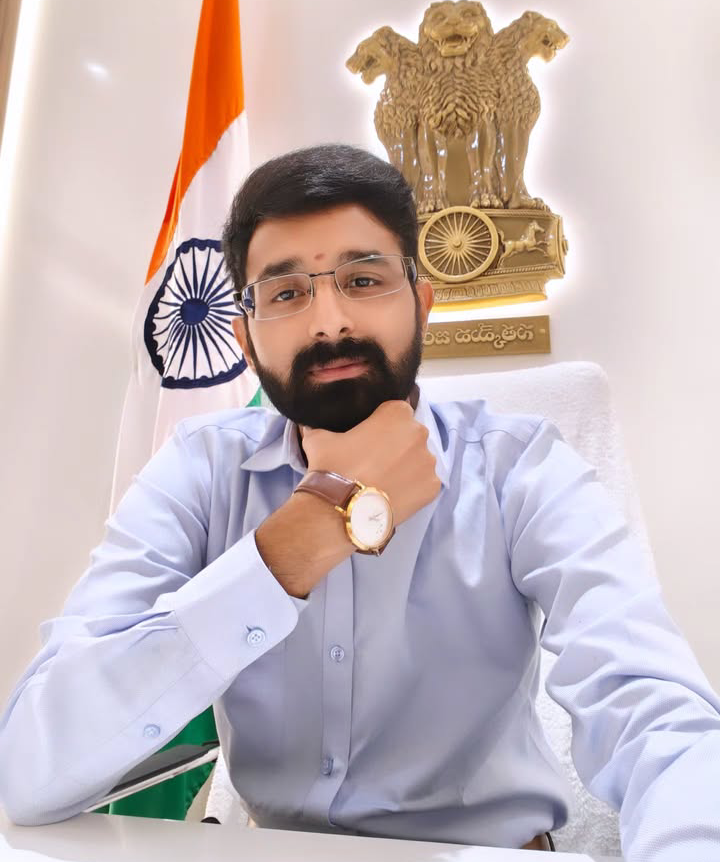
Who is Vikas Gupta IAS?
Today let’s talk about Biography of Vikas Gupta IAS: In the complex machinery of Indian governance, certain civil servants stand out not merely for the positions they hold but for the transformative impact they create in each role they assume. Vikas Gupta, a distinguished Indian Administrative Service officer from the 2001 Haryana batch, represents this exceptional category of bureaucrats whose careers illuminate the true potential of public service when combined with vision, integrity, and relentless dedication to improvement.
Biography of Vikas Gupta IAS
The Foundation: Vikas Gupta IAS From Jaipur to Civil Services
Born and raised in Jaipur, Rajasthan, Vikas Gupta’s early life was shaped by the vibrant political and social environment of the city. Growing up during a particularly tumultuous period in Indian politics, he witnessed the Mandal-Mandir agitations firsthand when he was in class nine. These formative experiences of observing political developments and their societal impact planted seeds that would eventually blossom into a career dedicated to public administration.
Gupta pursued his undergraduate education at the Regional Engineering College in Jaipur, now known as the Malviya National Institute of Technology, where he completed his Bachelor of Engineering in Electronics and Communications. By his own candid admission, he was never the top-ranking student who dominated academic standings. Instead, he consistently placed within the top ten of his class without breaking into the top five, a position he describes with characteristic humility as being “a very average student.”
This self-assessment, however, masks the crucial transformation that occurred during his engineering years. A pivotal moment arrived in his second year when he performed poorly after not investing full effort, ranking twenty-third out of sixty-five students. During a micro-electronics viva examination, he experienced the uncomfortable reality of going completely blank, unable to answer questions despite having studied the material superficially. This humbling experience became a turning point, crystallizing a life philosophy that would guide his subsequent achievements: without genuine hard work and complete dedication, nothing meaningful can be accomplished.
The path to the Indian Administrative Service wasn’t predetermined. Like many engineering graduates of his generation, Gupta initially contemplated pursuing business management education followed by a corporate career. By his third year, however, his keen interest in political developments and governance issues drew him toward civil services. He prepared for both the IAS examinations and the CAT simultaneously, demonstrating the hedging strategy common among ambitious students uncertain about their ultimate career direction. When results arrived, he had succeeded in all his examinations, but chose the path of public service over corporate management.
Vikas Gupta IAS Academic Excellence Beyond Borders
What distinguishes Gupta’s preparation for civil service isn’t just clearing the highly competitive examination but his commitment to continuous learning beyond initial success. After joining the IAS, he pursued advanced education at one of the world’s most prestigious institutions, the University of Oxford, where he completed a Master of Public Policy. His performance at Oxford matched his dedication, as he secured First Class honors in a program that attracts talented students from across the globe.
This Oxford education provided more than just academic credentials. It exposed him to international best practices in governance, policy formulation, and public administration. The Master of Public Policy program typically combines theoretical frameworks with practical case studies, econometric analysis with ethical considerations, and comparative governance models with implementation strategies. This interdisciplinary training equipped Gupta with analytical tools and conceptual frameworks that would prove invaluable in his subsequent administrative roles, allowing him to approach governance challenges with both global perspective and local sensitivity.
The combination of his engineering background, which instilled systematic thinking and problem-solving approaches, with policy education from Oxford, which emphasized evidence-based decision-making and institutional design, created a unique skill set. This intellectual foundation enabled him to navigate the complexities of Indian bureaucracy while introducing innovative solutions drawn from international experience.
Vikas Gupta IAS Early Career: Building Blocks of Administrative Experience
Gupta’s early postings in Haryana provided him with diverse exposure across multiple sectors and administrative levels. He served as Deputy Commissioner of Rohtak district, a position that placed him at the helm of district administration with responsibilities spanning law and order, revenue collection, development programs, disaster management, and coordination among various government departments. The Deputy Commissioner role in Indian administration serves as perhaps the most comprehensive training ground for civil servants, requiring simultaneous attention to immediate crises and long-term development planning.
His tenure as Commissioner of Rohtak Municipal Corporation introduced him to urban governance challenges. Municipal administration in rapidly growing Indian cities presents unique difficulties: balancing development aspirations with infrastructure limitations, managing finite resources against infinite demands, navigating political pressures while maintaining administrative neutrality, and addressing citizen grievances in real-time. These experiences in Rohtak laid the groundwork for understanding urban systems, citizen expectations, and the operational realities of local government.
He also held positions as Director and Secretary of Urban Local Bodies and Mission Director for both the State Urban Livelihood Mission and State Urban Development Authority in Haryana. These roles positioned him at the intersection of policy formulation and program implementation, requiring him to translate state government priorities into actionable frameworks while ensuring adequate resources and institutional capacity for effective execution.
The Gurgaon Challenge: Vikas Gupta IAS Testing Leadership Under Pressure
Perhaps no posting tested Gupta’s administrative capabilities more thoroughly than his appointment as Municipal Commissioner of Gurgaon, one of India’s most rapidly urbanized and infrastructure-challenged cities. When he assumed this position, Gurgaon epitomized the contradictions of modern Indian urban development: gleaming corporate towers alongside potholed roads, luxury condominiums next to inadequate water supply systems, and a booming economy coexisting with barely functional civic infrastructure.
The challenges were immense and multifaceted. Gurgaon’s explosive growth had outpaced administrative capacity and infrastructure development. The Municipal Corporation of Gurgaon faced criticism from frustrated residents dealing with waterlogging during monsoons, irregular garbage collection, poorly maintained roads, and inadequate public services despite paying substantial property taxes. The political environment was complex, with multiple stakeholders including corporate entities, residential welfare associations, traditional village communities, and state government departments all having competing interests and expectations.
In his Gurgaon office, Gupta regularly encountered situations that tested both his diplomatic skills and problem-solving abilities. One such instance involved fifteen men from the Jat community arriving to file complaints about a fellow villager operating a waste segregation unit and home for destitute and mentally challenged individuals. The situation required balancing legitimate grievances about potential environmental impacts with the social importance of the facility being contested. Such encounters were routine rather than exceptional, requiring decisions that satisfied multiple parties without compromising administrative principles or public interest.
Gupta’s approach to Gurgaon’s problems emphasized several key principles that would characterize his administrative philosophy. He believed strongly in active citizen participation, arguing that cities cannot evolve without engaged residents willing to contribute beyond merely demanding services. At the YourStory Gurgaon Summit in November 2015, he stressed that entrepreneurial spirit represents a prerequisite for urban development, not just in business terms but in how citizens approach civic challenges. He interacted extensively with startups at the event, examining technology-driven solutions to urban problems with genuine interest and openness to innovation.
His leadership style in Gurgaon demonstrated accessibility combined with decisiveness. Despite holding the highest position in the city’s apex civic body, he maintained an approachable demeanor, personally hearing grievances while making clear that solutions required hard work and realistic expectations rather than administrative shortcuts. His dapper appearance and calm presence in meetings, even when facing groups of aggrieved citizens, reflected professionalism that inspired confidence without creating distance.
Vikas Gupta IAS Expanding Horizons: Diverse Portfolio Management
As Gupta’s reputation for effective administration grew, he was entrusted with increasingly diverse and challenging portfolios. His career trajectory through various departments demonstrates the confidence successive state governments placed in his abilities and the breadth of his administrative competence.
He served as Managing Director of the Haryana State Industrial and Infrastructure Development Corporation, a position requiring understanding of industrial policy, infrastructure financing, private sector partnerships, and economic development strategies. This role placed him at the intersection of government planning and private enterprise, requiring facilitation of investment while ensuring regulatory compliance and public interest protection.
His appointment as Commissioner and Secretary of the Citizen Resources Information Department reflected recognition of his capabilities in managing information systems and citizen services. In an era of increasing emphasis on e-governance and digital service delivery, this position required technological understanding combined with appreciation for user experience and accessibility considerations. The department’s mandate involved creating systems that made government information and services more accessible to citizens, reducing bureaucratic opacity and improving administrative efficiency.
As Director General of Micro, Small and Medium Enterprises for Haryana, Gupta oversaw policies and programs supporting the backbone of India’s economy. MSMEs contribute significantly to employment generation and economic output but face numerous challenges including access to credit, regulatory compliance burdens, technology adoption barriers, and market access limitations. His role involved developing enabling frameworks that addressed these challenges while promoting entrepreneurship and business growth.
His tenure handling Finance and Planning Department responsibilities as Secretary demonstrated his grasp of fiscal management and budgetary processes. This position required understanding government revenue sources, expenditure priorities, inter-governmental fiscal transfers, debt management, and long-term financial planning. He also served as Director General of the Swarna Jayanti Haryana Institute for Fiscal Management and Nodal Officer for Monitoring Budget Announcements, positions requiring both technical financial expertise and coordination capabilities across government departments.
Additional responsibilities included serving as Adviser for Civil Aviation in Haryana, a relatively specialized role requiring understanding of aviation policy, airport development, connectivity enhancement, and regulatory frameworks governing the sector. He also held charge as CEO of the Haryana Parivar Pehchan Authority, an initiative focused on creating comprehensive databases of families for improved welfare delivery and program targeting.
His appointment as Commissioner and Secretary of Urban Local Bodies represented a return to urban governance but at a state-wide policy level rather than individual city administration. This position involved overseeing all urban local bodies across Haryana, implementing reforms, ensuring financial accountability, promoting best practices, and coordinating with the central government on urban development schemes.
Vikas Gupta IAS Commitment to Governance Reforms
Throughout his various postings, certain themes consistently emerged in Gupta’s work. He demonstrated sustained commitment to e-governance initiatives, recognizing that technology could transform how government operates and how citizens access services. His focus on digital systems wasn’t merely about computerization but about reimagining processes to become more efficient, transparent, and citizen-centric.
Financial accountability and transparency formed another consistent priority. In his work with the State Finance Commission and various finance-related positions, he emphasized accrual accounting systems, timely financial reporting, and linking grants to accounting reforms. Speaking at professional forums, he articulated how proper financial reporting enables effective public fund management, sound decision-making, and increased accountability in local body operations. He connected these seemingly technical matters to ultimate outcomes: better service delivery to citizens, improved infrastructure development, and enhanced capacity for local bodies to raise funds.
Urban infrastructure development remained a constant focus given his extensive experience in urban administration. He understood that India’s urbanization trajectory demanded proactive planning, adequate infrastructure investment, innovative financing mechanisms, and governance structures capable of managing complex urban systems. His approach emphasized not just physical infrastructure but institutional infrastructure including skilled personnel, robust processes, and effective coordination mechanisms.
The National Stage: Vikas Gupta IAS Kendriya Vidyalaya Sangathan
In November 2025, Vikas Gupta received an appointment that represented both recognition of his distinguished career and a new challenge in a different sector. He was appointed Commissioner of Kendriya Vidyalaya Sangathan under the Ministry of Education, a five-year tenure leading one of India’s most prestigious school systems.
The Kendriya Vidyalaya Sangathan operates over a thousand schools across India and abroad, catering to millions of students, primarily children of central government employees including defense and paramilitary personnel. The organization faces unique challenges including maintaining quality across geographically dispersed locations, managing frequent student transitions due to parent transfers, ensuring curriculum standardization while allowing local flexibility, recruiting and retaining quality teachers, and modernizing educational delivery while preserving institutional values.
Gupta brings to this role a rare combination of attributes highly relevant to educational leadership. His Oxford training in public policy provides strategic thinking capabilities and exposure to global educational best practices. His extensive state-level administrative experience offers practical understanding of implementation challenges, resource constraints, and stakeholder management. His technology focus suggests potential for innovation in educational technology, digital learning platforms, and administrative management systems.
His track record across diverse portfolios demonstrates adaptability, a crucial quality given that education represents a new sectoral focus for him. The principles that guided his work in urban development, finance, industrial policy, and information systems—accountability, transparency, innovation, citizen focus, and evidence-based decision-making—are equally applicable to educational administration.
Under his stewardship, the Kendriya Vidyalaya Sangathan is expected to see renewed emphasis on several priorities. Technology-driven management could transform administrative efficiency, resource allocation, performance monitoring, and communication systems across the far-flung network of schools. Quality enhancement initiatives might address teacher training, curriculum innovation, assessment methods, and learning outcome measurement. Inclusive education approaches could ensure that the benefits of the KVS system extend to students from diverse backgrounds while maintaining the excellence the organization is known for.
Vikas Gupta IAS Administrative Philosophy and Leadership Style
Several consistent themes characterize Gupta’s approach to administration across his diverse postings. He believes deeply in the principle that meaningful achievement requires complete dedication and hard work, a lesson crystallized during that micro-electronics viva in engineering college. This isn’t mere rhetoric but a personal philosophy manifested in his willingness to tackle difficult assignments, engage with complex problems, and persist despite obstacles.
He values citizen participation and stakeholder engagement, recognizing that government cannot solve problems in isolation. His interactions with residents in Gurgaon, startups at business summits, and various interest groups reflect openness to diverse perspectives and willingness to incorporate external inputs into decision-making processes. This participatory approach doesn’t mean abandoning administrative responsibility but rather enriching official decisions with ground-level insights and building broader ownership of solutions.
Innovation and reform orientation mark his work across sectors. Whether introducing e-governance systems, promoting accrual accounting in local bodies, or engaging with technology startups for urban solutions, he demonstrates willingness to challenge existing practices and adopt better approaches. This reform orientation is tempered by practical understanding of implementation constraints, change management challenges, and the importance of building institutional capacity to sustain innovations.
He maintains accessibility while preserving administrative authority, a delicate balance many officials struggle to achieve. His willingness to personally hear grievances, engage with various groups, and explain decisions creates connection with stakeholders without compromising the ability to make tough calls when necessary.
His communication style emphasizes substance over showmanship. In interviews and public forums, he speaks with candor about challenges, acknowledges constraints, and articulates realistic solutions rather than offering populist promises or bureaucratic jargon. This authenticity builds credibility even when immediate solutions aren’t possible.
Vikas Gupta IAS Personal Attributes and Character
Beyond professional competence, several personal qualities distinguish Gupta’s service. Humility marks his self-presentation despite impressive achievements. His description of himself as an average student, his candid acknowledgment of early academic setbacks, and his attribution of success to hard work rather than innate brilliance reflect groundedness that prevents arrogance and maintains perspective.
Intellectual curiosity drives continuous learning evidenced by his Oxford education undertaken after joining the service. Many civil servants rest on initial examination success, but Gupta sought advanced education to deepen understanding and broaden perspectives. This commitment to learning extends to his engagement with new technologies, international best practices, and innovative approaches across his various roles.
Ethical integrity appears to guide his decision-making. Throughout his career, there are no reports of controversies, corruption allegations, or ethical lapses. In Indian bureaucracy where such issues unfortunately aren’t uncommon, maintaining a clean record across two decades and multiple high-profile postings speaks to character and principles.
Resilience in the face of challenging assignments characterizes his career choices. Rather than seeking comfortable postings, he has consistently taken on difficult responsibilities including the notoriously challenging Gurgaon municipal commissioner role. This willingness to accept tough assignments reflects confidence in capabilities and commitment to making a difference rather than merely holding office.

Frequently Asked Questions about Vikas Gupta IAS
What is Vikas Gupta’s educational background?
Vikas Gupta possesses a unique combination of technical and policy education that has shaped his administrative approach. He completed his Bachelor of Engineering in Electronics and Communications from the Malviya National Institute of Technology in Jaipur, formerly known as Regional Engineering College, graduating with First Division and Distinction. This engineering background provided him with systematic thinking, analytical capabilities, and problem-solving skills that proved valuable in administrative roles. After joining the Indian Administrative Service, he pursued advanced education at the University of Oxford, one of the world’s most prestigious institutions, where he completed a Master of Public Policy with First Class honors. This postgraduate education exposed him to international governance practices, policy analysis frameworks, and evidence-based decision-making methodologies that enriched his administrative toolkit and enabled him to approach Indian governance challenges with both global perspective and local understanding.
Which batch and cadre does Vikas Gupta belong to?
Vikas Gupta is an Indian Administrative Service officer from the 2001 batch, allotted to the Haryana cadre. The 2001 batch represents officers who cleared the prestigious civil services examination and completed their training to join service in 2001, making him currently a senior IAS officer with over two decades of administrative experience. The Haryana cadre allocation means his primary service has been within Haryana state, though IAS officers can be deputed to central government positions or other states. His long tenure in Haryana has given him deep familiarity with the state’s administrative structures, political dynamics, developmental challenges, and cultural context. This sustained engagement with a single state has enabled him to build extensive networks, develop specialized expertise in state-specific issues, and undertake long-term initiatives rather than constantly adapting to new environments as happens with frequent inter-state transfers.
What are some major positions held by Vikas Gupta IAS?
Throughout his distinguished career, Vikas Gupta has held numerous significant positions demonstrating versatility across sectors. His notable postings include Deputy Commissioner of Rohtak district, where he managed overall district administration including law and order, revenue, and development functions. He served as Commissioner of Rohtak Municipal Corporation and later as the high-profile Municipal Commissioner of Gurgaon, tackling complex urban governance challenges in one of India’s most rapidly developing cities. At the state level, he served as Director and Secretary of Urban Local Bodies, Managing Director of Haryana State Industrial and Infrastructure Development Corporation, and Commissioner and Secretary of the Citizen Resources Information Department. He held crucial positions in economic governance as Director General of Micro, Small and Medium Enterprises and as Secretary of the Finance Department. Additional responsibilities included serving as CEO of the Haryana Parivar Pehchan Authority, Adviser for Civil Aviation in Haryana, and Director General of the Swarna Jayanti Haryana Institute for Fiscal Management. His most recent appointment in November 2025 is as Commissioner of Kendriya Vidyalaya Sangathan under the Ministry of Education, a five-year tenure leading one of India’s premier school systems.
What is Vikas Gupta’s current posting?
As of November 2025, Vikas Gupta has been appointed as Commissioner of Kendriya Vidyalaya Sangathan under the Department of School Education and Literacy, Ministry of Education, Government of India. This represents a significant central government posting with a five-year tenure to lead the organization. The Kendriya Vidyalaya Sangathan operates over a thousand schools across India and abroad, serving millions of students primarily from central government employee families including defense and paramilitary personnel. As Commissioner, he holds the highest administrative position in the organization, responsible for overall policy direction, quality standards, operational efficiency, resource management, and strategic planning. This appointment marks his transition from state government service in Haryana to a major central government role, and represents a shift from his extensive experience in urban development, finance, and industrial policy into the education sector, bringing his proven administrative capabilities and reform orientation to enhance one of India’s most important educational institutions.
What is Vikas Gupta known for in his administrative career?
Vikas Gupta is recognized for several distinctive qualities that have marked his administrative career. He is known for his commitment to governance reforms, particularly in e-governance implementation, financial accountability systems, and transparency initiatives across various departments. His work in urban development, especially during his challenging tenure as Municipal Commissioner of Gurgaon, demonstrated his ability to manage complex stakeholder environments and address infrastructure challenges in rapidly urbanizing contexts. He is recognized for his emphasis on citizen participation and engagement, believing that effective governance requires active involvement of stakeholders rather than top-down administrative dictates. His willingness to embrace technology and innovation, including engagement with startups and modern solutions to traditional governance problems, sets him apart from more conventional administrators. He is known for maintaining accessibility while exercising administrative authority, personally engaging with citizens and grievance-holders while making difficult decisions when required. His diverse portfolio management across finance, urban development, industrial policy, information systems, and now education demonstrates remarkable versatility and adaptability. Perhaps most significantly, he is known for maintaining ethical integrity throughout his career with no controversies or corruption allegations despite holding numerous high-profile positions, earning him respect as a clean and principled civil servant.
Conclusion
The career trajectory of Vikas Gupta IAS represents an exemplary model of modern civil service in India, demonstrating how technical education, policy expertise, diverse administrative experience, and ethical commitment can combine to create transformative leadership. From his formative years in Jaipur through engineering education that taught him the value of hard work, from clearing competitive examinations to pursuing advanced studies at Oxford, and from managing district administration to leading state-level departments and now helming a premier national educational institution, his journey embodies the potential of the Indian Administrative Service when officers approach their responsibilities with vision, dedication, and integrity.
What distinguishes Gupta’s service isn’t merely the impressive roster of positions held but the consistent themes that run through his work: commitment to reforms that improve governance, emphasis on technology and innovation, focus on accountability and transparency, belief in citizen participation, and willingness to tackle difficult assignments that others might avoid. His ability to move seamlessly across sectors from urban development to finance, from industrial policy to education, while maintaining effectiveness and building upon previous experiences, demonstrates rare versatility in an administrative system often characterized by specialization.
His appointment to lead the Kendriya Vidyalaya Sangathan represents both culmination of his distinguished state-level career and commencement of a new chapter serving at the national level in a sector crucial for India’s future. The same qualities that enabled him to navigate the complexities of Gurgaon’s urban challenges, implement financial reforms across Haryana’s local bodies, promote MSME development, and manage diverse state departments position him well to lead educational reforms in an organization touching millions of young lives.
For aspiring civil servants, Gupta’s career offers valuable lessons: that consistent hard work matters more than initial academic rankings, that continuous learning enhances administrative effectiveness, that diverse experiences build comprehensive understanding, that ethical conduct sustains long-term credibility, and that genuine commitment to public service creates impact far beyond individual career advancement. His story reminds us that the Indian Administrative Service, despite legitimate criticisms of bureaucratic systems, continues producing officers who approach governance as a calling rather than merely a career, who see their positions as opportunities for service rather than just sources of authority, and who work systematically to make government more effective, responsive, and accountable.
As he begins his tenure at Kendriya Vidyalaya Sangathan, bringing two decades of administrative wisdom, international educational exposure, and proven reform capabilities to India’s education sector, Vikas Gupta IAS continues demonstrating that principled, competent, and dedicated civil servants remain essential to realizing India’s developmental aspirations and governance transformation.