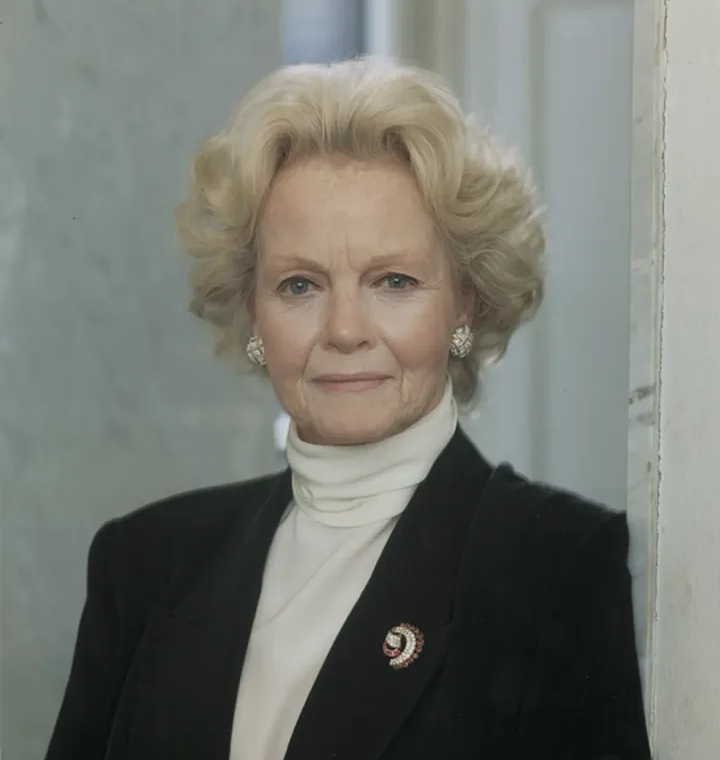
Who is Maria Riva?
Today let’s talk about Maria Riva Biography: In the constellation of Hollywood’s golden age, few stories are as complex and fascinating as that of Maria Riva, the daughter of one of cinema’s most iconic figures, Marlene Dietrich. Born Maria Elisabeth Sieber on December 13, 1924, in Berlin, Germany, Maria’s life would be defined by the extraordinary circumstances of her birth, the burden of being the child of a legend, and her own remarkable journey to establish an identity separate from her mother’s overwhelming fame. Her story is one of survival, resilience, and ultimately, the courage to tell the truth about a woman the world thought it knew.
Maria Riva Biography
Maria Riva Berlin Childhood in Tumultuous Times
Maria was born into a world that was simultaneously glamorous and precarious. Her mother, Marlene Dietrich, was on the cusp of international stardom, having already made a name for herself in German theater and film. Her father, Rudolf Sieber, was a film production assistant who had worked on several projects that brought him into Marlene’s orbit. Their marriage was unconventional from the start, reflecting the bohemian attitudes prevalent in Berlin’s artistic circles during the Weimar Republic era.
The Berlin of Maria’s early childhood was a city of stark contrasts. It was a center of artistic innovation and intellectual ferment, where theater, film, and cabaret flourished. Yet it was also a city marked by political instability, economic hardship following World War I, and the rising tide of extremism that would eventually sweep the Nazis to power. In this environment, young Maria experienced a childhood that alternated between the mundane routines of early education and the extraordinary world of Berlin’s entertainment industry.
Her mother’s breakthrough came in 1930 with the film “The Blue Angel,” directed by Josef von Sternberg. The role catapulted Marlene Dietrich to international fame and led to a contract with Paramount Pictures in Hollywood. This success would fundamentally alter Maria’s life. At just six years old, she found herself uprooted from Berlin and transported to America, a country whose language she didn’t speak and whose customs were foreign to her.
Maria Riva Growing Up in Hollywood’s Shadow
Life in Hollywood during the 1930s was unlike anything Maria had experienced in Berlin. Her mother quickly became one of the film industry’s biggest stars, commanding enormous salaries and receiving treatment befitting royalty. But for Maria, this meant growing up in the shadow of an icon, always being identified primarily as Marlene Dietrich’s daughter rather than as an individual in her own right.
The relationship between mother and daughter was complicated from the start. Marlene was a perfectionist and a control enthusiast who approached motherhood with the same intensity she brought to her film roles. She had exacting standards for Maria’s appearance, behavior, and achievements. Nothing Maria did seemed quite good enough, and the constant criticism took a psychological toll that would affect her throughout her life.
Despite the material comforts that came with being the daughter of a wealthy star, Maria’s childhood lacked the warmth and unconditional love that most children need. Marlene’s career always took precedence, and Maria was often left in the care of governesses and tutors while her mother traveled for film shoots or embarked on affairs with various Hollywood luminaries. The absences were difficult, but in some ways, Marlene’s presence was even more challenging, as it often meant enduring her mother’s critical scrutiny and manipulative behavior.
Maria attended exclusive schools where she mingled with the children of other Hollywood elite, yet she always felt different, marked by her mother’s fame and her own sense of not belonging. She learned to navigate multiple worlds: the public world where she had to maintain the image of the devoted daughter of a glamorous star, and the private world where she grappled with feelings of inadequacy and the complex emotions stirred by her mother’s domineering personality.
Maria Riva War Years and Coming of Age
The outbreak of World War II brought new complications to Maria’s already complex life. Her mother, despite being German by birth, became a fierce opponent of the Nazi regime and one of the most prominent celebrities to actively support the Allied cause. Marlene entertained troops, participated in war bond drives, and used her fame to boost morale. While these activities were admirable and courageous, they meant even more time away from Maria during crucial developmental years.
Maria came of age during the war, experiencing the anxieties and restrictions that shaped the lives of young people during that era. She attended school, participated in civil defense activities, and tried to carve out a normal existence despite the extraordinary circumstances of her family situation. The war years also complicated her relationship with her identity, as she navigated being German by birth, American by residence, and the daughter of a woman who had publicly and dramatically renounced her homeland.
During this period, Maria began to understand the complexity of her mother’s character more fully. She saw Marlene’s genuine commitment to fighting fascism and her willingness to risk her life entertaining troops in combat zones. Yet she also saw how her mother used her war work to enhance her public image and how even these noble activities were performed with an eye toward how they would be perceived and remembered.
Maria Riva Marriage and Family Life
In the years following World War II, Maria sought to establish her own life separate from her mother’s orbit. She married William Riva, a scenic and lighting designer, and began building a family of her own. The marriage represented an attempt to create the kind of normal, stable family life she had never experienced as a child. She eventually became a mother to four sons, and her dedication to her children reflected both her desire to give them what she hadn’t received and her determination to break the patterns established by her own upbringing.
However, establishing independence from Marlene Dietrich proved nearly impossible. Her mother continued to exert control, offering unsolicited advice about childcare, criticizing Maria’s choices, and inserting herself into family matters. The geographical distance that sometimes separated them did little to diminish Marlene’s influence, as she maintained contact through letters, telegrams, and phone calls that could be both loving and cutting, sometimes within the same communication.
Maria did pursue her own career in entertainment, working as an actress in television during the 1950s and later as a set designer. She appeared in various television programs and attempted to establish herself as a performer in her own right. However, she found that being Marlene Dietrich’s daughter was both a blessing and a curse in the industry. While her mother’s name opened doors, it also meant she was constantly compared to Marlene and judged by impossibly high standards.
Her work as a set designer allowed her to combine her artistic sensibility with the technical knowledge she had absorbed from growing up around film and theater productions. This career path also had the advantage of being less directly comparable to her mother’s achievements, allowing Maria to develop a professional identity that was at least partially her own.
Maria Riva Long Goodbye
As Marlene Dietrich aged and her career wound down, the dynamics between mother and daughter evolved but remained fraught. Marlene became increasingly reclusive, eventually withdrawing almost entirely from public life and spending her final years as a virtual hermit in her Paris apartment. During this period, Maria became one of the few people with whom Marlene maintained regular contact, though these interactions were often difficult.
Maria found herself in the role of caretaker and mediator, managing aspects of her mother’s affairs while dealing with Marlene’s paranoia, demands, and continued criticism. The woman who had once captivated audiences worldwide had become a difficult, lonely figure, clinging to past glories and refusing to accept the inevitability of aging and obscurity. For Maria, these years were emotionally exhausting, as she tried to provide care for a mother who had never provided the emotional support Maria needed.
Marlene Dietrich died in 1992 at the age of ninety, marking the end of an era not just in film history but in Maria’s personal history as well. The death freed Maria in ways she hadn’t fully anticipated, releasing her from decades of psychological bondage and creating space for her to finally tell her own story and her mother’s true story, unfiltered by the carefully constructed public image Marlene had maintained throughout her life.
Maria Riva Biography That Shook Hollywood
In 1992, the same year as her mother’s death, Maria Riva published “Marlene Dietrich,” a biography that sent shockwaves through Hollywood and challenged the carefully maintained legend of one of cinema’s greatest icons. The book was remarkable for its unflinching honesty, revealing aspects of Marlene’s character and life that contradicted the glamorous, confident persona she had presented to the world.
Maria’s biography portrayed Marlene as a complex, often difficult person: narcissistic, manipulative, bisexual at a time when such revelations were still shocking to many, and capable of great cruelty even toward those closest to her. The book detailed Marlene’s numerous affairs with both men and women, her neglect of her daughter in favor of her career and romantic pursuits, and her obsessive control over every aspect of her public image.
The reaction to the book was intense and divided. Some critics and readers praised Maria’s courage in telling the truth about her famous mother, viewing the biography as an important corrective to hagiographic accounts that ignored Marlene’s flaws. Others accused Maria of betrayal, arguing that she had violated the loyalty owed to a parent and exploited her mother’s fame for personal gain and revenge.
Maria defended her work by explaining that she wrote the biography not out of spite but out of a need to tell the complete truth about a woman whom the public had only known through carefully filtered information. She argued that Marlene herself had created much of the mythology surrounding her life and that future generations deserved an accurate account rather than a sanitized fairy tale. The book was meticulously researched, drawing on Maria’s personal memories, extensive correspondence, and interviews with people who had known Marlene throughout various stages of her life.
Maria Riva Life as an Author and Public Figure
The publication of her mother’s biography transformed Maria from a relatively obscure figure known primarily for her famous parent into a public personality in her own right. She became sought after for interviews, speaking engagements, and appearances on television programs discussing old Hollywood and her unique perspective on that era.
Maria proved to be an articulate and engaging speaker, able to discuss her mother’s life and career with both affection and critical distance. She could appreciate Marlene’s artistry and courage while also acknowledging the personal cost of being raised by such a demanding, self-absorbed parent. This balanced perspective won her respect from many quarters, even among those who initially criticized her for writing so candidly about her mother.
She became involved in various projects related to preserving and contextualizing her mother’s legacy. She worked with film archives, participated in retrospectives of Marlene’s work, and provided commentary for documentaries about her mother and the golden age of Hollywood. In these activities, Maria demonstrated a nuanced understanding of her mother’s artistic achievements and cultural significance, even as she refused to perpetuate myths about Marlene’s personal character.
Her own writing continued beyond the controversial biography. She contributed to various publications, sharing memories of old Hollywood, reflections on fame and family, and insights into the entertainment industry during its golden age. Her perspective was valuable because she had lived through that era as both an insider and an outsider, close enough to observe everything but never fully part of the world she was observing.
Maria Riva Reflections on Fame, Family, and Identity
Throughout her later years, Maria Riva became increasingly reflective about the themes that had defined her life: the nature of fame, the complexity of family relationships, and the challenge of establishing identity when overshadowed by a legendary parent. In interviews and writings, she explored these topics with honesty and insight gained from decades of experience.
She spoke candidly about the psychological damage caused by growing up as the child of a narcissistic parent, helping to bring awareness to issues that psychologists were only beginning to fully understand and discuss publicly. Her willingness to discuss these difficult topics helped destigmatize conversations about dysfunctional family relationships and parental narcissism, particularly in contexts where the parent is publicly admired.
Maria also reflected on the nature of celebrity and how it had changed from her mother’s era to the present day. She observed that while Marlene had been able to carefully control her public image through studio publicists and limited media access, modern celebrities faced a very different landscape where privacy was nearly impossible and where scandals could erupt and spread globally within hours. She wondered whether her mother could have survived in such an environment or whether the carefully constructed Dietrich mystique required the more controlled media environment of Hollywood’s golden age.
Her thoughts on identity were particularly poignant. Maria spoke about the decades it took her to stop defining herself primarily in relation to her mother and to develop a sense of self that was independent of Marlene Dietrich. She acknowledged that even writing the biography had been part of that process, a way of externalizing her experiences and creating distance between her own identity and her mother’s overwhelming personality.
Maria Riva Legacy and Impact
Maria Riva’s legacy is multifaceted and extends beyond her role as Marlene Dietrich’s daughter or as the author of a controversial biography. She contributed to our understanding of Hollywood’s golden age by providing an insider’s perspective that was both privileged and marginalized. Her accounts of life behind the scenes during cinema’s most glamorous era have historical value beyond their sensational elements.
Her willingness to speak truthfully about her experiences helped advance conversations about family dysfunction, narcissistic parenting, and the hidden costs of fame. In an era when children of celebrities were expected to maintain public facades of perfect family harmony, Maria’s honesty was revolutionary. She paved the way for other children of famous parents to speak more openly about their experiences.
The biography itself, despite or perhaps because of its controversial nature, became an important primary source for anyone studying Marlene Dietrich or Hollywood history. While some details have been debated and some interpretations questioned, the book’s core contributions to the historical record are undeniable. It provided information and perspectives that would have been lost forever if Maria had chosen silence or sanitization over honesty.

Frequently Asked Questions about Maria Riva
Why did Maria Riva wait until after her mother’s death to publish the controversial biography?
Maria Riva’s decision to publish her comprehensive biography of Marlene Dietrich in 1992, the year of her mother’s death, was strategic and deeply personal. Throughout Marlene’s life, she maintained iron control over her public image, going to extraordinary lengths to ensure that only approved information reached the public. She destroyed documents, controlled access to journalists, and would have certainly prevented publication of any account that contradicted her carefully constructed mythology. Publishing while Marlene was alive would have resulted in legal battles, public denunciation from her mother, and likely complete estrangement. Maria had already experienced decades of her mother’s manipulation and emotional abuse, and she knew that attempting to publish the truth during Marlene’s lifetime would have brought even more suffering. Additionally, there was a respect for her mother’s dignity, however complicated their relationship. Waiting until after Marlene’s death allowed Maria to tell the complete story without inflicting public humiliation on her mother while she was still alive. It also meant Maria could finally speak freely without fear of retribution or having to defend her account against her mother’s formidable ability to shape public perception. The timing was both practical and ethical, allowing truth to emerge while minimizing unnecessary cruelty.
What was the relationship really like between Maria Riva and Marlene Dietrich?
The relationship between Maria and Marlene was profoundly complex, characterized by deep dysfunction beneath a surface of public devotion. Marlene exhibited many traits associated with narcissistic personality disorder, viewing Maria primarily as an extension of herself rather than as a separate individual with her own needs and identity. From Maria’s childhood, Marlene was controlling and critical, setting impossible standards and withholding the unconditional love children need. She scrutinized Maria’s appearance constantly, criticized her choices, and made her feel perpetually inadequate. Yet the relationship wasn’t simply one of cruelty and neglect. There were moments of connection, times when Marlene’s charm and charisma created intimacy, which made the subsequent criticisms and withdrawals even more painful. This pattern of intermittent reinforcement created a trauma bond that kept Maria psychologically entangled with her mother for decades. Marlene also depended on Maria in certain ways, particularly as she aged, creating a dynamic where Maria felt obligated to provide care despite the emotional toll. The relationship involved genuine love complicated by profound dysfunction, creating psychological scars that Maria spent much of her adult life trying to heal. Understanding this relationship requires acknowledging its contradictions: Marlene could be both captivating and cruel, devoted and neglectful, loving and destructive, sometimes within the same interaction.
How did Maria Riva establish her own career and identity separate from her famous mother?
Establishing an independent identity while being Marlene Dietrich’s daughter was Maria’s lifelong challenge and perhaps her greatest achievement. Her initial attempts involved pursuing careers in entertainment, working as an actress in television during the 1950s and later as a set designer. These choices allowed her to use skills and knowledge gained from growing up around film and theater productions while trying to create her own professional reputation. However, she discovered that her mother’s shadow was inescapable in the entertainment industry, where she was constantly compared to Marlene or valued primarily for her connection to a legend. Her most successful step toward independence came through marriage and motherhood, creating a family life that was deliberately different from her own childhood. By focusing on being the kind of mother she wished she’d had, Maria began defining herself through her own values rather than through her mother’s expectations or the public’s perceptions. Her work as a set designer provided professional fulfillment in a field where she could excel based on her own talents rather than her family name. Finally, writing her mother’s biography, though controversial, was ultimately an act of self-definition. By taking control of the narrative and telling her own story alongside her mother’s, Maria asserted her authority over her own experiences and refused to let others define her relationship with Marlene. The biography transformed her from “Marlene Dietrich’s daughter” into “Maria Riva, author and historian,” a subtle but significant shift in identity.
What controversies surrounded Maria Riva’s biography of her mother?
The publication of Maria’s biography of Marlene Dietrich ignited intense controversy that persisted for years. The primary accusation was betrayal, with critics arguing that Maria had violated sacred boundaries of family loyalty by revealing intimate, unflattering details about her mother. Some viewed the book as an act of revenge, claiming Maria was settling scores and exploiting her mother’s fame for personal gain. The revelations about Marlene’s bisexuality were particularly controversial in 1992, when such discussions were less common and more shocking to mainstream audiences. Some of Marlene’s surviving friends and colleagues disputed Maria’s accounts, claiming she had exaggerated or misrepresented events to paint her mother in the worst possible light. There were debates about whether children of famous people have the right to tell their stories if doing so damages their parents’ reputations, with some arguing that public figures deserve privacy regarding their personal lives and family relationships. Literary critics debated the book’s tone, with some feeling Maria’s anger overwhelmed her objectivity while others praised her for refusing to sanitize difficult truths. The controversy also touched on broader questions about biography itself: whether biographers should prioritize protection of their subjects’ reputations or commitment to historical truth. Some readers felt uncomfortable with the intimacy of certain revelations, questioning whether Maria had disclosed things that should have remained private regardless of their historical interest. Despite these controversies, the biography became a bestseller and earned respect from many scholars and critics who valued its contributions to understanding both Marlene Dietrich specifically and Hollywood history more broadly.
How did growing up as Marlene Dietrich’s daughter affect Maria Riva’s mental health and personal development?
Growing up as Marlene Dietrich’s daughter had profound psychological effects that Maria struggled with throughout her life. Being raised by a narcissistic mother who viewed her primarily as an extension of herself rather than as a separate individual created core issues with self-esteem and identity. Maria internalized the constant criticism she received, developing a harsh inner voice that echoed her mother’s impossible standards. The unpredictability of Marlene’s attention, alternating between smothering control and neglectful absence, created an anxious attachment style that affected Maria’s adult relationships. She experienced what psychologists now recognize as complex trauma from prolonged childhood emotional abuse, which can be particularly damaging because it comes from someone who is supposed to provide safety and unconditional love. The public nature of her mother’s fame added another layer of complication, as Maria had to maintain a facade of the devoted, grateful daughter while privately suffering from Marlene’s treatment. This split between public performance and private reality created a sense of living inauthentically that was psychologically exhausting. Maria also struggled with feelings of inadequacy, constantly comparing herself to her larger-than-life mother and feeling she could never measure up. These issues affected her confidence in pursuing her own career and contributed to difficulty establishing a strong sense of self. Recovery was a lifelong process involving therapy, self-reflection, and eventually the cathartic act of writing about her experiences. By speaking openly about these effects later in life, Maria helped bring awareness to the psychological damage that can result from narcissistic parenting, contributing to broader understanding of these dynamics.
Conclusion
Maria Riva’s life story is ultimately one of survival and self-determination in the face of extraordinary circumstances. Born into a situation that would have overwhelmed many people, being the daughter of one of the twentieth century’s most iconic celebrities, she navigated impossible expectations, psychological abuse, and the suffocating weight of her mother’s fame to eventually establish her own identity and voice.
Her journey from the child who lived in Marlene Dietrich’s shadow to the woman who stepped into the light and told her own truth is remarkable. It required decades of struggle, self-reflection, and ultimately the courage to risk public condemnation by speaking honestly about her experiences. The biography she wrote, controversial though it was, represented not an act of betrayal but an act of liberation, freeing herself from the mythology that had constrained her entire life.
Maria’s contributions extend beyond settling scores or revealing secrets. She provided invaluable historical insight into Hollywood’s golden age from a unique vantage point. She advanced important conversations about family dysfunction, narcissistic parenting, and the hidden costs of fame. She demonstrated that even when born into circumstances that seem to predetermine one’s life story, it’s possible to write one’s own ending.
Her legacy includes the professional work she accomplished, the family she raised with love and attention she never received, and the example she set for others struggling with similar situations. She showed that it’s possible to love a difficult parent while also acknowledging their flaws, to honor someone’s professional achievements while being honest about their personal failures, and to emerge from a traumatic upbringing with compassion and insight rather than bitterness.
In the end, Maria Riva’s greatest achievement was becoming fully herself, separate from and independent of her mother’s overwhelming personality and fame. She lived long enough to be recognized not simply as Marlene Dietrich’s daughter but as Maria Riva, a woman who had lived a remarkable life, faced extraordinary challenges, and found her own voice. That voice, once silenced by her mother’s dominance, eventually spoke truth that enriched our understanding of one of cinema’s legends while asserting its own right to be heard. Her story reminds us that even those born into the most gilded cages must eventually find their own way to freedom.