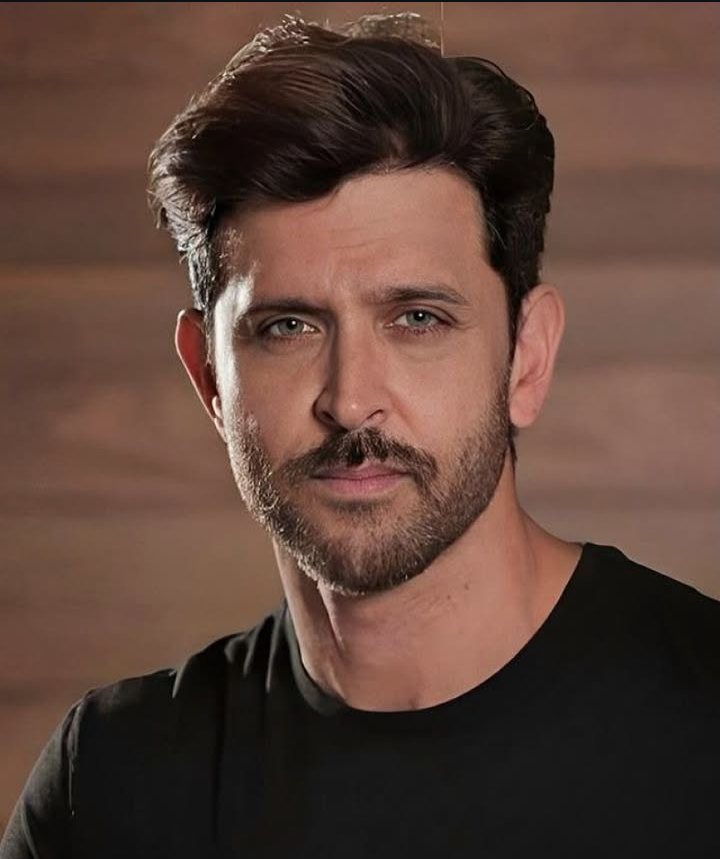
Who is Hrithik Roshan?
Today let’s talk about Hrithik Roshan Biography:The story of Hrithik Roshan is one of extraordinary talent, devastating setbacks, remarkable comebacks, and the determination to overcome obstacles that would have ended most careers before they began. Born on January 10, 1974, into one of Bollywood’s prominent film families, Hrithik’s journey from a stammering child with physical challenges to becoming one of Indian cinema’s biggest superstars represents a triumph of perseverance, dedication, and undeniable talent. His career has been marked by breathtaking dance performances, powerful acting, stunning looks that earned him the nickname “Greek God,” and a resilience that has seen him navigate professional failures, personal turmoil, and public controversies while maintaining his position at the pinnacle of Bollywood stardom.
Hrithik Roshan Biography
Hrithik Roshan Born Into Bollywood Royalty
Hrithik Roshan was born in Mumbai to filmmaker Rakesh Roshan and Pinky Roshan, entering a world where cinema wasn’t just an industry but a family legacy. His paternal grandfather, Roshan Lal Nagrath, was a renowned music director who worked under the name Roshan, composing memorable music for classic Hindi films. His father Rakesh Roshan had established himself as a successful actor before transitioning into one of Bollywood’s most successful producers and directors. This lineage meant that Hrithik grew up surrounded by the magic and mechanics of filmmaking, with film sets, actors, and the creative process being part of his everyday reality.
However, being born into privilege and connection didn’t mean Hrithik’s path would be easy. From early childhood, he faced significant challenges that could have derailed any dreams of becoming a leading man in an industry obsessed with perfection. He was born with an extra thumb on his right hand, a physical difference that required surgical correction. More significantly, he suffered from a severe stammering problem that made normal communication difficult and would seem to make a career requiring dialogue delivery virtually impossible.
Growing up in Mumbai’s film community, young Hrithik was acutely aware of his speech impediment and the limitations it imposed. Stammering affects not just communication but confidence and social interaction, particularly for a child growing up in the shadow of successful family members and surrounded by the articulate, charismatic personalities that populate the film industry. The frustration and embarrassment of struggling to express himself created psychological challenges that extended beyond the physical speech difficulty itself.
Despite these challenges, or perhaps because of them, Hrithik developed a determination and work ethic that would define his career. His family was supportive, and he began working with speech therapists to address his stammer. This process was neither quick nor easy—overcoming a severe speech impediment requires years of dedicated practice, persistence through countless frustrating moments, and psychological resilience. The discipline and determination he developed through this struggle would later translate into the perfectionism and dedication that characterize his approach to his craft.
Hrithik Roshan Early Exposure to Cinema
Hrithik’s involvement with cinema began long before his official debut as a leading man. As a child, he appeared in several films in small roles or as a background dancer, getting early exposure to the demands and rhythms of film production. He worked as an assistant director on several of his father’s films, learning the technical and creative aspects of filmmaking from behind the camera. This apprenticeship provided invaluable education about storytelling, performance, and the collaborative nature of cinema.
These early experiences also revealed both his passion for cinema and his remarkable potential, particularly in dance. Even as a child and teenager, Hrithik displayed extraordinary dancing ability that combined technical precision with expressive artistry. Dance would become one of his defining attributes, setting him apart from other actors and contributing significantly to his stardom. His dancing wasn’t just about executing steps correctly but about embodying music and conveying emotion through movement, transforming choreography into storytelling.
During his years before stardom, Hrithik also focused on developing his physique and physical capabilities. He understood that in an industry where appearance matters enormously, particularly for leading men, he needed to cultivate his physical presence. He began serious fitness training, bodybuilding, and learning various physical skills that would later allow him to perform complex action sequences and dance routines with apparent effortlessness. This dedication to physical preparation would become a hallmark of his career, with his sculpted physique becoming as much a part of his brand as his dancing ability.
His father Rakesh Roshan was preparing to launch him as a hero, but the timing and vehicle for this launch required careful consideration. The Indian film industry had seen many star sons fail despite family connections and resources, as audiences can be unforgiving toward privileged newcomers who don’t deliver compelling performances. Rakesh Roshan understood that his son’s debut needed to be spectacular, showcasing his unique abilities while providing a story and character that would connect with audiences.
Hrithik Roshan Kaho Naa Pyaar Hai: A Dream Debut
On January 14, 2000, Hrithik Roshan’s debut film “Kaho Naa Pyaar Hai” released, and Bollywood would never be quite the same. Directed by his father Rakesh Roshan, the film was a romantic thriller that gave Hrithik a double role, allowing him to showcase different facets of his personality and talent. What followed was unprecedented in the history of Indian cinema—a debut that didn’t just succeed but created a cultural phenomenon and launched one of the biggest superstars the industry had seen.
The film’s success was extraordinary by any measure. It became the highest-grossing film of 2000 and won numerous awards including Filmfare Awards for Best Film, Best Director, and Best Actor for Hrithik. But beyond commercial success and critical acclaim, “Kaho Naa Pyaar Hai” created “Hrithik Mania”—a level of fan hysteria and public obsession that Bollywood hadn’t witnessed in years. Young women across India became infatuated with the handsome newcomer, his posters adorned countless walls, and his every appearance created mob scenes.
What made his debut so impactful? Multiple factors converged to create the perfect storm of stardom. His looks were undeniably striking—chiseled features, expressive eyes, a sculpted physique, and an overall aesthetic that seemed almost too perfect, earning him the nickname “Greek God.” His dancing was breathtaking, combining technical excellence with charisma that made audiences unable to look away when he moved. The songs and dance sequences in “Kaho Naa Pyaar Hai” showcased his abilities spectacularly, with numbers that would become iconic in Bollywood musical history.
His acting, while that of a newcomer, showed promise and more importantly showed the vulnerability and earnestness that made him relatable despite his extraordinary looks. He managed to convey emotion authentically, making audiences care about his character’s journey. His screen presence was magnetic—a quality that cannot be taught or manufactured but that marks genuine stars. The camera loved him, and he possessed that indefinable quality that makes certain performers compelling to watch even in simple moments.
The film’s music, composed by Rajesh Roshan, was phenomenally popular, with songs that dominated airwaves and became anthems for young people. The combination of great music, spectacular dancing, romantic storyline, and a star-making performance created a package that audiences couldn’t resist. “Kaho Naa Pyaar Hai” wasn’t just a successful film—it was a cultural moment that established Hrithik Roshan as an instant superstar in ways that usually take careers years to achieve.
The Pressure of Instant Stardom
While most aspiring actors would envy such a spectacular debut, instant mega-stardom brings its own pressures and challenges. The expectations placed on Hrithik after “Kaho Naa Pyaar Hai” were enormous—audiences, industry professionals, and critics all wondered whether he could sustain the success or whether he was merely a one-film wonder riding his father’s coattails. The pressure to deliver another blockbuster, to prove he deserved the adulation, and to establish himself as more than just a good-looking dancer became intense.
His subsequent films in the early 2000s received mixed responses. While some like “Fiza” and “Mission Kashmir” showcased his acting abilities in more serious roles and earned him critical appreciation, others failed to replicate the massive commercial success of his debut. Films like “Yaadein” and “Mujhse Dosti Karoge” disappointed at the box office, leading to questions about whether his initial success was an anomaly. The Indian film industry and audiences can be brutally unforgiving, and the same media that had celebrated his arrival began questioning whether he could sustain his career.
This period taught Hrithik important lessons about the film industry and his own career management. He learned that success requires not just talent but smart script selection, understanding audience preferences, and continuously evolving as a performer. He couldn’t rely solely on dancing and looks but needed to develop as an actor capable of carrying different kinds of films. He also learned about the cyclical nature of film careers—how success and failure are often temporary states, and that sustaining a long career requires resilience through both.
During this challenging period, rather than panicking or accepting whatever projects came his way, Hrithik appears to have taken stock and made strategic decisions. He focused on improving his craft, choosing scripts more carefully, and being willing to take risks with different kinds of roles rather than playing safe. This thoughtful approach to career management would distinguish him from many contemporaries who burned bright briefly but couldn’t sustain their careers through changing trends and inevitable setbacks.
Hrithik Roshan Koi Mil Gaya and Reinvention
In 2003, Hrithik Roshan and his father Rakesh Roshan took a significant risk with “Koi Mil Gaya,” India’s first real science fiction film featuring friendly aliens. Hrithik played Rohit, a young man with developmental disabilities who befriends an alien named Jadoo. This role represented a dramatic departure from the romantic hero image he had established, requiring him to portray a character with mental challenges authentically and sensitively.
The risk paid off spectacularly. “Koi Mil Gaya” was both a commercial blockbuster and a critical success, with Hrithik’s performance earning widespread praise and multiple awards including another Filmfare Award for Best Actor. His portrayal of Rohit demonstrated acting depth that many hadn’t credited him with, showing he could disappear into a character completely different from his own personality and appearance. He studied the mannerisms, speech patterns, and behaviors of people with developmental disabilities, bringing authenticity to the role while avoiding caricature or condescension.
The film’s success established several important things about Hrithik’s career. It proved he was more than just a good-looking dancer but a serious actor capable of handling challenging roles. It demonstrated his willingness to take risks and play characters that other stars might avoid for fear of compromising their image. It showed that he and his father could create successful, innovative cinema that pushed Bollywood’s boundaries. Most importantly, it re-established his box office viability and creative credibility after a period of uncertainty.
“Koi Mil Gaya” spawned a successful franchise with sequels “Krrish” and “Krrish 3,” establishing Hrithik as Bollywood’s first genuine superhero star. The Krrish character became iconic, and the franchise demonstrated that Indian cinema could create homegrown superhero properties rather than just consuming Western imports. Hrithik’s physical conditioning, dancing ability, and screen presence made him perfect for action-heavy superhero roles, and the franchise became commercially successful while also giving him a unique space in Bollywood that no other actor occupied.
Hrithik Roshan Dancing Phenomenon
If there’s one aspect of Hrithik Roshan’s stardom that distinguishes him most clearly from contemporaries, it’s his dancing ability. He is widely considered one of the finest dancers in Bollywood history, combining technical excellence with expressive artistry in ways that few others have matched. His dancing isn’t just about executing choreography correctly but about embodying music, telling stories through movement, and creating moments of pure cinematic magic that audiences remember long after films end.
His dance style combines multiple influences—the traditional Bollywood masala style, contemporary Western dance forms, classical Indian dance elements, and his own unique flair. He can perform complex technical moves with apparent effortlessness, his control over his body is extraordinary, and his ability to convey emotion through dance transforms choreography from mere movement into storytelling. Whether performing high-energy dance numbers or more subtle, romantic choreography, he brings intensity and commitment that makes every performance memorable.
Choreographers love working with Hrithik because he comes to rehearsals fully prepared, works tirelessly to perfect even small details, and brings creative input that enhances choreography. He’s known for learning complex routines quickly and adding his own interpretations that often improve the original vision. His work ethic in preparing for dance sequences is legendary—he’ll rehearse for hours, work on conditioning to build the stamina required for elaborate sequences, and approach each dance number as an opportunity to create something special.
Numerous dance numbers across his filmography have become iconic in Bollywood—”Ek Pal Ka Jeena” from “Kaho Naa Pyaar Hai,” “Main Aisa Kyun Hoon” from “Lakshya,” “Dhoom Again” from “Dhoom 2,” “Bang Bang” from the film of the same name, and many others. These performances showcase different aspects of his dancing ability and have inspired countless imitations, dance covers, and have become staples of Indian wedding celebrations and dance competitions. His influence on Bollywood dancing is substantial, raising standards and inspiring both fellow actors and aspiring dancers.
Hrithik Roshan Action Hero and Physical Transformation
Beyond dancing, Hrithik Roshan has established himself as one of Bollywood’s premier action stars, capable of performing complex, physically demanding sequences that require extraordinary fitness and skill. His commitment to physical preparation for roles is legendary, with his body transformations for various films becoming subjects of public fascination and fitness inspiration for countless fans.
For films like “Dhoom 2,” “Krrish” series, “Bang Bang,” and “War,” Hrithik underwent intensive training regimens that transformed his already impressive physique into extraordinary athletic condition. He’s known to train for months before filming action sequences, learning martial arts, weapons handling, motorcycle and vehicle stunts, and various physical skills required for authentic action performance. His dedication extends beyond just looking good shirtless to actually being able to perform the demanding physical feats that his characters require.
His approach to action differs from some actors who rely heavily on body doubles and technical trickery. While he certainly uses stunt coordinators and safety equipment, Hrithik insists on performing many stunts himself, bringing authenticity to action sequences that audiences can feel. This commitment occasionally results in injuries—he’s suffered multiple injuries during action filming—but also creates more visceral, exciting action sequences because the audience can see it’s actually him performing dangerous feats.
His physical transformations have also influenced fitness culture in India, with his workout routines, diet plans, and physique goals becoming aspirational for many Indian men. He’s occasionally shared details of his training methods, inspiring fitness enthusiasm while also being honest about the extraordinary dedication and work required to achieve such results. His influence extends beyond cinema into broader fitness and wellness culture, demonstrating how celebrity can inspire positive lifestyle changes when used thoughtfully.
Hrithik Roshan Versatility as an Actor
While Hrithik Roshan is known for action films, romantic roles, and spectacular dancing, his filmography demonstrates significant versatility and willingness to challenge himself with diverse characters and genres. He has played historical figures in “Jodhaa Akbar” and “Mohenjo Daro,” contemporary soldiers in “Lakshya,” a thief with a disability in “Guzaarish,” a mathematically brilliant teacher in “Super 30,” and various other characters that require different acting approaches and skills.
His performance in “Guzaarish” as a quadriplegic magician seeking euthanasia was particularly praised for its sensitivity and emotional depth, though the film itself didn’t achieve commercial success. His willingness to take on such a challenging role, requiring him to convey emotion primarily through facial expressions and voice since his character couldn’t move, demonstrated artistic ambition beyond just commercial considerations. Not every risk has paid off commercially, but his willingness to take them has earned respect and has resulted in some of his most acclaimed performances.
In “Lakshya,” he portrayed a directionless young man finding purpose through military service, delivering a nuanced performance that conveyed internal transformation convincingly. The film, while initially receiving a lukewarm commercial response, has gained appreciation over time and is now considered one of his finest performances. His work in “Zindagi Na Milegi Dobara” showed his ability to work as part of an ensemble, delivering a relaxed, natural performance in a character-driven film that contrasted with his usual larger-than-life roles.
“Super 30” saw him transform into mathematician Anand Kumar, requiring him to adopt a different physical appearance, Bihari accent, and the mannerisms of a real person. The film’s success demonstrated that audiences would accept him in unglamorous roles if the story and performance were compelling. These diverse roles have prevented him from being typecast and have given his career longevity by showing he can adapt to changing audience preferences and tackle different kinds of cinema.
Hrithik Roshan Personal Life and Public Scrutiny
Hrithik Roshan’s personal life has been subject to intense public scrutiny, particularly his marriage to and subsequent divorce from Sussanne Khan. Hrithik and Sussanne, daughter of actor Sanjay Khan, married in 2000, shortly after his debut, in what was considered one of Bollywood’s most glamorous weddings. They have two sons together, Hrehaan and Hridhaan, and for over a decade appeared to be one of Bollywood’s stable, happy couples.
Their separation in 2013 and subsequent divorce in 2014 shocked fans and generated enormous media attention. Both handled the divorce with considerable dignity, avoiding public mud-slinging and prioritizing their children’s wellbeing. They’ve maintained a cordial relationship post-divorce, co-parenting their sons and occasionally appearing together at family events, demonstrating mature handling of a difficult situation. Their approach has been praised as a model for how divorces can be managed with respect and consideration for children’s needs.
Hrithik has been linked romantically to various actresses and personalities over the years, with media constantly speculating about his relationships. His rumored relationship with Kangana Ranaut became particularly controversial, with both parties making public statements that contradicted each other and eventually involved legal notices. The situation highlighted the challenges of navigating personal relationships under intense public scrutiny and the ways that relationship conflicts can become public spectacles when celebrities are involved.
Despite the attention to his personal life, Hrithik has generally maintained considerable privacy, choosing to address personal matters sparingly and focusing public attention on his professional work. He’s spoken occasionally about the challenges of maintaining personal privacy while being a public figure, the impact of constant scrutiny on mental health, and the importance of protecting his children from excessive media attention. His approach balances acknowledgment of public interest with maintaining boundaries around what he chooses to share publicly.
Hrithik Roshan Challenges and Comebacks
Hrithik Roshan’s career hasn’t been a straight upward trajectory but has included significant challenges, failures, and comebacks that have tested his resilience. After the extraordinary success of his debut, he experienced a period in the mid-2000s when several films underperformed commercially, leading to questions about his star power and choice of scripts. Films like “Kites” and “Guzaarish” failed to find audiences despite Hrithik’s committed performances, suggesting that his name alone couldn’t guarantee commercial success.
He has also faced health challenges, including chronic back pain and a subdural hematoma (brain clot) that required surgery. These physical challenges could have been career-ending for someone whose work depends on physical performance and action sequences, but Hrithik approached recovery with the same determination he brings to his craft. He underwent necessary medical treatment, adapted his training methods to accommodate his physical limitations, and returned to performing demanding action sequences without allowing injuries to permanently limit his capabilities.
His comebacks after career setbacks have often been spectacular. After a relatively quiet period, “Bang Bang” and particularly “War” reminded audiences and industry professionals of his star power and box office appeal. “War” became one of the highest-grossing Indian films, demonstrating that when given the right vehicle, Hrithik could deliver blockbuster results. These comebacks after periods of uncertainty have become a pattern in his career, showcasing resilience and the ability to reinvent himself when necessary.
The cyclical nature of his career—peaks of extraordinary success followed by challenging periods followed by successful comebacks—has given him perspective on the transitory nature of fame and success. He’s spoken about learning to handle both success and failure with equanimity, not becoming arrogant during peaks or despondent during valleys, and maintaining focus on the work itself rather than external validation or criticism.
Hrithik Roshan Work Ethic and Perfectionism
Those who work with Hrithik Roshan consistently describe his extraordinary work ethic and perfectionism. He’s known for being among the most prepared and dedicated actors in Bollywood, approaching every aspect of his craft with meticulous attention to detail and tireless dedication to excellence. This reputation isn’t just public relations spin but is consistently verified by directors, choreographers, co-stars, and crew members who witness his approach firsthand.
For dance sequences, he rehearses extensively, often more than choreographers request, to ensure every movement is perfect. For action scenes, he trains for months to build required capabilities and learn necessary skills authentically. For dramatic scenes, he works intensively on understanding character motivations, emotional truth, and authentic performance. This dedication extends to aspects like learning dialects for roles, undergoing physical transformations, and studying real people he’s portraying to bring authenticity to performances.
His perfectionism can apparently be demanding not just for himself but for those working with him, as he holds others to the high standards he sets for himself. However, this is generally described as pushing for excellence rather than being difficult or unreasonable. He’s willing to do numerous takes to get scenes right, doesn’t complain about long shooting schedules or demanding physical requirements, and brings energy and commitment even to scenes that others might consider routine or unimportant.
This work ethic likely stems partly from his childhood struggles with stammering and the determination and discipline he developed overcoming that challenge. Having experienced what dedicated practice and persistence can achieve in overcoming seemingly insurmountable obstacles, he applies similar dedication to his craft. His perfectionism has sometimes meant longer production schedules and higher costs, but it’s also resulted in the spectacular dance sequences, convincing action scenes, and powerful performances that have defined his career and justified his position as one of Bollywood’s highest-paid actors.
Hrithik Roshan Brand Hrithik Roshan
Beyond his film career, Hrithik Roshan has built a powerful personal brand that extends into multiple commercial domains. He’s among India’s most sought-after celebrity endorsers, representing numerous prestigious brands across categories including fitness, fashion, automobiles, watches, beverages, and various other products. His brand value stems from his looks, fitness, perceived sophistication, and broad appeal across demographic segments.
His brand associations are generally selective and align with his image as aspirational yet accessible, sophisticated yet relatable. He represents premium products while maintaining connection with middle-class audiences who form Bollywood’s core constituency. This balance—appearing glamorous and successful while not seeming so elite as to be alienating—is crucial for commercial viability in India’s diverse market and is something Hrithik has navigated successfully throughout his career.
He launched his own casual wear brand HRX in partnership with Myntra and Cult.fit, leveraging his fitness credibility and fashion sense. The brand has been commercially successful, demonstrating that his influence extends beyond just lending his face to others’ products to building business ventures that capitalize on his personal brand. HRX represents his values around fitness, style, and accessibility, offering affordable fitness and casual wear that makes his lifestyle aspirational yet achievable for ordinary consumers.
His social media presence, while not the most extensive among Bollywood stars, is substantial and carefully curated. He shares glimpses of his personal life, behind-the-scenes content from film shoots, fitness inspiration, and messages to fans in ways that maintain engagement while preserving privacy. His posts typically generate enormous engagement, demonstrating his continued relevance and the strong parasocial connection fans feel with him despite him being selective about what he shares publicly.
Hrithik Roshan Legacy and Influence
As Hrithik Roshan enters his third decade in Bollywood, his legacy and influence on Indian cinema are already substantial. He has redefined what Bollywood dancing can be, raising standards and inspiring both fellow actors and the next generation of performers. His commitment to fitness and action performance has influenced how action films are made and how actors prepare for physical roles. His willingness to take risks with diverse roles has demonstrated that superstars can be versatile rather than playing safe with formulaic characters.
His impact extends beyond just his own work to influence on broader Bollywood trends. The emphasis on physical fitness among male actors, the popularity of superhero films, the integration of more sophisticated action choreography, and higher standards for dance performance all reflect trends that Hrithik either initiated or significantly influenced. Younger actors frequently cite him as inspiration, and many attempt to emulate his dedication and versatility though few match his unique combination of looks, dancing ability, acting talent, and work ethic.
His journey from a stammering child with physical challenges to one of Bollywood’s biggest superstars also provides an inspiring narrative about overcoming obstacles through determination and hard work. While he certainly had advantages of family connections and resources that most aspiring actors lack, his personal struggles and the dedication required to overcome them resonate with audiences and provide genuine inspiration beyond typical celebrity success stories.
As he continues his career, selecting projects carefully and increasingly focusing on quality over quantity, Hrithik Roshan has secured his place among Bollywood’s all-time greats. Whether future projects will add to his legacy or simply maintain it remains to be seen, but his contribution to Indian cinema—through spectacular performances, unforgettable dance sequences, inspiring fitness transformations, and versatile acting—is already assured.
Conclusion
The story of Hrithik Roshan is ultimately one of talent meeting opportunity, privilege meeting challenge, and success earned through dedication rather than simply inherited. Born into a film family but facing personal obstacles that could have prevented any career in front of the camera, he overcame stammering and self-doubt to become one of Indian cinema’s most successful and influential actors. His journey has included spectacular debuts, challenging periods, remarkable comebacks, personal struggles played out publicly, and consistent evolution as a performer and public figure.
His contribution to Bollywood extends across multiple dimensions—as a dancer who redefined what’s possible in Hindi film choreography, as an action star who brought new standards of physical preparation and authenticity to Indian action cinema, as an actor who has tackled diverse roles with commitment and skill, and as a star who has maintained relevance and success across changing industry trends and audience preferences. His influence on fitness culture, fashion, and the aspirations of young Indian men further extends his impact beyond cinema into broader cultural spheres.
The challenges he has faced—professional setbacks, health issues, personal turmoil, public controversies—and his responses to them reveal resilience and maturity that complement his obvious talents. His willingness to take risks, to reinvent himself when necessary, and to approach his craft with unwavering dedication despite already achieving extraordinary success demonstrates commitment to excellence that transcends mere commercial calculation. Whether dancing with breathtaking precision, performing death-defying stunts, or delivering emotionally complex dramatic performances, Hrithik Roshan brings intensity and commitment that justifies his position at Bollywood’s pinnacle.
As he continues his career, balancing commercial considerations with artistic ambitions, maintaining personal privacy while fulfilling public expectations, and navigating the challenges of sustaining stardom in an industry constantly searching for the next sensation, Hrithik Roshan remains one of Indian cinema’s most compelling figures. His legacy as one of Bollywood’s finest dancers is already secure, his status as a major star is unquestioned, and his influence on Indian cinema will be felt long after his performing career ends. The boy who overcame stammering to become one of cinema’s most charismatic performers, who transformed personal challenges into extraordinary determination, has already earned his place in Bollywood history, and his story continues to unfold.

Frequently Asked Questions about Hrithik Roshan
How did Hrithik Roshan overcome his stammering problem?
Hrithik Roshan suffered from a severe stammering problem from childhood that made normal communication difficult and seemed to make an acting career virtually impossible. Overcoming this challenge required years of dedicated work with speech therapists, countless hours of practice, and extraordinary psychological resilience. The process wasn’t quick or easy—it involved persistent effort through frustrating setbacks and developing techniques to manage his speech impediment. He worked on breathing exercises, practiced speaking slowly and deliberately, and gradually built confidence in verbal communication. The discipline and determination he developed through this struggle became foundational to his approach to his craft. Even after achieving success, he has occasionally spoken about continuing to work on his speech, as stammering can be a lifelong challenge requiring ongoing management. His journey from a child who struggled to speak to an actor who delivers dialogue convincingly and has given memorable performances demonstrates remarkable perseverance. He has occasionally spoken publicly about his stammer, both to inspire others facing similar challenges and to highlight that obstacles can be overcome with dedication. His success despite this significant impediment has made him an inspiration to many people dealing with speech difficulties, demonstrating that such challenges, while real and difficult, don’t have to prevent achieving one’s dreams. The work ethic and perfectionism that helped him overcome stammering later translated into his meticulous preparation for roles, his dedication to dance and action sequences, and his overall approach to his career.
What made Hrithik Roshan’s debut in “Kaho Naa Pyaar Hai” so successful?
Hrithik Roshan’s debut in “Kaho Naa Pyaar Hai” on January 14, 2000, was unprecedented in Bollywood history, creating a level of fan hysteria and commercial success rarely seen for newcomers. Multiple factors converged to create this phenomenon. His striking looks—chiseled features, expressive eyes, sculpted physique—earned him the nickname “Greek God” and created immediate visual appeal. His dancing was breathtaking, combining technical excellence with charisma that made audiences unable to look away, with the film’s dance sequences showcasing his abilities spectacularly. The film’s music by Rajesh Roshan was phenomenally popular, with songs dominating airwaves and becoming anthems for young people. His acting, while that of a newcomer, showed vulnerability and earnestness that made him relatable despite his extraordinary appearance, and his screen presence was magnetic in ways that mark genuine stars. The film itself was well-crafted, combining romance, thriller elements, great music, and a compelling story that audiences embraced. His double role allowed him to showcase different facets of his talent and appeal. The timing was also significant—the film released at the beginning of a new millennium, and audiences were ready for a fresh face and energy. The marketing and promotional campaign built anticipation effectively. The combination of all these factors—looks, dancing, music, story, timing—created perfect conditions for a phenomenon rather than just a successful film. The film became the highest-grossing film of 2000, won numerous awards, and created “Hrithik Mania” with fan hysteria that Bollywood hadn’t witnessed in years. This debut established him as an instant superstar rather than requiring the gradual career building most actors experience.
Why is Hrithik Roshan considered one of Bollywood’s best dancers?
Hrithik Roshan is widely regarded as one of the finest dancers in Bollywood history for multiple reasons that distinguish him from other talented dancer-actors. His technical excellence is extraordinary—he can execute complex choreography with precision, his control over his body is remarkable, and he can perform intricate moves with apparent effortlessness that actually requires immense skill and practice. Beyond technical ability, he brings expressive artistry to dancing, embodying music and conveying emotion through movement in ways that transform choreography from mere steps into storytelling. His dance style incorporates multiple influences—traditional Bollywood masala style, contemporary Western forms, classical Indian elements, and his own unique flair—creating versatility that allows him to excel in different kinds of choreography. His physical conditioning and athleticism enable him to perform demanding sequences that require extraordinary stamina and strength. Choreographers consistently praise his work ethic—he comes to rehearsals fully prepared, learns complex routines quickly, rehearses tirelessly to perfect even small details, and brings creative input that often enhances original choreography. His screen presence while dancing is magnetic, with the camera loving him and his energy being palpable even to viewers. He approaches each dance sequence as an opportunity to create something special rather than merely fulfilling routine requirements. Numerous iconic Bollywood dance numbers across his filmography demonstrate different facets of his ability—from high-energy numbers to romantic choreography to technically complex sequences. His influence on Bollywood dancing has been substantial, raising standards and inspiring both fellow actors and aspiring dancers. His dedication to dance extends beyond natural talent to include constant practice, physical conditioning, and perfectionist attention to every detail of performance, creating a combination of gifts and dedication that few others match.
What are some of Hrithik Roshan’s most acclaimed performances?
While Hrithik Roshan is often known for his looks, dancing, and action sequences, his filmography includes several critically acclaimed dramatic performances that demonstrate his range as an actor. His debut in “Kaho Naa Pyaar Hai” earned him the Filmfare Award for Best Actor and launched his career spectacularly. In “Koi Mil Gaya,” he played Rohit, a young man with developmental disabilities, delivering a sensitive, authentic performance that earned widespread praise and demonstrated he was more than just a good-looking dancer but a serious actor capable of complex characterization. His performance in “Lakshya” as a directionless young man finding purpose through military service was nuanced and conveyed internal transformation convincingly, with the film gaining appreciation over time as one of his finest works. In “Jodhaa Akbar,” he portrayed Emperor Akbar with dignity and depth in a historical epic that required both physical presence and emotional subtlety. His role in “Guzaarish” as a quadriplegic magician seeking euthanasia was particularly challenging, requiring him to convey emotion primarily through facial expressions and voice since his character couldn’t move, demonstrating artistic ambition and sensitivity. In “Zindagi Na Milegi Dobara,” he delivered a relaxed, natural ensemble performance that showcased his ability to work as part of a team rather than dominating every scene. His transformation into mathematician Anand Kumar in “Super 30” required adopting a different physical appearance, Bihari accent, and the mannerisms of a real person, demonstrating commitment to authenticity. In “War,” while primarily an action film, he brought emotional depth to his character that elevated the film beyond mere spectacle. These performances, across different genres and character types, demonstrate versatility and willingness to challenge himself with diverse roles rather than playing safe with formulaic characters.
How has Hrithik Roshan maintained his career longevity in Bollywood?
Hrithik Roshan’s career longevity in an industry known for quickly discarding yesterday’s stars reflects multiple strategic and personal factors. His willingness to reinvent himself and take risks with diverse roles has prevented typecasting and demonstrated versatility that keeps audiences interested. After initial success as a romantic hero, he tackled challenging roles like the developmentally disabled character in “Koi Mil Gaya,” historical figures, contemporary soldiers, and various other characters requiring different approaches. His commitment to excellence and perfectionism ensures that when he takes on projects, he delivers performances worth watching, maintaining quality standards that justify his star status. His extraordinary work ethic and dedication to physical preparation, dance rehearsals, and acting craft mean he continues delivering spectacular performances even as he ages, maintaining the physical capabilities that distinguish him from peers. His selective approach to projects, increasingly choosing quality over quantity, ensures that each appearance feels more like an event rather than just another film, maintaining anticipation and specialness around his work. His ability to handle both success and failure with equanimity, learning from setbacks and making strategic comebacks, has helped him navigate the cyclical nature of film careers without being permanently derailed by challenging periods. His diversification