Who is Imran Khan?
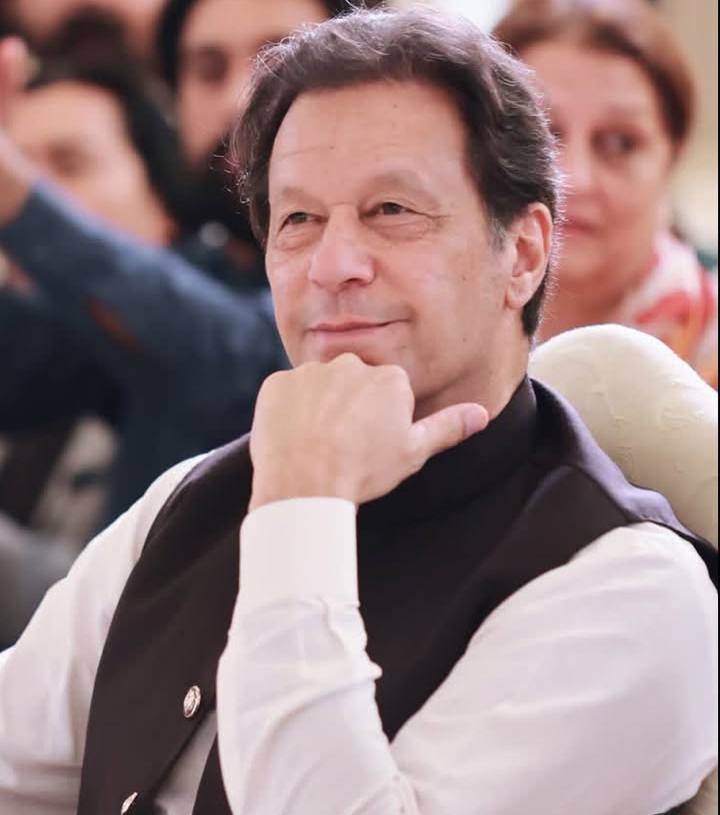
Today let’s talk about Imran Khan Biography: In the landscape of modern South Asian politics, few figures have captured the public imagination quite like Imran Khan. A man who achieved legendary status as Pakistan’s greatest cricket captain, leading his nation to World Cup glory, before embarking on an equally dramatic political journey that would eventually see him become Prime Minister of Pakistan. His life story reads like a modern epic from the privileged playgrounds of Lahore to the hallowed grounds of Lord’s Cricket Ground, from humanitarian work building cancer hospitals to the rough-and-tumble arena of Pakistani politics. Whether admired or criticized, Imran Khan remains one of Pakistan’s most compelling and controversial public figures, a man whose impact on his nation extends far beyond the cricket field.
Imran Khan Biography
Imran Khan Early Life and Privileged Beginnings
Imran Ahmad Khan Niazi was born on October 5, 1952, in Lahore, Pakistan, into a prosperous Pashtun family with distinguished lineage. His father, Ikramullah Khan Niazi, was a civil engineer, while his mother came from the respected Burki family. The Khan family belonged to Pakistan’s upper-middle class, a position that afforded young Imran educational and social opportunities unavailable to most Pakistanis. Growing up in Zaman Park, an affluent neighborhood of Lahore, Imran was exposed to both traditional Pakistani values and modern, Westernized lifestyles.
His family’s connections and status meant that Imran moved in elite circles from childhood. He attended Aitchison College, Lahore’s most prestigious school, often called the “Eton of Pakistan” for its colonial heritage and its role in educating the Pakistani elite. This education emphasized English-language instruction, Western sports including cricket, and the social graces expected of Pakistan’s upper classes. The experience shaped Imran’s worldview, giving him comfort operating in both Pakistani and Western contexts that would later prove valuable in his cricket career and political life.
Even as a child, Imran showed athletic promise and competitive drive. He was drawn to cricket, a sport that carried special significance in Pakistan as a legacy of British colonial rule that had been enthusiastically adopted and transformed into a source of national pride. His cousins, particularly Javed Burki and Majid Khan, were accomplished cricketers who represented Pakistan internationally, providing both inspiration and mentorship. These family connections gave Imran early exposure to high-level cricket and made a career in the sport seem achievable rather than a distant fantasy.
Imran Khan Education Abroad and Cultural Formation
At age eighteen, Imran left Pakistan to attend the Royal Grammar School in Worcester, England, completing his A-levels before gaining admission to Keble College, Oxford University, where he studied economics and politics. This Oxford education was transformative, exposing him to Western intellectual traditions, political philosophies, and social environments radically different from Pakistan. Oxford in the early 1970s was a place of political ferment and cultural experimentation, and Imran absorbed these influences while also becoming increasingly aware of his identity as a Pakistani in the West.
At Oxford, Imran played cricket for the university team, honing skills that would later make him one of the world’s premier fast bowlers and all-rounders. The Oxford cricket tradition was prestigious, and performing well there opened doors to county cricket and eventually the international game. Playing alongside and against some of England’s best young cricketers gave Imran competitive experience and raised his game to new levels. His success at Oxford established him as a cricketing prospect with genuine international potential.
His time in England during these formative years also exposed him to Western lifestyle and culture in ways that would shape his personal style and public image. Imran became known for his striking looks, his comfort in elite social settings, and his ability to navigate both Pakistani and Western worlds with equal ease. He developed friendships with British aristocracy, dated English women, and became a familiar figure in London’s fashionable social circles. This cosmopolitan sophistication would later make him an unusual figure in Pakistani public life—simultaneously deeply Pakistani and unmistakably internationalized.
However, his years abroad also strengthened his Pakistani identity in important ways. Distance from Pakistan gave him perspective on his country’s challenges and made him more consciously Pakistani rather than simply accepting his nationality as unremarkable background. He experienced the subtle racism and condescension that Pakistanis often faced in Britain, which made him sensitive to issues of national dignity and the need for Pakistan to command respect internationally. These experiences planted seeds of nationalism that would later blossom in his political career.
RImran Khan ise to Cricket Stardom
Imran Khan made his Test cricket debut for Pakistan in 1971 against England at Edgbaston, Birmingham, when he was just eighteen years old. His early international career was promising but inconsistent, as the young all-rounder worked to establish himself at the highest level of the game. Throughout the 1970s, he developed into one of the world’s premier fast bowlers, capable of generating genuine pace and swing that troubled even the best batsmen. His bowling action was classical and elegant, his approach to the wicket rhythmic and athletic, making him not just effective but aesthetically pleasing to watch.
As his career progressed, Imran became not just a bowler but a genuine all-rounder, capable of contributing significantly with the bat. His batting evolved from useful lower-order hitting to genuine middle-order capability, with several Test centuries to his name by the time his career ended. This all-around ability made him invaluable to the Pakistani team, someone who could change games with either ball or bat. His fielding was also excellent, particularly his catching in the slips, completing his profile as a complete cricketer.
Beyond statistics, Imran brought intangible qualities to Pakistan cricket. He was fiercely competitive, hating to lose and willing his team to victories that seemed impossible. His presence raised the performance of teammates, inspiring them to exceed their perceived limitations. He understood cricket’s psychological dimensions, knowing when to be aggressive and when to be patient, when to encourage and when to demand. These leadership qualities would eventually make him captain and would transform Pakistan cricket.
During the late 1970s and throughout the 1980s, Imran established himself among the world’s elite cricketers. He topped bowling averages, took wickets in all conditions and against all opponents, and produced match-winning performances with regularity. His rivalry with the great West Indian pace bowlers and his performances against powerful Australian and Indian sides established his reputation. He was playing for one of cricket’s traditionally weaker teams yet competing on equal terms with the best, a source of enormous pride for Pakistanis who saw in his success validation of their nation’s capabilities.
Imran Khan Captain of Pakistan
Imran Khan first captained Pakistan in 1982, though his initial stint was brief and unsuccessful. However, when he was reappointed captain in 1984, he began transforming not just the team’s fortunes but Pakistani cricket culture itself. As captain, Imran demanded professionalism, fitness, discipline, and commitment at levels Pakistani cricket had not previously maintained. He was an authoritarian leader who expected high standards and did not tolerate complacency or lack of effort. His force of personality and proven excellence gave him authority to make demands that might have been resented from a lesser figure.
Under his captaincy, Pakistan became one of world cricket’s most formidable teams. They achieved notable series victories in India, England, and the West Indies—traditionally difficult tours where Pakistan had struggled. Imran molded a team featuring brilliant but often temperamental players like Javed Miandad, Wasim Akram, Waqar Younis, and Abdul Qadir into a cohesive, winning unit. He protected his players from cricket administration politics, took responsibility for defeats while crediting players for victories, and created team culture based on mutual respect and shared purpose.
His leadership extended beyond tactics and team selection to inspiring belief. Pakistani cricket had long suffered from an inferiority complex, with players mentally defeated before facing stronger teams. Imran convinced his team that they were inferior to no one, that with proper preparation and self-belief they could beat anyone anywhere. This psychological transformation was perhaps his greatest contribution as captain, changing how Pakistani cricketers saw themselves and their capabilities.
The 1992 World Cup Triumph
The pinnacle of Imran Khan’s cricket career came with Pakistan’s victory in the 1992 Cricket World Cup in Australia and New Zealand. This triumph was remarkable for multiple reasons and became the defining moment not just of Imran’s career but of Pakistani cricket history. Coming into the tournament, Pakistan was not among the favorites, and their early performances justified the low expectations with several defeats that left them needing unlikely results to even qualify for the semifinals.
At this low point, Imran delivered what became legendary motivational speeches urging his team to “fight like cornered tigers.” This metaphor captured something essential about Imran’s approach—the belief that desperation could be transformed into fierce determination, that being written off could liberate players from pressure and allow them to play with freedom and aggression. The speech worked spectacularly, as Pakistan won every remaining match they needed to win, first to qualify for the semifinals, then to reach the final, and finally to claim the championship.
The final against England at the Melbourne Cricket Ground was vintage Imran. Though past his physical prime at thirty-nine and carrying injuries that limited his bowling, he delivered a crucial innings of 72 runs that steadied Pakistan’s batting and set up a defendable total. His leadership throughout the final was masterful, utilizing his bowlers perfectly and maintaining composure even during tense moments. When Pakistan clinched victory, Imran became a national hero on a scale few Pakistanis have achieved, his name synonymous with Pakistani triumph and pride.
The World Cup victory’s significance extended far beyond sports. It came at a difficult time in Pakistani history, when the country was facing international isolation due to its nuclear program, when economic challenges were mounting, and when national morale was low. The cricket victory provided a desperately needed boost to national confidence and gave Pakistanis something to celebrate together across regional, ethnic, and sectarian divides. Imran became the embodiment of Pakistani potential—proof that with proper leadership and determination, Pakistan could triumph on the world stage.
Imran Khan Transition to Philanthropy
Immediately following the World Cup triumph and his retirement from cricket in 1992, Imran Khan embarked on what many considered an even more ambitious project—building a state-of-the-art cancer hospital in Lahore to provide free treatment to poor Pakistanis. This mission was deeply personal, inspired by his mother’s death from cancer and his witnessing of the inadequate cancer treatment facilities available in Pakistan. The suffering of cancer patients who couldn’t afford treatment, who had to travel abroad or simply accept death, moved Imran to action.
The Shaukat Khanum Memorial Cancer Hospital and Research Centre, named for Imran’s mother, opened in 1994 after an extraordinary fundraising campaign. Imran leveraged his celebrity status, his international connections, and the goodwill from the World Cup victory to raise funds from Pakistanis both at home and in the diaspora, as well as from international donors. The campaign required him to essentially beg for donations, a humbling experience for someone accustomed to adulation, but one he embraced for the cause. His personal commitment and visible leadership inspired unprecedented charitable giving from Pakistanis.
The hospital represented revolutionary approach to healthcare in Pakistan. It was built to international standards with state-of-the-art equipment, staffed by highly qualified Pakistani doctors many of whom returned from abroad to work there, and committed to providing free treatment to approximately seventy-five percent of patients who couldn’t afford to pay. The model was that paying patients would subsidize treatment for the poor, making world-class cancer care accessible regardless of ability to pay. This vision challenged the two-tier healthcare system where the rich received quality care abroad or in private facilities while the poor suffered with inadequate public healthcare.
The hospital’s success—both in providing excellent medical care and in its sustainable financial model—established Imran as more than just a cricket hero. He demonstrated capacity to conceptualize ambitious projects, to manage complex organizations, to mobilize resources at scale, and to deliver tangible improvements in Pakistani lives. The hospital also established his credibility as someone motivated by genuine concern for ordinary Pakistanis rather than personal enrichment, an unusual quality in Pakistan’s public life. This credibility would become crucial political capital when he later entered politics.
Imran Khan Entry into Politics
Imran Khan founded the Pakistan Tehreek-e-Insaf (PTI), meaning “Pakistan Movement for Justice,” in 1996. His entry into politics was driven by belief that Pakistan’s problems—corruption, poor governance, inequality, lack of justice—stemmed from failed political leadership, and that transformational change required new leadership untainted by the corrupt practices of established political families. His vision was of a “Naya Pakistan” (New Pakistan) based on Islamic principles of justice, merit-based meritocracy, an equitable society, and rule of law.
His early years in politics were spectacularly unsuccessful by conventional measures. In the 1997 general elections, PTI won zero seats, with Imran himself losing his constituency in Lahore. This humiliation led many to dismiss him as a dilettante celebrity dabbling in politics without understanding its realities. Throughout the late 1990s and early 2000s, PTI remained a marginal force, unable to build organizational strength or electoral appeal. Imran’s political rallies attracted small crowds, and his party struggled to recruit credible candidates or establish presence beyond a few urban centers.
Several factors contributed to these early failures. Pakistan’s political landscape was dominated by entrenched parties—the Pakistan Muslim League and the Pakistan Peoples Party—with deep organizational structures, patronage networks, and dynastic leadership that commanded loyalty across generations. Imran’s anti-corruption message, while appealing in principle, threatened established power structures without offering clear alternative for the millions dependent on patronage politics for their livelihoods. His elite background and Westernized lifestyle made him seem disconnected from ordinary Pakistanis despite his charitable work. His political inexperience showed in organizational matters, campaign strategy, and coalition building.
During these wilderness years, Imran demonstrated remarkable persistence and conviction. Lesser figures might have abandoned politics after such repeated failures, returning to comfortable celebrity life. Instead, Imran continued building his party slowly, speaking at universities, engaging with civil society organizations, maintaining critique of Pakistan’s political establishment, and refining his political message. He took controversial positions including opposition to Pakistan’s alliance with the United States in the “war on terror,” arguing this alliance compromised Pakistani sovereignty and fueled extremism rather than combating it.
Imran Khan Political Breakthrough and Rise to Power
Imran Khan’s political fortunes began changing in the early 2010s, particularly following massive rallies in 2011 that attracted hundreds of thousands of supporters, primarily young people frustrated with traditional politics. These rallies demonstrated that PTI had evolved from marginal party to genuine political force capable of mass mobilization. The 2013 general elections, while not delivering victory, saw PTI win significant seats and establish itself as Pakistan’s third major political party, breaking the two-party dominance.
His support base consisted primarily of urban middle-class youth, overseas Pakistanis, and educated professionals who shared his critique of corrupt traditional politics and his vision of reformed Pakistan. He became particularly popular in Khyber Pakhtunkhwa province, where PTI won enough seats to form provincial government in 2013, giving the party first opportunity to demonstrate governance capabilities. The Khyber Pakhtunkhwa government’s performance, particularly in education and health sectors, helped establish PTI’s credibility as more than just protest movement.
The 2018 general elections finally brought Imran Khan to power as Prime Minister. PTI won the most seats, though not an outright majority, requiring coalition government with smaller parties and independent candidates. The victory was historic—Imran had persisted for twenty-two years before reaching the prime minister’s office, demonstrating extraordinary determination. However, the victory was immediately controversial, with opposition parties alleging that the military establishment had manipulated the election in PTI’s favor, a charge that would haunt Imran’s government and raise questions about his political independence.
His swearing-in as Prime Minister represented an extraordinary personal journey from cricket field to the country’s highest political office. At sixty-five years old, Imran finally had the platform to implement his vision of transforming Pakistan. His inaugural speech emphasized austerity, his government would reduce expenses and eliminate perks of office; accountability, powerful elites would no longer be above the law; and social welfare, the state would protect its most vulnerable citizens. He projected image of incorruptible leader willing to make hard decisions for Pakistan’s long-term benefit.
Imran Khan Time as Prime Minister
Imran Khan’s tenure as Prime Minister from August 2018 to April 2022 was marked by significant challenges, modest achievements, and growing controversies. He inherited an economy in crisis, with massive debt, declining foreign exchange reserves, widening current account deficit, and need for international bailout. His government negotiated an IMF program that imposed painful economic reforms including subsidy removals, tax increases, and currency devaluation. These economically necessary but politically costly measures created inflation and hardship, particularly for middle and lower-income Pakistanis, eroding support.
On the positive side, his government launched ambitious social welfare programs including the Ehsaas program providing cash transfers to poor families, universal health insurance in selected regions, and low-cost housing initiatives. His government emphasized education reform, attempted to improve ease of doing business, and launched reforestation campaigns addressing environmental concerns. His personal lifestyle remained modest—he lived simply, refused most prime ministerial perks, and maintained rhetoric about austerity that contrasted with previous leaders’ ostentation.
His foreign policy emphasized restoring Pakistan’s international standing, improving relations with regional neighbors, and maintaining balanced relationships with major powers including the United States, China, and Russia. He achieved some diplomatic successes including improved relationships with Saudi Arabia and played facilitating role in U.S.-Taliban negotiations regarding Afghanistan. However, the withdrawal of U.S. forces from Afghanistan and subsequent Taliban takeover created complex challenges for Pakistan, which found itself hosting millions of Afghan refugees while managing difficult neighbor.
Relations with India remained tense, particularly following the 2019 Pulwama attack and subsequent military confrontation that brought nuclear-armed rivals dangerously close to war. While Imran expressed willingness for dialogue and peace, nationalistic elements in both countries and the unresolved Kashmir dispute prevented meaningful progress. His response to India’s revocation of Kashmir’s special status in 2019 was forceful rhetorically but limited practically, reflecting constraints on Pakistan’s options.
Imran Khan Controversies and Criticisms
Imran Khan’s time in power was marked by persistent controversies that undermined his government’s credibility and ultimately contributed to his downfall. The most significant controversy concerned his relationship with Pakistan’s powerful military establishment. Critics alleged that he was essentially the military’s civilian face, selected and supported by the establishment to serve its interests rather than being an independent democratic leader. His reluctance to criticize military overreach, his dependence on military-supported coalition partners, and his government’s authoritarian tendencies including media restrictions and opposition harassment reinforced these perceptions.
His government was accused of political victimization, using accountability institutions and law enforcement agencies to target opposition figures while protecting PTI members and allies accused of similar corruption. While Imran justified this as necessary accountability that previous governments had avoided, critics saw selective justice designed to weaken opposition rather than genuine anti-corruption effort. High-profile arrests of opposition leaders, including former Prime Minister Nawaz Sharif and PPP leader Asif Zardari, looked to many like political persecution rather than impartial justice.
His governance approach came under criticism for being amateurish and erratic, with policy flip-flops, poorly executed initiatives, and appointments based on loyalty rather than competence. His cabinet reshuffles were frequent, creating instability and suggesting difficulty building effective governance teams. His communication style—informal, sometimes impulsive, prone to controversial statements—was refreshing to supporters but appeared unprofessional to critics. His tendency to blame previous governments and external conspiracies for problems rather than taking ownership of failures frustrated even some initial supporters.
His handling of religious extremism was particularly criticized. Despite presenting himself as moderate Muslim who understood both Islam and modern world, his government’s relationship with religious extremist groups was troubling. His reluctance to confront groups like Tehreek-e-Labbaik Pakistan, which used violent protests to enforce blasphemy-related demands, suggested either sympathy for their positions or fear of confronting them. His comments on issues like rape and women’s dress that many considered victim-blaming and regressive damaged his progressive credentials.
Imran Khan Ouster and Aftermath
Imran Khan’s government fell in April 2022 when he lost a vote of no confidence in the National Assembly, becoming the first Pakistani Prime Minister to be removed through this constitutional process. The ouster followed defections from his coalition partners and even some PTI members, reducing his government to minority status. The events leading to the vote were dramatic, with legal battles, parliamentary procedural fights, and political maneuvering that captivated the nation.
Imran’s response to the ouster was defiant and conspiratorial. He claimed he was removed through an American-backed conspiracy, alleging that a diplomatic cable proved U.S. involvement in regime change because his government pursued independent foreign policy. While no credible evidence of American conspiracy emerged, the narrative resonated with anti-American sentiment in Pakistan and allowed Imran to present himself as victim of foreign intervention rather than domestic political failure. He transformed from government leader to opposition firebrand, drawing massive crowds to rallies demanding fresh elections.
The months following his ouster saw escalating confrontation between Imran and the new government led by a coalition of the parties he had spent years criticizing. His supporters called for early elections, organized protests, and maintained that the new government lacked legitimacy. The new government accused Imran of various crimes including corruption and misuse of power, charges he dismissed as political revenge. The confrontation took an unprecedented turn when, in May 2023, Imran was arrested on corruption charges, sparking widespread violent protests by PTI supporters.
The subsequent period has been marked by extraordinary political turbulence. Imran has faced numerous legal cases, spent time in custody, and continued to mobilize supporters despite restrictions. PTI won substantial support in the 2024 general elections despite Imran being imprisoned and the party facing severe pressure including disqualifications of candidates and allegations of electoral manipulation. The political situation remains highly polarized, with Imran maintaining significant popular support while facing institutional opposition.
Imran Khan Personal Life
Imran Khan’s personal life has been as colorful and controversial as his public career. He was long considered one of Pakistan’s most eligible bachelors, with well-publicized relationships with various women in England and Pakistan. His first marriage in 1995 to Jemima Goldsmith, daughter of British billionaire Sir James Goldsmith, was a fairy-tale romance that captivated public attention. Jemima converted to Islam, and the couple had two sons, Sulaiman and Kasim. However, the marriage ended in divorce in 2004, reportedly due to difficulties Jemima faced adapting to Pakistani life and the pressures of Imran’s political career.
His second marriage in 2015 to journalist Reham Khan lasted less than a year and ended acrimoniously, with both parties making public accusations that damaged both reputations. The marriage seemed rushed and ill-considered, surprising even Imran’s close associates. Reham later published a controversial memoir making sensational claims about Imran that he vehemently denied but which damaged his image particularly regarding his personal morality.
His third marriage in 2018, just before becoming Prime Minister, to Bushra Bibi, a spiritual adviser and faith healer, surprised many and sparked controversy. Bushra was previously married, and her role as spiritual guide to Imran raised questions about her influence over his political decisions. She has largely stayed out of public view but has been accused by critics of wielding inappropriate influence over state matters through her spiritual guidance to Imran. The marriage reflects Imran’s increasingly spiritual orientation in recent years, contrasting sharply with his earlier playboy image.
These marital histories have been used by critics to question his judgment, stability, and moral authority, particularly given his claims to represent Islamic values. His transformation from jet-setting cricket star known for dating Western women to pious political leader emphasizing Islamic principles has struck many as convenient political repositioning rather than genuine spiritual evolution. However, supporters argue his personal journey represents authentic spiritual growth and that his past mistakes make his current faith more genuine rather than less.
Imran Khan Legacy and Continuing Influence
Imran Khan’s legacy is complex and contested, likely to be debated for generations. In cricket, his contribution is undeniable—he transformed Pakistan into cricketing power, captained the team to its greatest triumph, and inspired generations of Pakistani cricketers. His leadership style, his development of pace bowling talent, and his role in building cricket infrastructure through his foundation work ensured lasting impact on Pakistani cricket.
His philanthropic legacy through Shaukat Khanum Hospital is similarly substantial. The hospital has treated hundreds of thousands of cancer patients, saved countless lives, and demonstrated that high-quality healthcare can be provided sustainably to Pakistan’s poor. His subsequent Namal University project, while smaller in scale, similarly aimed to provide quality education accessible to talented students regardless of economic background. These institutions represent tangible, lasting contributions to Pakistani society beyond politics.
His political legacy is more ambiguous. He successfully challenged Pakistan’s dynastic political system and created space for new political voices. His emphasis on accountability, meritocracy, and justice resonated with millions of Pakistanis frustrated with traditional politics. His social welfare programs, particularly Ehsaas, represented significant government effort to address poverty. However, his government’s economic performance was mixed, his governance often appeared amateurish, and questions about his relationship with military establishment undermined claims of representing genuine democratic alternative.
Perhaps his greatest impact has been awakening political consciousness particularly among young Pakistanis who had been disillusioned with politics. His ability to mobilize masses, especially youth, and to maintain their engagement even in opposition demonstrates genuine political talent. Whether this mobilization leads to lasting positive change or simply adds to Pakistan’s political instability remains to be seen. His continuing influence on Pakistani politics even from prison demonstrates the powerful hold he maintains over significant portions of the population.
Conclusion
Imran Khan’s life story is extraordinary by any measure—from cricket legend to philanthropist to political leader, he has lived multiple remarkable careers that individually would have been noteworthy. His journey from privileged Lahore childhood through Oxford education, cricket stardom, humanitarian work, and political struggle to the prime minister’s office represents a uniquely Pakistani narrative that crosses class, culture, and institutional boundaries.
His character combines seemingly contradictory elements—elite background yet populist appeal, Westernized education yet Islamic rhetoric, authoritarian leadership style yet democratic claims, idealistic vision yet pragmatic compromises. These contradictions make him a complex, fascinating figure who defies simple categorization. His supporters see a principled leader who never gave up on his vision for Pakistan despite decades of failure and who now fights against corrupt establishment despite persecution. His critics see an opportunistic politician who collaborated with military establishment when convenient, governed poorly when given chance, and now mobilizes supporters through conspiracy theories rather than accepting democratic accountability.
What seems clear is that Imran Khan’s impact on Pakistan has been profound and lasting. He changed cricket permanently, created institutions that continue serving Pakistanis, and transformed political discourse in ways that will endure regardless of his personal political fate. Whether history ultimately judges him as visionary leader who might have transformed Pakistan if given fair chance, or as flawed politician whose rhetoric exceeded his governance abilities, will depend partly on future developments in Pakistan’s political evolution and partly on whose perspective prevails in historical narratives.
At seventy-one, imprisoned and facing multiple legal challenges, Imran Khan’s story is far from finished. Given his history of perseverance, remarkable comebacks, and ability to maintain popular support through adversity, counting him out would be premature. Whatever his ultimate fate, he has already secured a unique place in Pakistani history as one of the most consequential and controversial figures of his generation, a man who captured Pakistani imagination across multiple domains and whose legacy will be debated and analyzed for decades to come.
Frequently Asked Questions about Imran Khan
What was Imran Khan’s greatest achievement in cricket?
Imran Khan’s greatest cricket achievement was captaining Pakistan to victory in the 1992 Cricket World Cup, the country’s only World Cup title. This triumph was remarkable because Pakistan entered the tournament as underdogs and suffered early defeats that left them needing to win every remaining match just to reach the semifinals. Imran’s leadership during this period was legendary, particularly his motivational speeches urging the team to “fight like cornered tigers” that inspired an extraordinary winning streak. In the final against England at the Melbourne Cricket Ground, Imran contributed a crucial innings of 72 runs despite being thirty-nine years old and carrying injuries. Beyond this single triumph, his overall cricket legacy includes transforming Pakistan into one of world cricket’s strongest teams, developing legendary fast bowlers like Wasim Akram and Waqar Younis, achieving series victories in traditionally difficult venues like India and the West Indies, and establishing himself as one of cricket’s greatest all-rounders with both exceptional fast bowling and significant batting contributions. His leadership style, which demanded professionalism, fitness, and mental strength at unprecedented levels for Pakistani cricket, permanently raised standards and changed how Pakistani cricketers saw themselves.
What is Shaukat Khanum Hospital and why is it significant?
Shaukat Khanum Memorial Cancer Hospital and Research Centre, opened in Lahore in 1994 and named for Imran Khan’s mother who died from cancer, is a state-of-the-art cancer treatment facility that provides free treatment to approximately seventy-five percent of patients who cannot afford to pay. The hospital’s significance extends beyond its medical care to its revolutionary approach in the Pakistani context. It was built to international standards with cutting-edge equipment and staffed by highly qualified Pakistani doctors, many of whom returned from abroad specifically to work there. The financial model where paying patients subsidize free treatment for the poor demonstrated that world-class healthcare could be sustainably provided to Pakistan’s impoverished majority rather than only to the wealthy elite. Imran leveraged his cricket fame to raise funds from Pakistanis both domestically and in the diaspora through an unprecedented charitable campaign. The hospital has treated hundreds of thousands of cancer patients since opening and has saved countless lives that would have been lost without access to treatment. It established Imran’s credibility as someone capable of conceptualizing and executing ambitious projects for public benefit, providing moral authority that later supported his political career. The hospital remains a functioning testament to what visionary leadership and charitable commitment can achieve in Pakistan.
How long was Imran Khan in politics before becoming Prime Minister?
Imran Khan founded the Pakistan Tehreek-e-Insaf (PTI) party in 1996 and became Prime Minister in August 2018, meaning he spent twenty-two years in politics before reaching the country’s highest office. This extraordinarily long journey included many failures and humiliations. In the 1997 elections, PTI won zero seats with Imran himself losing his constituency. Throughout the late 1990s and 2000s, PTI remained a marginal political force with tiny rallies and minimal organizational strength. The breakthrough began around 2011 when massive rallies attracted hundreds of thousands, primarily young supporters. The 2013 elections saw PTI emerge as Pakistan’s third major party and form government in Khyber Pakhtunkhwa province. Finally, the 2018 elections brought PTI to power nationally, though without an outright majority, requiring coalition government. This lengthy struggle demonstrated remarkable persistence and conviction, as most people would have abandoned politics after such repeated failures. The extended timeline also allowed Imran to build genuine political movement rather than simply leveraging cricket celebrity, though questions about military establishment support in his eventual victory have complicated the narrative of his political rise.
Why was Imran Khan removed as Prime Minister?
Imran Khan was removed as Prime Minister in April 2022 through a vote of no confidence in the National Assembly, becoming the first Pakistani Prime Minister to be ousted through this constitutional process. The removal followed defections from his coalition partners and some PTI members, reducing his government to minority status. Multiple factors contributed to his ouster including economic difficulties particularly inflation that hurt ordinary Pakistanis and eroded support; dissatisfaction with governance performance including policy flip-flops and perceived amateurism; reported falling out with Pakistan’s powerful military establishment that had allegedly supported his rise to power; and opposition parties uniting despite their mutual differences to remove him. Imran claimed he was removed through an American-backed conspiracy, alleging a diplomatic cable proved U.S. involvement in regime change because his independent foreign policy displeased Washington. While no credible evidence emerged supporting this conspiracy theory, it resonated with anti-American sentiment and allowed Imran to present himself as victim rather than failed leader. The actual reasons likely involved domestic political calculations, economic performance dissatisfaction, and the military establishment withdrawing support rather than foreign conspiracy. His removal sparked a new political confrontation with Imran mobilizing massive rallies demanding fresh elections while facing numerous legal cases from the new government.
What is Imran Khan’s current political situation?
As of 2024, Imran Khan remains imprisoned facing multiple legal cases while maintaining significant popular support and political influence despite being behind bars. He was arrested in May 2023 on corruption charges that he claims are politically motivated revenge by the government. Since then, he has faced numerous additional cases including charges related to revealing state secrets, corruption, and inciting violence. Despite his imprisonment, PTI candidates performed strongly in the 2024 general elections, demonstrating his continuing popular appeal particularly among youth and urban middle classes. However, the party faced severe pressure including disqualifications of candidates, allegations of electoral manipulation against them, and restrictions on campaigning. The political situation remains highly volatile and polarized, with Imran’s supporters viewing him as a political prisoner being persecuted for challenging corrupt establishment, while opponents see him facing legitimate accountability for crimes committed during his time in power. His case has raised concerns about democratic backsliding and rule of law in Pakistan, with international observers noting the legal processes appear politically motivated. Despite imprisonment and institutional pressure, Imran maintains ability to mobilize supporters and shape political discourse, suggesting his influence on Pakistani politics will continue regardless of his personal legal fate.