Who is Maithili Thakur?
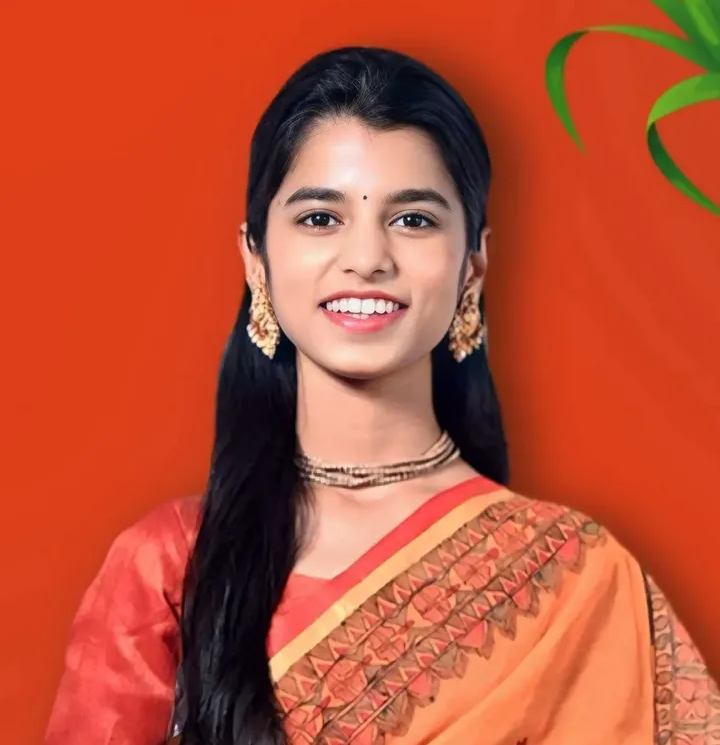
Today let’s talk about Maithili Thakur Biography: In the vast landscape of Indian music, where countless voices compete for attention, one young woman from a small town in Bihar has managed to capture hearts across the nation and beyond. Maithili Thakur, born on July 25, 2000, in Benipatti, Madhubani district of Bihar, represents a new generation of artists who are bridging the gap between traditional folk music and contemporary digital platforms. Her journey from singing in her grandfather’s lap to receiving awards from the Prime Minister of India is a testament to talent, dedication, and the transformative power of preserving cultural heritage in the modern age.
Maithili Thakur Biography
A Name Carrying Sacred Meaning
Maithili’s very name carries profound significance, connecting her to both divine tradition and cultural identity. She was named after the goddess Sita, the revered consort of Lord Rama in Hindu mythology, who is often referred to as Maithili because she was the princess of Mithila. Her name also honors her mother tongue, Maithili, one of India’s scheduled languages spoken primarily in the Mithila region of Bihar and Nepal. This dual significance would prove prophetic, as Maithili would grow up to become one of the most prominent ambassadors of Maithili folk music and the broader cultural heritage of the Mithila region.
Born into a family where music wasn’t just an art form but a way of life, Maithili was destined for a musical journey. Her father, Ramesh Thakur, is a Maithil musician and music teacher who was working in Delhi at the time of her birth. Her mother, Bharti Thakur, provided the nurturing environment that allowed her children’s talents to flourish. The Thakur household was one where the sounds of harmonium, tabla, and classical ragas filled the air, creating an atmosphere where music was as natural as breathing.
The Foundation: Early Training and Family Legacy
Maithili’s musical education began remarkably early, even by the standards of classical Indian music training. At just four years old, she started learning music from her grandfather, who recognized the spark of talent in the young child. Along with her two brothers, Rishav and Ayachi, Maithili was trained by both her grandfather and father in Maithili folk music, Hindustani classical music, harmonium, and tabla. This rigorous training laid the foundation for the versatility that would later become her trademark.
The family’s commitment to music was absolute. In Indian classical music tradition, the guru-shishya parampara, or teacher-student tradition, is sacred, and having musicians in the family meant that Maithili received not just technical training but also the cultural context and emotional depth that makes folk music resonate with audiences. Her brothers became integral parts of her musical journey, with Rishav specializing in tabla and Ayachi developing skills as both a singer and percussionist. The three siblings would eventually become known as a musical trio, performing together and supporting each other’s artistry.
Maithili Thakur Pivotal Move to Delhi
When Maithili was around six years old, her father made a decision that would change the trajectory of her life. Recognizing his daughter’s exceptional potential, Ramesh Thakur relocated the entire family from Benipatti to Dwarka in New Delhi. This move was driven by a desire to provide better opportunities for his children’s musical development. While Benipatti offered rich cultural traditions and authentic folk music roots, Delhi provided access to better training facilities, exposure to diverse musical influences, and platforms where young talent could be showcased.
The transition wasn’t without its challenges. Maithili was home-schooled until the fifth standard because schools were far from their home, requiring the family to balance her formal education with intensive musical training. This arrangement allowed her to dedicate more time to music while still receiving basic education. The sacrifice and commitment shown by her family during these early years demonstrated their belief in her potential and their willingness to invest everything in nurturing her talent.
Living in Delhi exposed Maithili to a broader musical landscape while she maintained her grounding in Maithili folk traditions. She learned to appreciate different musical styles, understand what urban audiences responded to, and develop the versatility that would later allow her to sing in multiple Indian languages including Hindi, Bengali, Urdu, Marathi, Bhojpuri, Punjabi, Tamil, English, Maithili, Awadhi, and Magahi. This multilingual ability would become one of her greatest assets, allowing her to connect with diverse audiences across India.
The Early Years: Maithili Thakur Competitions and Rejections
Maithili’s journey to fame was far from smooth. In 2011, when she was just eleven years old, she made her television debut on Sa Re Ga Ma Pa Little Champs, a popular singing reality show on Zee TV. While the experience introduced her to the world of television and competitive singing, she did not win the competition. This early setback could have been discouraging, but it only strengthened her resolve.
Four years later, in 2015, she auditioned for Indian Idol Junior on Sony TV. She managed to reach the Top 20, showcasing her talent to a national audience, but once again, she didn’t win the title. What many don’t know is that between these visible appearances, Maithili auditioned for multiple reality shows and faced rejection six times. Even after reaching the Top 20 in competitions, she found herself eliminated, each rejection a painful reminder of how competitive the Indian music industry is.
These repeated rejections were crucial in shaping Maithili’s character and artistic identity. Rather than causing her to abandon her dreams or compromise her artistic integrity by trying to fit into commercial molds, these experiences taught her resilience. She learned that success in the entertainment industry requires not just talent but also timing, persistence, and sometimes a bit of luck. More importantly, she remained committed to her roots in classical and folk music, refusing to abandon her cultural heritage in pursuit of commercial success.
Throughout this period, she was a five-time winner in the classical music category at the Delhi State Level Competition, demonstrating that while television success eluded her, her mastery of classical music was being recognized by those who understood the nuances of the art form. These local victories provided validation and encouragement during what must have been a frustrating time.
Maithili Thakur Breakthrough: Rising Star
The year 2017 marked the turning point in Maithili Thakur’s career. She participated in Colors TV and India’s first live singing reality show, Rising Star, and this time, everything aligned perfectly. From the very first round, Maithili’s performances captured the nation’s attention. When she sang “Om Namah Shivaya,” a powerful devotional song dedicated to Lord Shiva, with such depth and spiritual intensity that it earned her a direct entry into the finals. Becoming the show’s first finalist was a vindication of all the years of training, all the rejections, and all the faith her family had placed in her abilities.
Throughout Rising Star, Maithili consistently delivered performances that showcased not just her technical prowess but also her ability to connect emotionally with audiences. She specialized in performing traditional folk songs and classical compositions, bringing to the mainstream television audience sounds and styles that were often overlooked in favor of more commercial Bollywood music. Her authenticity resonated with viewers who were hungry for something genuine and culturally rooted.
The finale of Rising Star came down to a nail-biting finish. Maithili ended as the runner-up, losing by just two votes. While coming in second place might have been disappointing, the exposure she gained from Rising Star proved more valuable than the winner’s trophy. Her performances had been viewed by millions, her name had become recognizable across India, and most importantly, she had demonstrated that there was a substantial audience for traditional folk and classical music presented in an accessible, engaging format.
Following the show, her internet popularity soared dramatically. Videos of her performances were shared widely on social media platforms, introducing her to audiences who might never have watched the television show. This was the beginning of her transformation from television contestant to digital phenomenon.
The Digital Revolution: Maithili Thakur YouTube and Social Media Stardom
After Rising Star, Maithili and her brothers made a strategic decision that would define the next phase of their careers. Rather than waiting for television opportunities or record label contracts, they took control of their own narrative by creating content directly for digital platforms. They launched a YouTube channel where they posted regular performances, and the response was overwhelming.
Their videos on YouTube and Facebook began garnering views ranging from seventy thousand to seven million, a remarkable achievement for content focused primarily on classical and folk music. In an era dominated by pop music and Bollywood covers, the Thakur siblings proved that there was a massive, underserved audience hungry for traditional Indian music performed with authenticity and skill. Maithili’s melodious voice, combined with Rishav’s tabla accompaniment and Ayachi’s vocal and percussion support, created a complete musical experience that needed no elaborate production or commercial gimmicks.
The success on digital platforms was transformative in multiple ways. First, it provided financial independence, allowing them to sustain their musical careers without compromising their artistic vision to please television producers or music labels. Second, it gave them direct connection with their audience, allowing them to understand what resonated and build a loyal fan base. Third, it positioned them as pioneers in bringing traditional Indian music to younger, digitally-native audiences who might never have discovered folk music through conventional channels.
One of their most successful ventures on YouTube has been their ongoing series of performances of the Ramcharitmanas, the sacred text by Tulsidas that tells the story of Lord Rama. This Manas Path, where they sing verses from the epic, has been hugely successful, connecting them with devotionally-minded audiences across India and the Indian diaspora worldwide. As of April 2024, they had reached their 302nd episode, covering the 236th couplet of the Ayodhya Kanda section. This consistent, long-term project demonstrates their commitment to using their platform for cultural and spiritual education, not just entertainment.
The Launch of Ya Rabba
In 2016, demonstrating entrepreneurial spirit alongside artistic talent, Maithili launched her debut album titled “Ya Rabba” with Universal Music. The album, created in collaboration with singer Tannishtha Puri, showcased her versatility and her ability to work in both traditional and contemporary musical contexts. Having an album with Universal Music, one of the world’s largest music companies, was a significant achievement for a young artist primarily known for folk and classical music.
The album demonstrated that Maithili wasn’t content to be typecast in a single musical category. While her heart clearly belonged to folk music and her roots in Maithili and Bhojpuri traditions, she was willing to explore and experiment with different styles and genres. This openness to evolution while maintaining core authenticity has been key to her sustained relevance in a rapidly changing musical landscape.
Cultural Ambassador and National Recognition
As Maithili’s fame grew, so did recognition of her role as a cultural ambassador. After the huge success of their videos on Facebook and YouTube, Maithili and her brothers began performing at various national and international events, taking Maithili folk music and Hindustani classical music to stages around the world. These performances introduced international audiences to the rich musical traditions of Bihar and the Mithila region, challenging stereotypes about Indian folk music and demonstrating its sophistication and emotional depth.
In 2019, the Election Commission of India made Maithili and her brothers brand ambassadors of Madhubani, the district of their birth. This official recognition by a government body validated their role as representatives of their region’s cultural heritage. Madhubani is famous for its traditional art form, Madhubani painting, and having the Thakur siblings as ambassadors helped create synergies between visual and musical folk traditions.
The Government of India further recognized her contributions by awarding her the Atal Mithila Samman, an honor that acknowledged her work in preserving and promoting the cultural heritage of the Mithila region. In 2021, she received the Lokmat Sur Jytosna National Music Award from Anurag Thakur, who was then serving as the Information and Broadcasting Minister. These awards from government officials and national institutions demonstrated that Maithili’s work was being recognized not just as entertainment but as a form of cultural preservation and promotion with national significance.
The Historic National Creators Award
The pinnacle of Maithili’s recognition came on March 8, 2024, when Prime Minister Narendra Modi presented her with the Cultural Ambassador of the Year Award at the inaugural National Creators Award ceremony at Bharat Mandapam in New Delhi. This was a historic moment, marking the first time the Government of India formally recognized digital content creators alongside traditional artists, acknowledging the changing landscape of how culture is consumed and shared in the digital age.
The National Creators Award had received over 1.5 lakh nominations across twenty different categories, with approximately ten lakh votes cast during the selection process. Being chosen from such a massive pool of talented creators across diverse fields was a tremendous honor. The fact that a folk singer specializing in regional music won in a national competition that included creators from all fields, entertainment, education, technology, and social advocacy demonstrated the impact of her work and the hunger for authentic cultural content.
The award ceremony itself became memorable not just for the honor but for the personal interaction between Maithili and Prime Minister Modi. When PM Modi invited her to sing after presenting the award, she performed a beautiful hymn, “Dimik Dimik Damru,” dedicated to Lord Shiva, as it was the occasion of Mahashivratri. The Prime Minister, known for his appreciation of Indian cultural traditions, praised her performance and shared a story about a German girl who, despite being born blind, learned to sing South Indian devotional songs in Tamil. This comparison highlighted the universal power of Indian music and the dedication of those who commit to mastering it.
In a moment that went viral on social media, before leaving the stage, Maithili requested a selfie with the Prime Minister. PM Modi responded with humor, saying, “Nowadays one cannot do without selfies,” and graciously posed with her for the photograph. As they took the selfie, Maithili expressed her gratitude, saying, “I met you, thank you very much.” This spontaneous, unscripted moment humanized both the young artist and the nation’s leader, and the video was viewed millions of times, further amplifying Maithili’s visibility and bringing her story to audiences who might not have been familiar with her music.
Maithili Thakur Champion of Madhubani Art
Beyond her musical contributions, Maithili Thakur has played an instrumental role in promoting Madhubani art, the traditional folk art form rooted in the Mithila region of Bihar. Madhubani painting, characterized by intricate geometric patterns and vibrant colors, has been practiced for centuries by the women of the Mithila region, often as a form of storytelling and religious expression.
Maithili creatively weaves elements of this vibrant art into her musical journey, often incorporating its themes and motifs into her performances and visual presentations. Through this fusion of visual and musical folk traditions, she not only enriches her own artistic expression but also brings Madhubani art to a wider, more diverse audience. Her performances sometimes feature backdrops or costumes inspired by Madhubani designs, creating a multisensory experience of Mithila culture.
Leveraging her substantial following on platforms like YouTube and Instagram, where she has over six million followers, Maithili regularly shares content that highlights the history, techniques, and cultural importance of Madhubani painting. Her engaging posts, which often include visuals and stories about the art form, help educate her followers and spark interest in this unique cultural tradition worldwide. By using her musical platform to promote visual art, she creates synergies that benefit the entire cultural ecosystem of the Mithila region.
She actively participates in exhibitions, fairs, and cultural festivals dedicated to traditional Indian art, helping spotlight Madhubani painting and inspiring others to appreciate and support it. Through these artistic contributions and public outreach efforts, Maithili has played a vital role in keeping Madhubani art vibrant and relevant, ensuring its legacy continues to thrive among new audiences both in India and around the world. In an age where traditional art forms often struggle to find relevance among younger generations, her work in connecting traditional visual art with contemporary music and digital media represents an innovative approach to cultural preservation.
The Musical Style: Maithili Thakur Bridging Tradition and Accessibility
What sets Maithili Thakur apart from many folk singers is her ability to make traditional music accessible without diluting its authenticity. She is a trained classical singer with deep expertise in Hindustani classical music, which provides her with a technical foundation that allows her to handle complex ragas and intricate rhythmic patterns. This classical training is evident in her voice control, her understanding of musical structure, and her ability to improvise within traditional frameworks.
However, she specializes in folk forms like Chhath Geet, songs associated with the important Chhath Puja festival celebrated in Bihar, and Kajari Geet, a form of semi-classical music sung during the rainy season. These folk forms, while deeply traditional, are performed by Maithili in ways that appeal to contemporary audiences. She maintains the essential character and emotional content of the songs while presenting them with production values and performance styles that work for modern listeners, whether they’re watching on YouTube, attending a live concert, or hearing her on streaming platforms.
Her repertoire includes devotional bhajans dedicated to various deities, romantic folk songs, seasonal songs tied to agricultural cycles and festivals, classical compositions from the Hindustani tradition, and original songs and covers of popular music. This versatility allows her to connect with diverse audiences while always staying rooted in her primary identity as a preserver and promoter of Maithili and Bihari folk traditions.
The Sibling Synergy: A Musical Family
An essential element of Maithili’s success has been the contribution of her brothers, Rishav and Ayachi Thakur. The three siblings perform together as a unit, with Maithili as the primary vocalist, Rishav on tabla providing rhythmic foundation, and Ayachi contributing both as a singer for background vocals and harmonies and as a percussionist on instruments like the dholak. This family ensemble creates a complete musical experience that doesn’t require elaborate instrumental arrangements or backing tracks.
The chemistry between the siblings is palpable in their performances. Having trained together since childhood, they have an intuitive understanding of each other’s musical sensibilities. Rishav’s tabla playing is perfectly attuned to Maithili’s vocal phrasing, providing dynamic rhythmic support that enhances rather than overpowers her voice. Ayachi’s vocal contributions add depth and texture, creating harmonies and call-and-response patterns that are characteristic of traditional folk music performance.
Performing as a family unit also reinforces the message of cultural transmission and preservation. Indian classical and folk music traditions have historically been passed down through families, with knowledge transferred from generation to generation. By performing together, the Thakur siblings embody this tradition while adapting it to contemporary contexts. Their success demonstrates that traditional family-based musical education remains viable and valuable even in the digital age.
Maithili Thakur Financial Success and Professional Growth
As Maithili’s popularity has grown, so has her financial success, though she has been refreshingly modest about discussing wealth. Her monthly income from YouTube alone is estimated at two to three lakh rupees, a substantial amount that provides financial security and independence. Her complete net worth is estimated at around one crore rupees, accumulated through various revenue streams including YouTube ad revenue, brand ambassadorships and endorsements, performance fees for concerts and events, album sales and streaming royalties, and government awards and honors.
On Instagram, where she maintains a verified account with over six million followers, she identifies herself as an ambassador for various organizations and causes, including child rights advocacy for the National Commission for Protection of Child Rights, ambassador for the National Institute of Disaster Management, and partnerships with commercial brands. Her Instagram bio includes contact information for event and brand queries, indicating a professional approach to managing her career and commercial opportunities.
This financial success is particularly significant given that it comes primarily from traditional and folk music rather than commercial Bollywood playback singing. It demonstrates that artists can build sustainable careers by staying true to their cultural roots and artistic vision, provided they leverage modern platforms and business approaches effectively. Maithili’s success provides a roadmap for other traditional artists seeking to build careers in the digital age without compromising their artistic integrity.
The Political Turn: Maithili Thakur Entering Electoral Politics
In a surprising development in 2025, several media outlets reported that Maithili Thakur was considering entering politics ahead of the Bihar Legislative Assembly elections. She held meetings with Bharatiya Janata Party leaders, including Vinod Tawde and Union Minister Nityanand Rai, prompting widespread speculation about a possible candidature from her native constituency of Benipatti in Madhubani district, where she would have had natural support due to her fame and her family’s roots.
On October 14, 2025, Maithili formally joined the BJP and received a ticket to contest from the Alinagar assembly constituency. This decision to enter electoral politics at just twenty-five years old represented a significant departure from her musical career, though it also aligned with a tradition in India of artists and cultural figures transitioning into politics. Her entry was likely motivated by a desire to give back to her home state of Bihar and to use political power to further promote and preserve the cultural traditions she holds dear.
The move into politics was not without controversy. Some fans worried that partisan political involvement might compromise her status as a cultural ambassador who should ideally transcend political divisions. Others questioned whether someone so young and without political experience was ready for the often-brutal world of electoral politics. However, supporters argued that her deep connection to Bihar’s culture, her understanding of the state’s challenges, and her proven ability to communicate with people made her well-suited for political leadership.
As of the time of this writing, the results of the 2025 Bihar Legislative Assembly election are still pending, and Maithili’s political future remains uncertain. Regardless of the electoral outcome, her decision to enter politics represents another dimension of her commitment to serving her community and her region, extending beyond cultural preservation into direct civic engagement.
Maithili Thakur Personal Life and Values
Despite her fame and public visibility, Maithili has maintained a relatively private personal life. She remains unmarried and focused primarily on her musical career and, more recently, her political ambitions. In interviews, she consistently credits her father, Ramesh Thakur, for all her success, acknowledging his vision in recognizing her potential, his sacrifice in relocating the family to Delhi, and his dedication in training her and her brothers.
Her relationship with her mother, Bharti Thakur, while less frequently discussed in public interviews, has been equally important in providing the emotional support and stable home environment necessary for the children to flourish artistically. The entire Thakur family seems to operate as a unit, with each member playing their role in supporting the collective success of the siblings.
Maithili’s values are evident in the choices she has made throughout her career. She has consistently chosen authenticity over commercial success, performing traditional folk songs rather than chasing Bollywood playback opportunities that might have been more lucrative but less culturally meaningful. She has used her platform not just for self-promotion but for educating audiences about Mithila culture, Madhubani art, and the importance of preserving India’s diverse folk traditions. Her commitment to singing devotional bhajans and performing the Ramcharitmanas on YouTube demonstrates a spiritual dimension to her work that goes beyond mere entertainment.
Her ambassadorships for child rights and disaster management indicate a sense of social responsibility and a desire to use her influence for causes beyond music and culture. These commitments suggest a well-rounded individual who understands that public figures have obligations to contribute to society in multiple ways.
The Impact: Maithili Thakur Inspiring a New Generation
Perhaps Maithili Thakur’s greatest contribution has been inspiring a new generation of young people to take pride in their regional cultures and traditional art forms. In an India where urbanization and globalization often lead young people to abandon regional languages, folk music, and traditional practices in favor of more cosmopolitan or Western cultural markers, Maithili represents a counter-narrative. She demonstrates that one can be rooted in tradition while being thoroughly modern, that folk music can coexist with digital platforms, and that cultural preservation can be both personally fulfilling and financially viable.
For young women in Bihar and other parts of rural India, Maithili’s success is particularly inspiring. She shows that talent and dedication can overcome geographical limitations, that rejection and failure need not be permanent, and that staying true to one’s roots can be a path to success rather than an obstacle to it. Her journey from Benipatti to receiving awards from the Prime Minister proves that the Indian dream is available to those from small towns and rural areas, not just to urban elites with established connections in the entertainment industry.
For the Mithila region specifically, Maithili has been a powerful advocate and representative. She has brought international attention to the region’s cultural richness, challenged negative stereotypes about Bihar, and provided economic opportunities through cultural tourism and increased interest in Madhubani art. Local artists and musicians have benefited from the attention she has brought to Mithila culture, and her success has encouraged parents in the region to support their children’s interest in traditional arts rather than viewing them as economically unviable pursuits.
Maithili Thakur Challenges and Future Directions
Despite her remarkable success, Maithili faces ongoing challenges. The Indian music industry, particularly Bollywood playback singing, remains dominated by a relatively small group of established singers and by commercial considerations that often favor generic, mass-market appeal over authentic folk traditions. While Maithili has carved out her own niche, breaking into mainstream playback singing or achieving the kind of commercial success enjoyed by pop artists would require compromises she may be unwilling to make.
The sustainability of a career based primarily on YouTube and social media is also a concern. Platform algorithms change, audience preferences evolve, and maintaining relevance requires constant content creation, which can be exhausting and may leave little time for artistic development and experimentation. The pressure to regularly produce content that generates views and engagement might eventually conflict with the slower, more contemplative process of mastering traditional art forms and creating meaningful cultural work.
Her entry into politics introduces new uncertainties. Political careers are unpredictable, and electoral success requires skills quite different from those needed for musical performance. If she wins and becomes an MLA, she will need to balance legislative duties with her musical career, and partisan political involvement might alienate some of her audience. If she loses, she will need to navigate the disappointment while returning to her musical career without being labeled as someone who failed at politics.
Looking forward, Maithili has several potential paths. She could continue focusing on digital content creation and live performances, building on her established success and further expanding her audience domestically and internationally. She could transition into music education and mentorship, using her knowledge and experience to train the next generation of folk and classical musicians. She could pursue a political career, using her fame and cultural credibility as a foundation for political leadership in Bihar. She could explore fusion projects, collaborating with musicians from other genres to create innovative music that honors traditional roots while pushing artistic boundaries. She could focus on cultural documentation, recording and preserving endangered folk songs and musical traditions from Bihar and neighboring regions before they disappear.
Whatever direction she chooses, Maithili Thakur has already secured her place as one of the most important folk musicians of her generation and a crucial link in the chain of cultural transmission that connects contemporary India with its traditional past.
Frequently Asked Questions about Maithili Thakur
Who is Maithili Thakur and what makes her special?
Maithili Thakur is an Indian playback singer, politician, and cultural ambassador born on July 25, 2000, in Benipatti, Madhubani district, Bihar. She is trained in both Indian classical music and folk music, specializing in traditional forms from the Mithila region of Bihar including Maithili folk songs, Chhath Geet, and Kajari Geet. What makes her particularly special is her ability to bridge tradition and modernity by presenting authentic folk music on digital platforms like YouTube and Instagram, where she has amassed millions of followers. She became nationally famous as the runner-up on the 2017 singing reality show Rising Star, losing by just two votes in the finale. Along with her two brothers Rishav on tabla and Ayachi on vocals and percussion, she performs as a family musical trio that has brought Bihar’s rich musical heritage to audiences worldwide. Her multilingual abilities allow her to sing in Hindi, Bengali, Maithili, Urdu, Marathi, Bhojpuri, Punjabi, Tamil, English, and other Indian languages. In 2024, she received the Cultural Ambassador of the Year Award from Prime Minister Narendra Modi at the inaugural National Creators Award, recognizing her role in preserving and promoting Indian cultural heritage through digital platforms.
What awards and recognition has Maithili Thakur received?
Maithili Thakur has received numerous prestigious awards throughout her career, demonstrating recognition from both government institutions and the public. She was a five-time winner in the classical music category at the Delhi State Level Competition during her formative years. The Government of India awarded her the Atal Mithila Samman for her contributions to promoting Mithila culture. In 2019, the Election Commission of India made her and her brothers brand ambassadors of Madhubani district. In 2021, she received the Lokmat Sur Jytosna National Music Award from Anurag Thakur, who was then the Information and Broadcasting Minister. Her most significant recognition came on March 8, 2024, when Prime Minister Narendra Modi personally presented her with the Cultural Ambassador of the Year Award at the first-ever National Creators Award ceremony at Bharat Mandapam in New Delhi. This historic award, selected from over 1.5 lakh nominations and 10 lakh votes across twenty categories, recognized her work in using digital platforms to promote Indian cultural heritage. She has also been appointed as an ambassador for various causes including child rights advocacy with the National Commission for Protection of Child Rights and the National Institute of Disaster Management.
How did Maithili Thakur become famous?
Maithili’s path to fame involved years of training, multiple rejections, and eventual breakthrough through television and digital media. She began learning music at age four from her grandfather and father, and when she was six, her family relocated from Bihar to Delhi to provide better opportunities for her musical development. She was home-schooled until fifth grade to allow more time for intensive music training. Her first television appearance was in 2011 on Sa Re Ga Ma Pa Little Champs, followed by Indian Idol Junior in 2015 where she reached the Top 20. Despite facing rejection from reality shows six times, she persisted. Her major breakthrough came in 2017 when she participated in Rising Star on Colors TV, becoming the show’s first finalist after her rendition of “Om Namah Shivaya” earned her direct entry to the finals. Though she finished as runner-up by just two votes, the exposure dramatically increased her visibility. Following the show, she and her brothers strategically leveraged digital platforms, creating a YouTube channel where their performances of traditional folk songs and devotional music garnered views ranging from 70,000 to 7 million. Their consistent content creation, particularly their ongoing series performing the Ramcharitmanas, built a loyal following and established them as pioneers in bringing traditional Indian music to digital-native audiences.
What is Maithili Thakur’s connection to Madhubani art?
Maithili Thakur has played an instrumental role in promoting Madhubani art, the traditional folk art form rooted in the Mithila region of Bihar. Madhubani painting is characterized by intricate geometric patterns, vibrant colors, and themes drawn from mythology and nature, traditionally practiced by women of the region. Maithili creatively integrates elements of this visual art into her musical performances, often incorporating Madhubani themes and motifs into her stage presentations, costumes, and visual backdrops, creating a multisensory experience of Mithila culture. Using her substantial social media following of over six million on Instagram and millions more on YouTube, she regularly shares content highlighting the history, techniques, and cultural importance of Madhubani painting. Her posts include visuals, stories, and educational content about the art form, helping to spark international interest in this traditional craft. She actively participates in cultural festivals, exhibitions, and fairs dedicated to traditional Indian art, where she helps spotlight Madhubani painting alongside her musical performances. Through this fusion of musical and visual folk traditions, she has brought Madhubani art to audiences who might never have encountered it otherwise, helping ensure its survival and relevance in the modern era. This work earned her recognition as a brand ambassador for Madhubani district by the Election Commission in 2019.
Has Maithili Thakur entered politics?
Yes, in a significant career development in 2025, Maithili Thakur entered electoral politics by joining the Bharatiya Janata Party. After speculation emerged from her meetings with BJP leaders including Vinod Tawde and Union Minister Nityanand Rai, she formally joined the party on October 14, 2025. She received a BJP ticket to contest the 2025 Bihar Legislative Assembly election from the Alinagar assembly constituency, rather than from her native Benipatti constituency as had initially been speculated. This decision to enter politics at age twenty-five represents a departure from her primary identity as a musician and cultural ambassador, though it aligns with a tradition in India of artists transitioning into political leadership. Her political entry has sparked both support and concern among her fans. Supporters argue that her deep connection to Bihar’s culture, her understanding of the state’s challenges, and her proven communication abilities make her well-suited for political leadership, and that her platform could advance causes related to cultural preservation and regional development. Critics worry that partisan political involvement might compromise her role as a cultural ambassador who ideally should transcend political divisions. As of this writing, the election results are pending, and whether she will successfully transition from cultural icon to political leader remains to be seen.
Conclusion
Maithili Thakur’s story is ultimately about the power of authenticity in an age often characterized by superficiality, the viability of traditional art forms in the digital era, and the possibilities available to those who refuse to let circumstances define their potential. Born in a small town in one of India’s poorest states, home-schooled because schools were too far away, facing repeated rejection from television competitions, she could easily have become another footnote in the long list of talented individuals whose gifts went unrecognized.
Instead, through a combination of exceptional talent, rigorous training, family support, strategic use of digital platforms, and unwavering commitment to her cultural roots, she has become a national figure. She has sung for Prime Ministers, won prestigious awards, amassed millions of followers, achieved financial success, and most importantly, played a crucial role in preserving and promoting the folk music traditions of the Mithila region.
What makes Maithili’s achievement particularly significant is that she has accomplished all this while remaining true to her artistic vision. She hasn’t had to abandon Maithili folk songs for Bollywood playback to achieve success. She hasn’t had to leave behind classical music traditions to appeal to mass audiences. She hasn’t had to present herself as anything other than what she is: a deeply talented musician rooted in her culture and committed to sharing it with the world.
Her journey offers important lessons for young artists everywhere. It demonstrates that rejection is not permanent, that traditional art forms can find enthusiastic audiences if presented accessibly, that cultural authenticity can coexist with commercial success, that digital platforms can democratize access to audiences and opportunities, and that family support and proper training provide foundations for sustainable careers. Most fundamentally, it shows that excellence, persistence, and authenticity will eventually be recognized and rewarded.