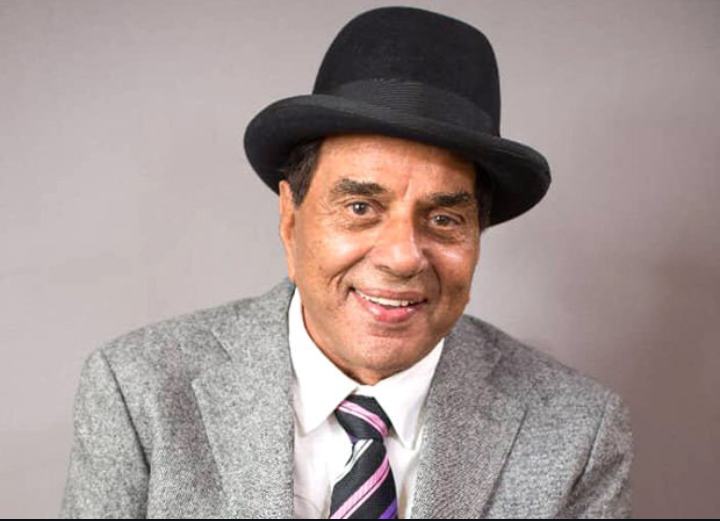
Who is Dharmendra?
Today let’s talk about Dharmendra Biography: On November 24, 2025, the world of Indian cinema mourned the passing of one of its brightest stars. Dharmendra Kewal Krishan Deol, known simply and affectionately as Dharmendra, passed away at the age of 89, leaving behind a legacy that spans 65 years and over 300 films. Widely considered one of the most handsome and commercially successful film stars in the history of Indian cinema, Dharmendra’s journey from a small village in Punjab to the pinnacle of Bollywood stardom remains one of the most inspiring stories in the annals of Indian entertainment.
Dharmendra Biography
Dharmendra Humble Beginnings in Punjab
Born on December 8, 1935, in the village of Nasrali in Khanna tehsil, Ludhiana district, Punjab, Dharam Singh Deol entered the world into a modest Jat Sikh family. His father, Kewal Kishan Singh Deol, was a school headmaster, and his mother, Satwant Kaur, raised him along with five other siblings in an environment where education was valued but resources were limited. Young Dharam spent his early childhood in the village of Sahnewal, where he was a reluctant student who often troubled his mother while being dragged to school.
Despite his initial resistance to formal education, Dharmendra completed his high school education at Government Senior Secondary School in Lalton Kalan, Ludhiana, and went on to Ramgarhia College in Phagwara for his intermediate education in 1952. But it was not academics that captured his imagination. From a very young age, Dharmendra developed a fascination with movies, particularly with the actress Suraiya. He would walk miles to watch her film Dillagi, reportedly seeing it more than forty times. This early passion for cinema planted the seeds of what would become an extraordinary career.
The turning point came when his mother spotted an advertisement in Filmfare magazine for a talent hunt organized by legendary filmmakers Bimal Roy and Guru Dutt. Encouraged by her, Dharmendra traveled to Malerkotla to get his portfolio done by a photographer named Jaan Mohammed and sent in his application. In 1958, he traveled to Bombay to participate in the contest and won the New Talent Hunt Award, catching the attention of members of the film industry. This victory would change his life forever, though the path ahead would not be without its struggles.
Dharmendra Struggle and the Breakthrough
Dharmendra made his debut in 1960 with Arjun Hingorani’s Dil Bhi Tera Hum Bhi Tere, a film that failed to make any significant impact at the box office. The early years of his career were marked by challenges as he auditioned for roles and struggled to make ends meet in the competitive world of Bombay cinema. He appeared in several films in the early 1960s, often playing romantic leads in woman-oriented films where the female protagonist’s role overshadowed his own, working opposite established actresses like Meena Kumari, Nutan, Mala Sinha, and Sharmila Tagore.
His breakthrough came in 1964 when he co-starred alongside Rajendra Kumar and Saira Banu in Mohan Kumar’s Ayee Milan Ki Bela. The film became a superhit, and despite playing the antagonist, Dharmendra was noticed by audiences and received a nomination in the Filmfare Award for Best Supporting Actor category. That same year, he played the lead role in Chetan Anand’s war drama Haqeeqat, based on the Sino-Indian War of 1962. The film proved to be a major critical and commercial success, with Mohammed Rafi’s solo song becoming hugely popular among the masses.
However, it was 1966’s Phool Aur Patthar that truly catapulted Dharmendra to stardom and established him as a solo lead hero. Portraying a brooding, rugged character with intense performances, he struck a chord with audiences and the film became the highest-grossing film of that year. This was also his first action film, marking the beginning of his transformation from romantic hero to action star. The film earned him his first Filmfare nomination for Best Actor and changed the trajectory of his career forever.
The Action King and the He-Man Era
Throughout the late 1960s and into the 1970s, Dharmendra solidified his position as one of Bollywood’s biggest stars. In 1971, he starred in Raj Khosla’s action drama Mera Gaon Mera Desh, which went on to become an all-time blockbuster and cemented his image as an action hero. The film was so successful that it shifted the entire industry from romantic to action films. His performance earned him his second nomination in the Filmfare Award for Best Actor category.
The early to mid-1970s represented Dharmendra’s artistic and commercial peak. He delivered hit after hit, including Jugnu in 1973, which proved to be a blockbuster in India as well as the Soviet Union and was even remade in Tamil and Telugu. That same year, he appeared in Yaadon Ki Baaraat, widely identified as the first masala film of Indian cinema, which became another blockbuster. His heroics in films like Raja Jani, Loafer, Jheel Ke Us Paar, and countless others were remarkable and unforgettable, earning him the nickname “He-Man” for his powerful physique, tough appearance, and unrivaled action sequences.
With his masculine body, charming looks, and powerful dialogue delivery, Dharmendra became the epitome of masculinity in Indian cinema. At the peak of his career, he was recognized as one of the world’s most handsome men. Even veteran actor Dilip Kumar reportedly said that Dharmendra was the most handsome man he had ever seen. His fitness and physique set new trends for Bollywood heroes and inspired future stars like Salman Khan and Akshay Kumar.
Dharmendra Sholay and the Partnership with Amitabh Bachchan
The year 1975 brought one of the most significant films in Indian cinema history, and Dharmendra was at its center. Ramesh Sippy’s Sholay, released on August 15, Indian Independence Day, would go on to become not just a blockbuster but a cultural phenomenon. Dharmendra played Veeru, one half of the iconic duo alongside Amitabh Bachchan’s Jai. The film is now listed as one of the top 25 must-see Bollywood films of all time and is considered one of the greatest films in the history of Indian cinema.
Interestingly, during the shoot of Sholay, there’s a famous anecdote about Dharmendra’s determination to spend time with his co-star Hema Malini, whom he was falling in love with. It is said that he paid the light boys twenty rupees each time to disturb scenes where he was teaching Hema to shoot with a revolver, allowing him more opportunities to embrace her during retakes. The story, whether entirely accurate or embellished over time, speaks to the romance that was blooming between the two stars.
Dharmendra’s partnership with Amitabh Bachchan proved to be one of Bollywood’s most successful collaborations. That same year, they also appeared together in Hrishikesh Mukherjee’s light-hearted comedy Chupke Chupke, which received positive responses from critics and became a hit. Though Bachchan was like a newcomer compared to the established Dharmendra during Sholay’s production, the two developed a great bond, and their pairing went on to become a new definition of friendship in Bollywood.
The Most Successful On-Screen Pairing
While Dharmendra worked with many leading ladies throughout his career, his most successful and commercially viable pairing was with Hema Malini. The two starred together in numerous films including Raja Jani, Sharafat, Seeta Aur Geeta, Charas, Maa, Sholay, and Azaad. They were voted as the most good-looking on-screen couple, as both were considered the most handsome and most beautiful actor and actress of their time. Their chemistry was electric, and audiences flocked to see them together.
But what started as professional collaboration soon blossomed into real romance. Dharmendra, who was already married to Prakash Kaur with four children, fell deeply in love with Hema Malini during the making of Sholay in 1975. The relationship created one of Bollywood’s most talked-about romantic scandals. Hema’s parents were initially opposed to the relationship because Dharmendra was already married. According to some accounts, on the day of Hema’s arranged marriage with actor Jeetendra in Madras, Dharmendra entered the marriage hall and was pushed out by Hema’s father. However, Hema Malini refused to marry Jeetendra.
Since the Hindu Marriage Act made it illegal for a Hindu to remarry while the first spouse was still alive, and Prakash Kaur could not be divorced as she was the mother of his four children, Dharmendra found another path. On August 21, 1979, he converted to Islam and changed his name to Dilawar Khan, which allowed him to marry Hema Malini on May 2, 1980, as his second wife. The decision was controversial and even led to lawsuits from two Congress party members under section 420 of the Indian Penal Code, as he had failed to declare his religion when he joined the Janata Party.
A Versatile Actor and Producer
Despite the focus on his action hero image, Dharmendra proved himself to be a remarkably versatile actor. He demonstrated his range in Hrishikesh Mukherjee’s Satyakam, showing depth and nuance in a complex role. In the 1975 film Pratigya, when the choreographer got frustrated trying to teach him proper dance moves for the song “Main Jat Yamla Pagla Deewana,” Dharmendra decided to dance with his natural, unique style, creating an iconic moment that would become one of his trademarks.
Throughout the 1970s and early 1980s, Dharmendra was among the highest-paid actors in Hindi cinema. From 1976 to 1982, he was the second-highest-paid actor along with Vinod Khanna, and from 1987 to 1993, he was the third-highest-paid Hindi actor for A-grade films. He received four Filmfare Best Actor nominations during his career, though he never won in that category. However, his contributions were recognized when he received the Filmfare Lifetime Achievement Award in 1997.
As a producer, Dharmendra launched both his sons into the film industry. He produced Betaab in 1983, which marked the debut of his elder son Sunny Deol and became a major success. In 1995, he launched his younger son Bobby Deol in Barsaat. He also helped launch his nephew Abhay Deol in Socha Na Tha in 2005. Beyond Bollywood, Dharmendra also appeared in several Punjabi films, making his debut in Punjabi cinema with Kankan De Ohle in 1970 and leaving an indelible mark on regional cinema.
Dharmendra Family Life and Personal Relationships
Dharmendra’s personal life was as dramatic as any of his films. His first marriage was to Prakash Kaur in 1954 when he was just 19 years old. From this marriage, he had four children: sons Sunny Deol and Bobby Deol, both of whom became successful actors, and daughters Vijayta Deol Gill and Ajeeta Deol, who were successfully kept away from the Bollywood industry by their mother.
From his second marriage to Hema Malini, he had two daughters: Esha Deol, who became an actress, and Ahana Deol. Interestingly, Dharmendra went on record saying he did not believe the Mumbai film industry was a place suitable for girls. He was unperturbed by his sons joining the industry but was vocal about his displeasure regarding his daughter Esha’s choice of profession. Nevertheless, Esha pursued her acting career.
Throughout his life, Dharmendra maintained complicated relationships with both families. His first wife Prakash Kaur remained legally married to him throughout his life, while he also maintained his marriage with Hema Malini for over four decades. The situation was unusual and often the subject of media scrutiny, but Dharmendra managed to maintain relationships with all his children, working with them in various films throughout his later career.
Dharmendra Political Career and Later Years
In addition to his film career, Dharmendra ventured into politics. He was elected as a Member of Parliament in the 2004 general elections from Bikaner in Rajasthan on a Bharatiya Janata Party ticket. He represented the 14th Lok Sabha of India from 2004 through 2009. During his election campaign, he made a controversial remark that he should be elected Dictator Perpetuus to teach “basic etiquette that democracy requires,” for which he was severely criticized. He was appointed to the standing committee on food, consumer affairs, and civil supplies during his tenure.
After a brief hiatus from acting, Dharmendra made a successful comeback in 2007 with Life in a Metro and Apne, the latter of which saw him appearing alongside both his sons Sunny and Bobby for the first time. The film was both critically acclaimed and commercially successful. That same year, he played a villainous role in Johnny Gaddaar, showcasing his range as an actor even in his seventies.
In 2011, he starred alongside his sons again in Yamla Pagla Deewana, released on January 14, which was a box office success. A sequel, Yamla Pagla Deewana 2, was released in 2013. He also acted with his daughter Esha in his wife Hema Malini’s directorial venture Tell Me O Khuda in 2011. In the same year, Dharmendra replaced Sajid Khan as the male judge of the third series of the popular reality show India’s Got Talent, bringing his charm and experience to a new generation of audiences.
Dharmendra Recognition and Honors
Throughout his illustrious career, Dharmendra received numerous honors recognizing his contributions to Indian cinema. In 1997, he received the Filmfare Lifetime Achievement Award. In 2007, he was honored with the IIFA Lifetime Achievement Award. The pinnacle of recognition came in 2012 when he was bestowed with the Padma Bhushan, India’s third-highest civilian honor, by the Government of India.
In 2011, Rediff listed him as one of the greatest Indian actors of all time. His influence on Indian cinema extends beyond his own performances to the actors he inspired and the trends he set. His action hero persona revolutionized action cinema in India and left an indelible mark on popular culture. The image of Dharmendra riding a motorcycle with a guitar in hand in Sholay remains etched in the collective memory of Indian audiences, symbolizing the epitome of heroism and masculinity.
A Legacy That Lives On
At the time of his passing, Dharmendra owned agricultural land worth more than 88 lakh rupees, non-agricultural land worth more than 52 lakh rupees, and a building in Mumbai worth more than 17 crore rupees. He had a collection of luxury vehicles including a Range Rover, Mercedes Benz S-Class, and a vintage car. His net worth was estimated at around 23 crore rupees as of 2014, though it had likely grown substantially since then.
Beyond material wealth, Dharmendra’s true legacy lies in the indelible mark he left on Indian cinema. He held the record for starring in the highest number of hit films in Hindi cinema, an achievement that speaks to both his talent and his enduring appeal to audiences across generations. His hobbies included cycling, traveling, and watching films, with his all-time favorite movie being Dillagi from 1949, the same film that had sparked his love for cinema as a young boy in Punjab.
Frequently Asked Questions about Dharmendra
How did Dharmendra get into films?
Dharmendra’s entry into films came through a Filmfare magazine talent hunt in 1958 organized by legendary filmmakers Bimal Roy and Guru Dutt. Encouraged by his mother who saw the advertisement, he traveled to Malerkotla to get his portfolio done and then to Bombay to participate in the contest. He won the New Talent Hunt Award, which caught the attention of the film industry and led to his debut in 1960 with Dil Bhi Tera Hum Bhi Tere.
What was Dharmendra’s most iconic film?
While Dharmendra starred in over 300 films, Sholay from 1975 is widely considered his most iconic film. Directed by Ramesh Sippy, this action-adventure film co-starring Amitabh Bachchan became one of the greatest films in the history of Indian cinema and is listed among India’s top 25 must-see Bollywood films of all time. His role as Veeru became legendary, and the film achieved cultural phenomenon status in India.
Why did Dharmendra convert to Islam?
Dharmendra converted to Islam on August 21, 1979, and changed his name to Dilawar Khan to marry actress Hema Malini. He was already married to Prakash Kaur with four children, and under the Hindu Marriage Act, it was illegal for a Hindu to remarry while the first spouse was still alive. Since Prakash Kaur could not be divorced and he had fallen in love with Hema Malini, conversion to Islam allowed him to marry Hema as his second wife on May 2, 1980.
How many children does Dharmendra have?
Dharmendra has six children from his two marriages. From his first marriage to Prakash Kaur, he has four children: sons Sunny Deol and Bobby Deol, both successful Bollywood actors, and daughters Vijayta Deol Gill and Ajeeta Deol. From his second marriage to Hema Malini, he has two daughters: Esha Deol, who became an actress, and Ahana Deol. His nephew Abhay Deol, son of his younger brother Ajit Deol, is also an actor.
What awards and honors did Dharmendra receive?
Dharmendra received numerous awards and honors throughout his career. He received the Filmfare Lifetime Achievement Award in 1997 for his contribution to Indian cinema. In 2007, he received the IIFA Lifetime Achievement Award. The highest honor came in 2012 when he was bestowed with the Padma Bhushan, India’s third-highest civilian honor, by the Government of India. He received four Filmfare Best Actor nominations during his career, though he never won in that category.
Conclusion
The passing of Dharmendra on November 24, 2025, marks the end of an era in Indian cinema. From the small village of Nasrali in Punjab to becoming one of the most beloved and successful actors in Bollywood history, his journey embodies the classic rags-to-riches story that cinema itself loves to tell. But Dharmendra’s life was far more complex and interesting than any script could capture.
He was a man of contradictions: a shy village boy who became the epitome of masculine confidence on screen, a romantic hero who became known as an action star, a family man with two families, a Muslim by conversion who remained deeply connected to his Punjabi Sikh roots, and a matinée idol who successfully transitioned into character roles as he aged. Through it all, he maintained the natural charm and authenticity that first won him the Filmfare talent contest back in 1958.
Dharmendra’s influence on Indian cinema cannot be overstated. He didn’t just act in films; he helped shape what Indian action cinema would become. His “He-Man” persona created a template that countless actors would follow. His willingness to take risks, whether in choosing unconventional roles or in his personal life, showed a courage that extended beyond his on-screen heroics. His collaborations with Amitabh Bachchan redefined male friendship in Bollywood, while his pairing with Hema Malini set standards for on-screen romance.
For his children, Sunny, Bobby, Esha, Ahana, Vijayta, and Ajeeta, he leaves behind not just a famous name but a legacy of resilience, talent, and the ability to reinvent oneself. For his fans, he leaves behind hundreds of films that continue to entertain and inspire. For Indian cinema, he leaves behind a standard of charisma, versatility, and commercial success that few have matched.
As India mourns the loss of its He-Man, we remember not just the action hero who rode motorcycles and fought villains, but the artist who brought depth to his roles, the producer who launched new talent, the politician who served his constituency, and the man who lived life on his own terms. Dharmendra’s smile, his dialogue delivery, his unique dance style, and his larger-than-life presence will continue to live on through his films, ensuring that new generations will discover why he was, and will always remain, one of the greatest stars Indian cinema has ever known. Rest in peace, Dharam ji. Your legacy is eternal.
Leave a Reply