Who is Robert Mugabe
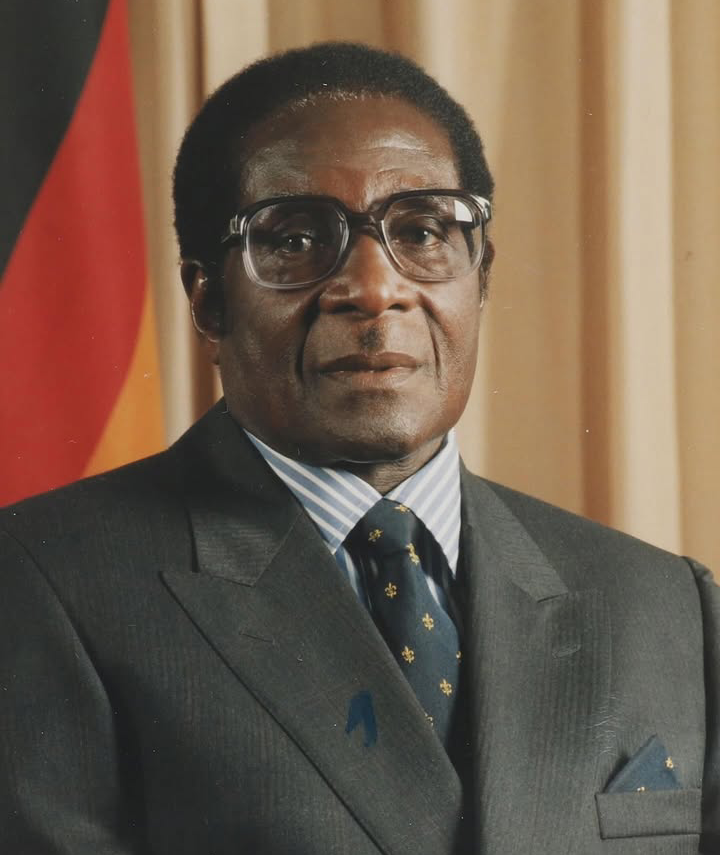
Today let’s talk about Robert Mugabe Biography: Few African leaders have embodied such stark contradictions as Robert Gabriel Mugabe. Born on February 21, 1924, in the small village of Kutama in what was then Southern Rhodesia, he would become both a liberation hero and an oppressive dictator, both a champion of education and a destroyer of his nation’s economy, both a fierce advocate for his people’s dignity and a brutal violator of their human rights. When he died on September 6, 2019, in Singapore at the age of 95, he left behind a legacy so complex and contested that Zimbabwe and the world are still grappling with how to remember him. His 37 years in power transformed Zimbabwe from the breadbasket of Africa into an economic basket case, yet his role in liberating the nation from white minority rule remains undeniable. The story of Robert Mugabe is ultimately the story of how power corrupts, how revolutionary ideals can be betrayed, and how one man’s journey from prisoner to president became a cautionary tale for post-colonial Africa.
Robert Mugabe Biography
Robert Mugabe Roots in Mission Education
Robert Gabriel Mugabe was born into a poor Shona family at the Kutama Mission village in Southern Rhodesia’s Zvimba District, just months after the territory had become a British Crown colony. His father, Gabriel Matibiri, was a carpenter from what is now Malawi, while his mother, Bona, was a devout Christian who worked as a catechist teaching village children. The family belonged to the Zezuru clan, one of the smallest branches of the Shona people, the largest ethnic group in the colony.
Young Robert’s childhood was marked by loss and abandonment. He had five siblings: Miteri, Raphael, Dhonandhe, Sabina, and Bridgette. When Robert was ten years old, his father abandoned the family in 1934, leaving Bona to raise the children alone. The desertion had a profound impact on Robert, who developed an exceptionally close relationship with his mother and became increasingly serious and withdrawn. Two of his brothers died young, losses that further shaped his somber temperament.
Education became Robert’s refuge and his pathway to a different life. He was an outstanding student at the local Kutama mission school operated by the Jesuits and Marist Brothers, demonstrating exceptional intelligence and a voracious appetite for learning. In the little time he allowed himself for play, he enjoyed tennis, though his few losses would frustrate him so deeply that he would immediately isolate himself. This inability to handle defeat gracefully, combined with his defiance when other children teased him, revealed personality traits that would later define his political career: stubbornness, an inability to accept criticism or loss, and a tendency toward isolation when challenged.
After completing elementary education, Mugabe was accepted at Kutama’s St. Francis Xavier College in 1941, graduating in 1945 as a trained teacher. He then taught at various mission schools including Dadaya Mission in Zvishavane, where he met Ndabaningi Sithole, who would later become a key figure in Zimbabwe’s independence struggle. In 1949, Mugabe received a scholarship to the University of Fort Hare in South Africa, one of the premier institutions for black African students during the colonial era.
Robert Mugabe Awakening to Nationalism
At Fort Hare, Mugabe’s political consciousness was awakened. He joined the African National Congress and participated in political discussions that exposed him to Pan-Africanism, Marxism, and anti-colonial thought. He graduated with a Bachelor of Arts degree in History and English in 1952 and returned to Southern Rhodesia that same year. But his education was far from over. Between 1955 and 1958, Mugabe taught in Northern Rhodesia and Ghana, where he met his first wife, Sally Hayfron, a teacher who would become a crucial partner in his political journey.
His time in Ghana during Kwame Nkrumah’s presidency proved transformative. Ghana had achieved independence from Britain in 1957, becoming the first sub-Saharan African colony to do so, and Nkrumah’s socialist policies and Pan-African vision deeply influenced Mugabe’s political thinking. He adopted Marxist and Maoist views that would shape his approach to Zimbabwe’s liberation struggle. Sally, who shared his political convictions, would become not just his wife but his political confidante and anchor during the difficult years ahead.
When Mugabe returned to Southern Rhodesia in May 1960, he encountered a homeland transformed by new injustices. Black families had been displaced and dispossessed, majority rule was denied, and violent protests had erupted in response to the systematic oppression. Mugabe, now firmly committed to the struggle for black majority rule, joined the National Democratic Party and quickly became its publicity secretary. He addressed a protest march of 7,000 people at Salisbury’s town hall, using the Ghana example to advocate for Marxism in the fight for independence.
Robert Mugabe Into the Fire: Prison and Revolution
In 1961, the government banned the NDP, but its supporters regrouped to form the Zimbabwe African People’s Union under Joshua Nkomo. The union rapidly grew to 450,000 members, demonstrating the hunger for change among Zimbabwe’s black majority. However, Mugabe and others grew frustrated with Nkomo’s approach, believing he was too moderate and failed to demand concrete timelines for constitutional change. By April 1963, Mugabe’s frustration had grown so intense that he publicly discussed starting a guerrilla war, defiantly declaring to a policeman that they were taking over the country.
In 1963, Mugabe and Sithole broke with Nkomo to found the Zimbabwe African National Union in Tanzania, a more radical organization committed to socialism and armed struggle. When he returned to Southern Rhodesia later that year, authorities arrested him and sent him to Hwahwa Prison. What followed would be one of the defining periods of Mugabe’s life: eleven years of imprisonment that would forge his political identity and harden his resolve.
In 1965, while Mugabe languished in prison, Prime Minister Ian Smith issued a Unilateral Declaration of Independence, creating the white-ruled state of Rhodesia and triggering international condemnation. Smith’s regime was an unrecognized apartheid state where whites, comprising just five percent of the population, maintained absolute control over the black majority. This declaration sparked the Second Chimurenga, the war for Zimbabwean independence that would last until 1979.
Prison could have destroyed Mugabe, but instead it strengthened him. He taught English to fellow prisoners, maintained secret communications to direct guerrilla operations, and remarkably, earned multiple graduate degrees by correspondence from the University of London, including a Bachelor of Law and Bachelor of Administration. His intellectual pursuits during imprisonment demonstrated his extraordinary discipline and determination. However, the regime’s cruelty was also evident: when Mugabe’s four-year-old son died in 1966, authorities refused to allow him to attend the funeral, a wound that never fully healed.
Robert Mugabe From Prison to Power
In 1974, Prime Minister Smith allowed Mugabe to attend a conference in Lusaka, Zambia. Instead of returning to prison, Mugabe escaped across the border and assembled Rhodesian guerrilla trainees, intensifying the armed struggle. In 1975, he reorganized ZANU and reactivated the armed campaign from Mozambique. By 1977, he had gained full control of both ZANU’s political and military operations, becoming the dominant force in the liberation movement.
The civil war that followed was brutal, with guerrillas operating from bases in Zambia, Mozambique, and Angola, fighting against Smith’s well-equipped forces. Mugabe received arms and training from China, the Soviet Union, and Eastern European countries, though he maintained pragmatic relationships with Western donors. His leadership during this period established him as a formidable revolutionary, ruthless when necessary but also strategic in building international support.
A 1978 accord between Smith and moderate black leaders like Bishop Abel Muzorewa created Zimbabwe Rhodesia with Muzorewa as prime minister, but it lacked legitimacy because ZANU and ZAPU had not participated. The breakthrough came with the 1979 Lancaster House Agreement, brokered by the British, which brought all major parties together. Though Mugabe participated reluctantly, preferring continued armed struggle, he ultimately accepted the compromise that would lead to majority rule while protecting some rights and property of the white minority.
The Promise: Early Years of Independence
In elections held on March 4, 1980, Mugabe’s ZANU-PF won a landslide victory. When Zimbabwe achieved internationally recognized independence on April 18, 1980, Robert Mugabe became the nation’s first prime minister. At his inauguration, he lit the Independence Flame, which was meant to burn eternally as a monument to black majority rule won through seven years of guerrilla warfare. The ceremony symbolized hope, transformation, and the birth of a new nation.
Mugabe’s early years in power were marked by pragmatism and conciliation that surprised many who expected a hardline Marxist approach. Recognizing that Zimbabwe’s economy depended on the skills of the remaining 200,000 whites, including 4,500 commercial farmers, he worked to convince them to stay. He formed a coalition government between his Shona-dominated ZANU-PF and Nkomo’s Ndebele-based ZAPU, preached racial reconciliation, and avoided immediate radical economic transformation.
His government expanded healthcare and education dramatically, creating a widely admired national education system that empowered citizens intellectually and made Zimbabwe one of Africa’s most literate nations. Despite his professed socialist ideology, he largely adhered to mainstream economic policies that maintained stability and growth. During the 1980s, Zimbabwe was considered a success story, the breadbasket of Africa, with a diversified economy, strong agricultural sector, and promising industrial base. Mugabe was hailed as a statesman, a leader who had successfully transitioned from revolutionary to responsible governor.
The Descent: Gukurahundi and One-Party Rule
The promise, however, was short-lived. Beneath the surface of reconciliation, darker currents were flowing. Tensions between ZANU-PF and ZAPU escalated as Mugabe sought to consolidate power. In 1982, he unleashed his North Korean-trained Fifth Brigade into Matabeleland, ZAPU’s stronghold, in what became known as the Gukurahundi. Over five years, this campaign killed at least 20,000 Ndebele civilians in what many historians describe as political genocide aimed at crushing opposition.
The brutality shocked those who had believed Mugabe’s rhetoric about reconciliation. Entire villages were destroyed, suspected dissidents were tortured and murdered, and a reign of terror descended on Matabeleland. The international community remained largely silent, willing to overlook the atrocities in the name of maintaining stability in a newly independent African nation. Mugabe had revealed himself as someone willing to use extreme violence to eliminate opposition, a trait that would characterize his rule increasingly over the decades.
In 1987, after crushing ZAPU resistance, Mugabe changed tactics. He invited ZAPU to merge with ZANU-PF, creating a de facto one-party authoritarian state. In the same year, he made constitutional amendments that abolished the position of prime minister and created an executive presidency, which he assumed on December 30, 1987. He was now head of state, head of government, and commander-in-chief of the armed forces, with few institutional checks on his power. The democratic promise of 1980 had given way to autocratic rule.
Also Read: Amaal Mallik Biography
Robert Mugabe Economic Collapse and Land Seizures
Throughout the 1990s, Zimbabwe’s economy began deteriorating as corruption increased and Mugabe made decisions based more on political calculations than economic sense. His calls for racial reconciliation had failed to stem white emigration, as skilled professionals and farmers left the country sensing the political winds shifting. In 1992, Sally Mugabe died of kidney failure, leaving Robert widowed after a marriage that had been central to his life and work. In 1996, he married Grace Marufu, who had been his mistress and with whom he had already had two children, Bona and Robert Junior, born in 1988 and 1990 respectively.
The turning point came in 2000 when Mugabe’s party was soundly defeated in a constitutional referendum. The proposed constitution would have given the government power to seize white-owned commercial farms without compensation. The defeat enraged Mugabe, who responded by encouraging black Zimbabweans to violently seize white-owned farms without waiting for legal processes. What followed was catastrophic.
Commercial farmers, who had the expertise and infrastructure to produce food efficiently, were driven from their land. The seized farms were often given not to experienced black farmers but to politically connected individuals with little agricultural knowledge. Food production collapsed, leading to severe shortages and famine. The loss of agricultural exports devastated the economy, triggering a downward spiral that would take Zimbabwe from prosperity to poverty in less than a decade.
By 2007, Zimbabwe had the world’s highest inflation rate at 7,600 percent, a figure that would eventually reach incomprehensible levels of hyperinflation. Money became worthless, with trillion-dollar notes unable to buy basic goods. Industries closed, unemployment soared, and millions of Zimbabweans fled to South Africa, Botswana, and other neighboring countries seeking survival. The breadbasket of Africa had become a basket case, dependent on food aid and remittances from its diaspora.
Robert Mugabe Holding Power Through Violence and Fraud
As conditions deteriorated, opposition to Mugabe intensified. In 1999, the Movement for Democratic Change was formed under Morgan Tsvangirai, uniting trade unions and civil society groups fed up with economic collapse. The MDC represented the first serious electoral challenge to Mugabe’s rule, and his response revealed how completely he had abandoned democratic principles.
Elections became increasingly fraudulent. In 2008, Tsvangirai defeated Mugabe in the first round of presidential voting but lacked the threshold to avoid a runoff. Before the second round, Mugabe unleashed a campaign of violence so severe that Tsvangirai withdrew, citing the impossibility of free elections. Mugabe declared victory in an election he effectively ran unopposed, but international pressure eventually forced him into a power-sharing government with Tsvangirai as prime minister.
The sham elections of 2002, 2008, and 2013 were characterized by intimidation, violence against opposition supporters, and manipulation of results. Political opponents were harassed, tortured, and sometimes killed. The state-dominated media published falsehoods and wild accusations designed to instill fear. Zimbabwe had become a repressive state where dissent was dangerous and democratic processes were hollow rituals masking authoritarian control.
Western nations imposed sanctions on Mugabe and his inner circle, though not on Zimbabwe itself. Mugabe responded by blaming all of Zimbabwe’s problems on Western imperialism, using anti-colonial rhetoric to deflect from his own mismanagement and corruption. He portrayed himself as a defender of African sovereignty against neo-colonialism, rhetoric that resonated in some circles despite its disconnect from reality.
The Final Years and Dramatic Fall
As Mugabe aged into his nineties, concerns grew about succession. Grace Mugabe, his second wife, began positioning herself to succeed him, leading to factional battles within ZANU-PF. In November 2017, when Mugabe fired his vice president Emmerson Mnangagwa, who was seen as an alternative to Grace, the military intervened.
In a move that was technically not a coup but functioned as one, the military placed Mugabe under house arrest, and massive protests erupted calling for his removal. After 37 years in power, the man who had once been cheered as a liberator was now reviled by his own people. On November 21, 2017, Robert Mugabe resigned as president, his removal orchestrated by the very system of repressive governance he had created.
In his final years, Mugabe lived quietly in Harare, largely forgotten by the international community that had once lionized or demonized him. He was no longer relevant to Zimbabwe’s politics, though the system he created persisted under new management. When he died on September 6, 2019, in a Singapore hospital where he had been receiving treatment for months, the reaction was mixed. Some mourned the liberation hero who had fought for independence, while others celebrated the end of a tyrant who had ruined their country.
Frequently Asked Questions about Robert Mugabe
How did Robert Mugabe come to power in Zimbabwe?
Robert Mugabe rose to prominence as a leader of the Zimbabwe African National Union during Zimbabwe’s liberation struggle against white minority rule in Rhodesia. After spending eleven years as a political prisoner, he led ZANU’s military and political operations from 1975 onward. Following the 1979 Lancaster House Agreement that ended the civil war, ZANU-PF won a landslide victory in the 1980 elections, and Mugabe became Zimbabwe’s first prime minister when the country achieved independence on April 18, 1980.
What were Robert Mugabe’s major achievements?
Mugabe’s most significant achievement was his role in liberating Zimbabwe from British colonial rule and white minority government, helping to establish an independent nation with black majority rule. In his early years as prime minister, he dramatically expanded access to healthcare and education, creating one of Africa’s most literate populations. He initially practiced racial reconciliation and maintained economic stability, making Zimbabwe prosperous in the 1980s. He also served in prominent international roles, chairing the Non-Aligned Movement, the Organisation of African Unity, and the African Union.
What caused Zimbabwe’s economic collapse under Mugabe?
Zimbabwe’s economic collapse resulted from multiple factors under Mugabe’s rule. The violent seizure of white-owned commercial farms beginning in 2000, combined with giving land to inexperienced political cronies rather than skilled farmers, devastated agricultural production and exports. Widespread corruption, economic mismanagement, and policies that prioritized political loyalty over competence destroyed industries and investment. International sanctions on Mugabe’s regime further isolated the economy. By 2007, Zimbabwe experienced the world’s highest inflation rate at 7,600 percent, eventually reaching hyperinflation that made the currency worthless.
What was the Gukurahundi and why is it significant?
The Gukurahundi was a campaign from 1982 to 1987 in which Mugabe’s North Korean-trained Fifth Brigade killed at least 20,000 Ndebele civilians in Matabeleland, the stronghold of his rival Joshua Nkomo’s ZAPU party. Described by historians as political genocide, it involved torture, village destruction, and systematic violence designed to crush opposition. The campaign revealed Mugabe’s willingness to use extreme brutality against his own citizens and marked the beginning of his transformation from liberation hero to authoritarian dictator. The atrocities remain a deeply painful chapter in Zimbabwe’s history.
How did Robert Mugabe’s rule finally end?
After 37 years in power, Mugabe’s rule ended on November 21, 2017, when he resigned following military intervention. The crisis was triggered when he fired Vice President Emmerson Mnangagwa, who was seen as a rival to Mugabe’s wife Grace, whom Mugabe appeared to be positioning as his successor. The military placed Mugabe under house arrest, and massive protests erupted demanding his removal. Facing impeachment proceedings and abandoned by his own party, the 93-year-old Mugabe resigned. He lived quietly in Harare until his death in Singapore on September 6, 2019
Conclusion
The life of Robert Mugabe represents one of the great tragedies of post-colonial Africa. He began as a brilliant student who became a revolutionary hero, enduring eleven years in prison for his convictions, leading his people to independence, and initially governing with pragmatism and vision. The educated teacher who earned degrees while imprisoned, who spoke eloquently about reconciliation and justice, who expanded education and healthcare, seemed poised to lead Zimbabwe into a prosperous future.
Yet that same man became a brutal dictator who orchestrated the massacre of 20,000 of his own citizens, who destroyed his country’s economy through corruption and mismanagement, who held power through violence and electoral fraud, and who impoverished a nation that had once been prosperous. The contradiction is so stark that it challenges simple narratives about good and evil, heroism and villainy.
What transformed Mugabe from liberator to oppressor? Was it power itself, which corrupts absolutely as Lord Acton warned? Was it the trauma of imprisonment and the death of his son, which hardened his heart? Was it the inability to handle opposition or criticism that had been evident even in his childhood tennis matches? Was it the influence of totalitarian ideologies he embraced in his youth? Or was the brutality always there, merely hidden until circumstances allowed it to emerge?
The answer likely involves all these factors and more. Mugabe’s story demonstrates that revolutionary credentials do not guarantee democratic governance, that fighting oppression does not mean one will not become an oppressor, and that liberation without accountability creates the conditions for new tyrannies. His legacy is not the Zimbabwe he liberated but the Zimbabwe he destroyed, not the education system he built but the economy he ruined, not the hope of 1980 but the despair of 2017.
For Zimbabwe, Mugabe’s passing in 2019 closed a chapter but did not end the story. The repressive system he created persists under new management, with opponents still harassed and opportunities still limited for ordinary citizens. His death removed the man but not the structure of governance he established. As one analyst noted, this toxic system is Mugabe’s enduring legacy.
History will remember Robert Mugabe as a complex figure who contained within himself both the hope and the tragedy of post-colonial Africa. He proved that good intentions are insufficient, that revolutionary heroism does not translate automatically into governance competence, and that holding onto power at any cost ultimately destroys both the leader and the led. In the end, the boy from Kutama who rose to lead a nation became the cautionary tale of what happens when liberation leaders fail to liberate themselves from the very authoritarianism they once fought against. His story remains a warning to all who seek power: the real revolution is not seizing power but knowing when to relinquish it, and the true measure of leadership is not how long one rules but how well one serves.