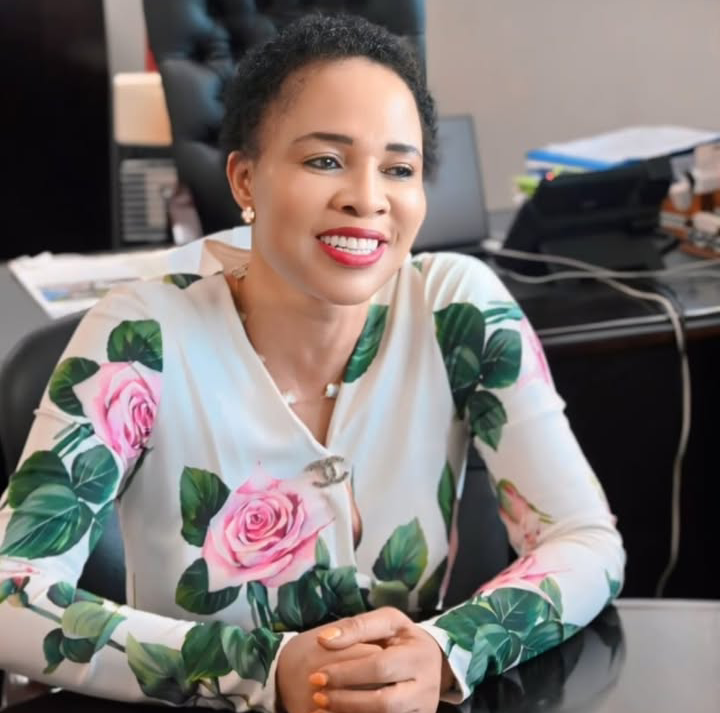
Who is Dr Imogen Maboikanyo Mashazi?
Today let’s talk about Biography of Dr Imogen Maboikanyo Mashazi: In the complex landscape of South African local government, where service delivery challenges meet political intrigue and where the legacy of apartheid continues to shape administrative realities, few figures have been as accomplished and as controversial as Dr. Imogen Maboikanyo Mashazi. As the first female City Manager of the City of Ekurhuleni, one of South Africa’s major metropolitan municipalities, she presided over impressive infrastructure expansion, achieved rare clean audit outcomes, and championed women’s empowerment in government. Yet in December 2025, she finds herself testifying before the Madlanga Commission of Inquiry, facing allegations that she used her position to shield problematic officials and interfere with police oversight. Her story is one of remarkable rise from humble beginnings, significant achievements in public service, and the murky intersection of municipal governance, law enforcement, and alleged corruption that has come to characterize much of South African local government.

Biography of Dr Imogen Maboikanyo Mashazi
Dr Imogen Maboikanyo Mashazi Growing Up in Apartheid South Africa
Dr. Imogen Maboikanyo Mashazi was born in Atteridgeville, Pretoria, a township established in 1939 under apartheid’s segregation policies to house black workers serving the white capital city. Her childhood was spent between Atteridgeville and Soweto, the sprawling township southwest of Johannesburg that became synonymous with black resistance to apartheid. These were not easy places to grow up, particularly during the tumultuous 1970s when black South Africans were fighting for basic human rights and dignity.
Her school years in Soweto coincided with the 1976 student uprisings, a watershed moment in South African history when thousands of black students protested the imposition of Afrikaans as a medium of instruction in schools. What began as a peaceful protest on June 16, 1976, turned into months of violence as police opened fire on students, killing hundreds and sparking nationwide resistance. Growing up amid this turbulence shaped Mashazi’s worldview and her understanding of the struggles facing black South Africans, experiences that would later inform her commitment to public service and improving conditions in historically disadvantaged communities.
Despite the challenges of receiving education under apartheid’s deliberately inferior Bantu Education system, designed to prepare black South Africans for menial labor rather than professional careers, Mashazi persevered. She completed her schooling and set her sights on a career in healthcare, one of the few professional paths readily accessible to black women at the time. Her choice to pursue nursing reflected both practical considerations and a genuine desire to serve her community, to heal and help people who had limited access to quality healthcare.
Dr Imogen Maboikanyo Mashazi Nursing Career at Baragwanath
Dr. Mashazi began her professional journey as a nurse at Chris Hani Baragwanath Hospital, known simply as Baragwanath or Bara, located in Soweto. This institution holds the distinction of being one of the largest hospitals in the world, a sprawling medical complex that serves the healthcare needs of millions of Sowetans and surrounding communities. Working at Baragwanath meant confronting the harsh realities of healthcare in apartheid and post-apartheid South Africa: overcrowding, resource shortages, patients suffering from preventable diseases, and the daily challenge of providing dignity and care in overwhelmed conditions.
Her experience as a nurse on the frontlines of public healthcare profoundly shaped her approach to public service. She witnessed firsthand how policy decisions made in distant government offices translated into life and death consequences for ordinary people. She saw how inadequate infrastructure, insufficient funding, and poorly coordinated services created unnecessary suffering. She also experienced the dedication of healthcare workers who persevered despite impossible odds, maintaining their commitment to patient care even when systems failed them.
This foundation in nursing distinguished Mashazi from many municipal administrators whose careers followed more conventional paths through bureaucracy or politics. She brought to governance a clinical perspective, a focus on outcomes over process, and an understanding that effective public service ultimately means improving the lives of real people with real needs. Her colleagues and observers would later note that she carried the compassion and hands-on problem-solving approach of a nurse into her administrative roles, though critics would also point out that such backgrounds don’t necessarily translate into the political savvy and ethical judgment required for high-level municipal leadership.
Dr Imogen Maboikanyo Mashazi Education and Professional Development
While working as a nurse, Mashazi recognized that advancing in public service would require formal education beyond her nursing qualifications. She pursued higher education at the University of South Africa, known as UNISA, the continent’s premier distance learning institution. UNISA has long served as an educational lifeline for working South Africans who cannot attend traditional universities due to work or family obligations, and it played a crucial role in educating black professionals during and after apartheid.
Through UNISA and other institutions, Mashazi earned qualifications in public health and municipal administration, equipping herself with the knowledge needed for leadership roles in local government. Her educational journey reflected determination and discipline, as she balanced demanding work responsibilities with the rigors of advanced study. She eventually earned a doctorate, though the specific field and institution of her doctoral work have not been widely publicized. The honorific “Dr.” before her name reflects this achievement and added to her credibility as she rose through municipal ranks.
Her educational credentials, combined with her practical healthcare experience, positioned her uniquely for roles at the intersection of public health and municipal governance. In the early 1990s, as South Africa transitioned from apartheid to democracy, she made the shift from nursing to municipal health administration, entering local government just as the country was reimagining how cities would be governed in the new democratic dispensation.
Dr Imogen Maboikanyo Mashazi Rising Through Municipal Ranks
Dr. Mashazi’s career in local government began in the early 1990s during the tumultuous transition period when South Africa was negotiating the end of apartheid and establishing new democratic institutions. She played crucial roles across various municipalities that would later be consolidated to form the City of Ekurhuleni Metropolitan Municipality in 2000. Ekurhuleni, meaning “place of peace” in Tsonga, was created by amalgamating nine former municipalities on Johannesburg’s East Rand, creating South Africa’s third-largest metropolitan area after Johannesburg and Cape Town.
Her impressive career progression saw her hold increasingly senior positions in municipal health departments. She was instrumental in establishing numerous primary healthcare facilities across the region, significantly improving healthcare access in areas that had been deliberately underserved during apartheid. Under her tenure as head of the health department in Ekurhuleni, the metro achieved remarkable public health outcomes. The city attained the highest tuberculosis cure rate nationally at a time when TB was ravaging South African communities, particularly in townships and informal settlements where overcrowding and poverty created ideal conditions for the disease’s spread.
Even more impressively, her leadership contributed to dramatically reducing mother-to-child HIV transmission rates. In a country devastated by the HIV/AIDS epidemic, with millions infected and inadequate government response during the Thabo Mbeki presidency when AIDS denialism dominated policy, reducing vertical transmission represented a genuine life-saving achievement. Every baby born HIV-negative to an HIV-positive mother because of effective prevention programs represented a victory, a life that would not be burdened by a disease that has claimed millions of South African lives.
These accomplishments in public health earned Mashazi recognition and positioned her as a rising star in municipal administration. She had demonstrated not just managerial competence but the ability to deliver measurable improvements in crucial areas affecting vulnerable populations. Her success brought awards and accolades, including Blue Drop and Green Drop awards recognizing excellent water and wastewater management, reflecting her expanding portfolio beyond health into broader municipal service delivery.
Dr Imogen Maboikanyo Mashazi Breaking the Glass Ceiling: First Female City Manager
Dr. Imogen Mashazi’s appointment as City Manager of the City of Ekurhuleni marked a historic achievement. She became the first woman to hold this position, the highest administrative role in the metropolitan municipality. The City Manager serves as the chief accounting officer, responsible for implementing council decisions, managing all municipal departments, overseeing billions in annual spending, and ensuring service delivery to over three million residents across Ekurhuleni’s vast urban landscape.
Her appointment broke a significant glass ceiling in South African local government, where senior administrative positions have been overwhelmingly held by men. The achievement was particularly meaningful given that she had risen from nursing, a feminized profession often undervalued, to the pinnacle of municipal administration. Her success embodied the possibilities of post-apartheid South Africa, where a black woman from a township could reach the highest levels of public service based on merit and performance.
Under her leadership as City Manager, Ekurhuleni’s capital expenditure increased dramatically from 3.9 billion rand to 7 billion rand, fast-tracking vital infrastructure projects that brought electricity, water, and roads to previously disadvantaged communities. This infrastructure expansion represented the physical manifestation of democratic transformation, as services historically reserved for white suburbs were extended to black townships and informal settlements that had been deliberately neglected under apartheid’s spatial planning.
One of her most visible achievements was overseeing the construction of 29 reservoirs and water towers across Ekurhuleni, including Africa’s second-tallest water tower in Benoni. These structures weren’t just impressive engineering feats but essential infrastructure for ensuring reliable water supply to growing communities. In a country where water security is an increasing concern due to aging infrastructure, population growth, and climate change, such investments represented forward-thinking governance.
Dr Imogen Maboikanyo Mashazi Financial Excellence and Clean Audits
Perhaps Dr. Mashazi’s most celebrated achievement as City Manager was the financial governance she oversaw. Under her tenure, Ekurhuleni achieved three consecutive clean audit outcomes from the Auditor-General since the 2019/2020 financial year. In the context of South African local government, where financial mismanagement, irregular expenditure, unauthorized spending, and outright corruption have become depressingly common, clean audits are extraordinarily rare and valuable.
A clean audit means zero unauthorized expenditure, zero wasteful expenditure, and compliance with all relevant legislation and financial management frameworks. It means that every rand spent by the municipality can be accounted for, that spending followed proper procurement processes, and that financial records are accurate and transparent. Achieving one clean audit is noteworthy; achieving three consecutive clean audits represents sustained excellence in financial management.
The city also achieved a 91 percent collection rate under her leadership, meaning that 91 percent of billed revenue was actually collected from residents and businesses. In municipalities across South Africa, collection rates have plummeted as economic conditions worsened, unemployment rose, and residents stopped paying for services they felt were inadequate. Maintaining a 91 percent collection rate required effective credit control, customer service, and maintaining public trust that payments would translate into actual service delivery.
These achievements earned Mashazi numerous accolades. She received the South African Board for Personnel Practice award, multiple Blue Drop and Green Drop awards for water and wastewater management excellence, and the Public Sector Leader Award at the Virtual Top Empowerment Awards. Good Governance Africa, a respected organization promoting transparency and accountability in African governance, recognized her exemplary commitment to efficient governance. These weren’t politically motivated awards but recognition from professional bodies and civil society organizations that her management had delivered measurable results.
Dr Imogen Maboikanyo Mashazi Champion of Women’s Empowerment
Beyond infrastructure and financial management, Dr. Mashazi used her position to advance gender equality in municipal government. In 2017, she established the City Manager’s Women Empowerment Legacy Project, an initiative designed to advance women’s careers in historically male-dominated municipal departments. Local government, particularly in technical fields like engineering, water management, and infrastructure, has been overwhelmingly male, with women often relegated to administrative support roles or softer portfolios like social development.
The Women Empowerment Legacy Project worked to identify talented women in the municipality, provide them with mentorship and development opportunities, and create pathways for advancement into senior positions. The initiative expanded its positive impact throughout all city departments, not just traditionally male-dominated ones. Mashazi understood from personal experience the barriers women face in advancing to leadership positions, and she used her authority to create opportunities for others who might face similar challenges.
Colleagues and observers described Mashazi as a passionate advocate for women’s rights and empowerment, someone willing to challenge patriarchal norms and push for women’s representation in decision-making. She was seen as a hands-on leader rooted in frontline public service values, a former nurse who carried compassion into administration but also a figure willing to stand firm and exercise authority in environments where women leaders are often undermined or dismissed.
Her leadership style combined toughness with empathy, decisiveness with consultation. She had to navigate the complex politics of municipal government, managing relationships with elected councilors who set policy direction, balancing the interests of different political factions within the ruling ANC, responding to demands from communities for improved services, and managing tens of thousands of municipal employees across dozens of departments.
The Shadows: Allegations and Controversy
Despite these impressive accomplishments, Dr. Mashazi’s tenure was not without controversy. By 2025, serious questions were being raised about her management of the Ekurhuleni Metro Police Department and her relationship with certain senior police officials, particularly Julius Mkhwanazi, the suspended acting head of EMPD. The allegations against her came into sharp focus when she was called to testify before the Madlanga Commission of Inquiry in December 2025.
The Madlanga Commission, officially investigating criminality, political interference, and corruption in South Africa’s criminal justice system, had heard disturbing evidence about mafia-style influence in the EMPD. Julius Mkhwanazi, whose name has been repeatedly linked to Mashazi, appears in a circulating video proclaiming that he would “take a bullet” for her, language that suggests a relationship going beyond normal professional loyalty between a City Manager and a department head.
Evidence presented to the commission painted a troubling portrait of Mkhwanazi’s character and alleged criminal involvement. An Independent Police Investigative Directorate report alleged that he had unlawfully entered into an agreement with suspected underworld figure Vusimuzi “Cat” Matlala, raising serious questions about the extent of criminal influence in the municipal police service. IPID recommended action against Mkhwanazi for authorizing blue lights to be fitted to this underworld figure’s fleet and for illegally facilitating the transfer of municipal resources to him.
Dr. Mashazi is accused of using her position to shield Mkhwanazi from disciplinary action and criminal investigation, allegedly interfering with oversight processes to protect him from consequences. More troublingly, evidence suggested she rewarded officials loyal to her with substantial salary increases, in one case up to 600,000 rand, creating what critics characterized as a patronage network that prioritized personal loyalty over competence and integrity.
On Thursday before her Monday testimony, the Madlanga Commission played a video showing Mashazi at what appeared to be a Christmas party, surrounded by colleagues singing, clapping, and referring to her in what observers described as cult-like adulation. The video suggested a workplace culture where the City Manager was not just respected but venerated, raising questions about whether appropriate checks and balances existed on her authority.
Dr Imogen Maboikanyo Mashazi Testifying Before the Commission
On December 1, 2025, Dr. Imogen Mashazi appeared before the Madlanga Commission in Pretoria to answer questions about these allegations. Her testimony was contentious from the start. She complained that the commission had prejudiced her by not giving her adequate time to prepare her response to the serious allegations against her. She also alleged that she had been forced to retire from her City Manager position by Ekurhuleni Mayor Doctor Xhakaza, suggesting that her departure was not voluntary but rather a removal engineered by political actors seeking to silence or scapegoat her.
Rather than simply defending herself against the allegations that she had protected Mkhwanazi, Mashazi went on the offensive. She accused Isaac Mapiyeye, the suspended chief of the EMPD, of subjecting female subordinates to sexual harassment and even rape. She claimed that it had been reported to her that Mapiyeye fathered multiple children with vulnerable subordinates, using his position of authority to exploit women who feared retaliation if they refused his advances or reported his behavior.
These allegations, if true, paint a horrifying picture of sexual predation and abuse of power within the EMPD. Mashazi positioned herself as someone who had tried to address these issues but who was now being blamed for problems that extended far beyond her control. She suggested that powerful forces were using the commission to destroy her reputation and deflect attention from the real criminals and abusers within the police department.
The testimony revealed the complex and murky dynamics of municipal governance, where personal relationships, political factions, criminal elements, and legitimate governance concerns all intersect in ways that make determining truth extraordinarily difficult. Was Mashazi a dedicated public servant who tried to address genuine problems and is now being scapegoated by political enemies? Or was she someone who built a patronage network, protected problematic officials out of personal loyalty, and is now trying to deflect blame by making counter-allegations?
A Legacy in Question
The City of Ekurhuleni had celebrated Dr. Mashazi’s service in July 2025, just months before the commission allegations dominated headlines. In an official press release, the city praised her extraordinary career and invaluable contributions, noting that her enduring dedication had significantly enhanced service delivery and governance standards. The statement extended heartfelt gratitude for her leadership, commitment, and indelible impact, wishing her continued success in future endeavors.
That official celebration now seems like a distant memory, replaced by daily headlines about commission testimony, allegations, and counter-allegations. The contrast between the City of Ekurhuleni’s glowing July tribute and the serious December allegations before the Madlanga Commission captures the complexity of assessing her legacy. Both the achievements and the controversies are real, documented, and significant. The challenge is determining how to weigh them against each other.
Her supporters point to concrete improvements in infrastructure, unprecedented financial management success, public health achievements, and genuine advancement of women in municipal government. They argue that she was a transformative leader who delivered for Ekurhuleni’s residents despite enormous challenges, and that the current allegations are politically motivated attacks designed to destroy someone who challenged powerful interests and refused to be a compliant woman in a male-dominated environment.
Her critics argue that whatever her administrative achievements, they cannot excuse alleged interference in police oversight, protection of problematic officials, and the creation of a patronage system that prioritized personal loyalty over institutional integrity. They point out that clean audits and infrastructure expansion, while valuable, mean little if they’re achieved through a governance system that protects criminals, silences whistleblowers, and operates through fear and favoritism rather than transparency and accountability.
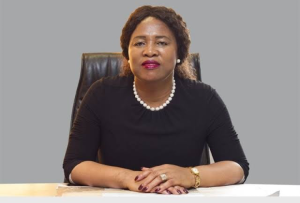
Frequently Asked Questions about Dr Imogen Maboikanyo Mashazi
Who is Dr Imogen Maboikanyo Mashazi?
Dr Imogen Maboikanyo Mashazi is a South African public servant who served as the first female City Manager of the City of Ekurhuleni, one of South Africa’s major metropolitan municipalities. Born in Atteridgeville, Pretoria, and raised in Soweto during the turbulent 1970s, she began her career as a nurse at Chris Hani Baragwanath Hospital before transitioning to municipal governance in the early 1990s. She has over four decades of public service experience spanning healthcare and municipal administration.
What were Dr Mashazi’s major achievements as City Manager?
Under Mashazi’s leadership, Ekurhuleni’s capital expenditure increased from R3.9 billion to R7 billion, enabling significant infrastructure expansion including 29 reservoirs and water towers. She oversaw three consecutive clean audit outcomes from 2019/2020 onward, reflecting zero unauthorized or wasteful expenditure and a 91% revenue collection rate. Her public health leadership previously achieved the highest national TB cure rate and dramatically reduced mother-to-child HIV transmission. She also established the City Manager’s Women Empowerment Legacy Project in 2017.
Why is Dr Mashazi testifying at the Madlanga Commission?
Dr Mashazi was called to testify before the Madlanga Commission of Inquiry in December 2025 regarding allegations that she used her position to shield suspended EMPD acting head Julius Mkhwanazi from disciplinary action and criminal investigation. Evidence suggests she may have interfered with police oversight, rewarded loyal officials with substantial salary increases, and protected problematic figures within the municipal police department. The commission is investigating criminality, political interference, and corruption in South Africa’s criminal justice system.
What allegations did Dr Mashazi make during her testimony?
During her December 1, 2025 testimony, Mashazi accused suspended EMPD chief Isaac Mapiyeye of subjecting female subordinates to sexual harassment and rape, claiming he fathered multiple children with vulnerable subordinates. She also alleged that she was forced to retire by Ekurhuleni Mayor Doctor Xhakaza and complained that the commission prejudiced her by not providing adequate preparation time. She positioned herself as someone trying to address genuine problems rather than protecting criminals.
What recognition has Dr Mashazi received for her work?
Dr Mashazi received numerous accolades including the South African Board for Personnel Practice award, multiple Blue Drop and Green Drop awards for water and wastewater management excellence, and the Public Sector Leader Award at the Virtual Top Empowerment Awards. Good Governance Africa recognized her commitment to transparent and efficient governance. In July 2025, the City of Ekurhuleni officially celebrated her extraordinary career and contributions to service delivery and governance standards
Conclusion
Dr Imogen Maboikanyo Mashazi’s story resists simple narratives of heroism or villainy. She is neither purely a transformative leader who broke barriers and delivered for communities, nor simply a compromised official who protected criminals and built a patronage network. The truth likely lies in the complex middle ground where most human stories reside, where genuine achievements coexist with serious failures of judgment, where dedication to public service intersects with personal ambition and loyalty to individuals over institutions.
What seems clear is that she was a formidable administrator who delivered measurable results in infrastructure, financial management, and public health. The clean audits, the infrastructure expansion, the health outcomes—these are documented facts that improved the lives of Ekurhuleni residents. Her rise from nursing to the highest municipal administrative position represented genuine achievement in a society still grappling with the legacies of apartheid and patriarchy.
What also seems clear is that questions about her management of the EMPD and her relationships with certain officials are serious and warranted. The allegations before the Madlanga Commission are not frivolous political attacks but substantive concerns about governance, oversight, and the possibility that criminal elements infiltrated municipal police services with the protection or acquiescence of senior administrators. These questions demand answers, and her testimony will be evaluated alongside other evidence presented to the commission.
The case highlights broader challenges in South African local government, where the promise of post-apartheid transformation has too often been undermined by corruption, patronage politics, and the breakdown of accountability mechanisms. Municipal governments sit at the intersection of service delivery and political power, managing enormous budgets and employing tens of thousands of workers, creating opportunities for both genuine public service and corrupt self-enrichment.
As the Madlanga Commission continues its work and as Dr. Mashazi’s testimony is evaluated, South Africans will have to grapple with difficult questions about how to assess leaders whose records contain both significant achievements and serious allegations. Can infrastructure expansion excuse interference in police oversight? Do clean audits matter if they’re achieved within a governance culture built on personal loyalty rather than institutional integrity? How should we weigh the advancement of women’s empowerment against allegations of protecting problematic male officials?
These are not easy questions, and they don’t have simple answers. What they demand is careful evaluation of evidence, resistance to premature judgment, and recognition that public service leadership in South Africa’s challenging environment requires navigating impossible tensions between political pressures, resource constraints, genuine public need, and the constant temptation toward corruption that has eroded so many promising careers.
Dr. Imogen Maboikanyo Mashazi’s legacy will ultimately be determined not by official celebrations or commission allegations alone, but by the weight of evidence, the judgment of history, and the assessment of whether her overall impact on Ekurhuleni and its residents was positive or negative. That assessment remains incomplete, awaiting the conclusion of the commission’s work and a full accounting of both her achievements and her failures. What cannot be disputed is that her career has been significant, influential, and consequential for millions of South Africans, for better and for worse.