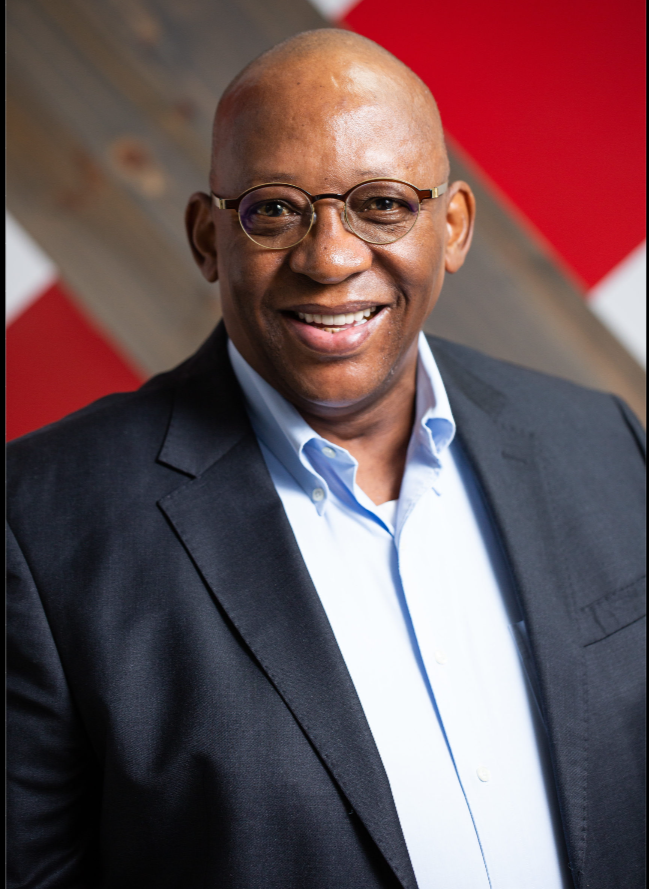
Who is Oupa Magashula?
Today let’s talk about Oupa Magashula Biography: On December 3, 2024, South Africa lost a man whose life embodied both the promise and the complexity of the post-apartheid era. Oupa Magashula, who passed away at age sixty-three after a long illness and extended hospitalization, was a figure whose career trajectory traced the opportunities and challenges facing Black South Africans in the new democracy. From his early days as a trade unionist fighting against apartheid to becoming Commissioner of the South African Revenue Service, and from the heights of that achievement to the depths of a scandal that forced his resignation, Magashula’s story is one of ambition, service, controversy, and ultimately, quiet redemption through continued contribution to his country.
Oupa Magashula Biography
Oupa Magashula Early Life and the Struggle Years
Oupa Magashula came of age during one of the most tumultuous periods in South African history. Born around 1961, he grew up during the height of apartheid, that system of institutionalized racial segregation and discrimination that denied Black South Africans basic human rights and economic opportunities. Like many young Black South Africans of his generation, Magashula was shaped by the struggle against apartheid and the vision of a different, more just South Africa.
In the early 1980s, when Magashula was in his twenties, he worked as a trade unionist. This was not merely a job but a form of political resistance. During apartheid, trade unions were among the few spaces where Black South Africans could organize collectively and push back against the oppressive system. The trade union movement was closely aligned with the broader anti-apartheid struggle, and union activists often faced harassment, detention, and worse from the apartheid security apparatus.
Working as a trade unionist during this period meant standing up for workers’ rights in factories and industries where Black laborers were exploited, paid poverty wages, and denied basic protections. It meant organizing strikes and protests despite the risks. It meant believing that collective action could change unjust systems. This early experience in the trade union movement would shape Magashula’s understanding of labor issues, organizational dynamics, and the challenges facing ordinary South Africans, knowledge that would prove valuable in his later corporate and government roles.
The details of Magashula’s specific trade union activities, which organizations he worked with, and what campaigns he was involved in have not been widely documented. Like many struggle activists whose contributions were never formally recognized or recorded, Magashula’s work during this period remains somewhat obscure. But the fact that he chose this path during apartheid’s darkest years speaks to his commitment to social justice and his willingness to take risks for causes he believed in.
Oupa Magashula Education: An Unconventional Path
While working as a trade unionist and witnessing the gradual dismantling of apartheid in the late 1980s, Magashula pursued higher education, a privilege that had been systematically denied to most Black South Africans under apartheid. In 1991, a watershed year that saw Nelson Mandela released from prison and the formal negotiations to end apartheid beginning, Magashula completed a Bachelor of Science degree in Oceanography and Chemistry at the University of Cape Town.
This was an unusual combination of studies, particularly for someone who would eventually build a career in human resources and organizational leadership rather than in the sciences. Oceanography, the study of the physical and biological properties of the ocean, and chemistry might seem disconnected from the path Magashula would ultimately take. However, this scientific training would have developed critical analytical skills, an understanding of complex systems, and rigorous research methodologies that would serve him well in any career.
The choice of UCT was also significant. The University of Cape Town, while it had admitted some Black students even during apartheid, remained a predominantly white institution during Magashula’s time there. Studying at UCT in the early 1990s, during the transition period when apartheid was crumbling but not yet fully dismantled, would have placed Magashula in an environment where he was navigating between worlds, experiencing both the opportunities of higher education and the lingering realities of racial inequality.
Recognizing that his future likely lay in organizational and business leadership rather than scientific research, Magashula later completed business management courses at the UCT Business School. This additional education bridged the gap between his scientific training and the practical skills needed for corporate leadership. The business management education would prove directly applicable to his subsequent roles in human resources and organizational development across various industries.
Oupa Magashula Building a Corporate Career
Armed with his education and his background in trade unionism, Magashula entered the private sector during the 1990s, the decade of democratic transition in South Africa. This was a period when South African companies, facing both internal pressure and international expectations, were beginning to transform their workforces and management structures to reflect the country’s demographics more accurately. Black professionals with education and experience, still relatively rare due to decades of apartheid restrictions, found unprecedented opportunities opening up.
Magashula worked in both operations and human resources at several major South African companies, including Nampak, a packaging and paper company; Sun International, the hospitality and gaming group; and Anglo Vaal Industries, a mining and industrial conglomerate. These experiences gave him exposure to different industries, different organizational cultures, and the challenges of managing human capital in a rapidly transforming society.
His work in human resources was particularly significant during this period. South African companies were not just hiring more Black employees to comply with new employment equity laws; they were grappling with how to transform organizational cultures that had been built on racial hierarchies, how to develop talent pipelines when the education system had systematically disadvantaged the majority of the population, and how to manage the tensions and resentments that transformation inevitably created. Human resources professionals in this context weren’t just processing paperwork; they were at the front lines of South Africa’s democratic transformation.
His time at these companies built Magashula’s reputation as a capable HR professional who understood both the technical aspects of human capital management and the broader social and political context in which South African organizations operated. He developed skills in talent management, organizational development, labor relations, and the strategic use of human resources to achieve business objectives. These would be the foundations on which his later career in public service would be built.
Oupa Magashula Joining Telkom: Telecommunications in Transition
Before joining SARS, Magashula served as the HR Director at Telkom, South Africa’s state-owned telecommunications company. This role was particularly significant because Telkom, as a state-owned enterprise, sat at the intersection of business imperatives and government policy objectives. The company was undergoing major transformation during this period, both in terms of its business model as South Africa’s telecommunications market was gradually liberalized, and in terms of its workforce composition as it implemented employment equity policies.
As HR Director, Magashula would have been responsible for managing thousands of employees, navigating complex labor relations in a highly unionized environment, and implementing transformation policies while maintaining operational effectiveness. The scale and complexity of this role prepared him well for what would come next: a move into the public sector at one of South Africa’s most critical institutions.
Oupa Magashula Entering SARS: The Beginning of a Government Career
In 2006, Oupa Magashula joined the South African Revenue Service, marking his transition from the private sector to public service. He was appointed as the head of Human Resources and Corporate Services and served on the SARS executive committee. This was a significant appointment, reflecting confidence in his abilities and his track record in human resources leadership.
SARS, established in 1997, was one of post-apartheid South Africa’s success stories. Under the leadership of commissioners like Pravin Gordhan, it had transformed from an apartheid-era tax collection agency into a modern, efficient, and relatively corruption-free institution that was crucial to South Africa’s fiscal stability. The agency was responsible for collecting the taxes that funded the government’s ambitious social programs, infrastructure development, and service delivery initiatives. Without an effective tax collection system, the post-apartheid dream of transforming South African society would have been impossible.
Magashula’s appointment as head of HR came at a time when SARS was continuing to professionalize its workforce and build institutional capacity. In this role, he created what was described as “an advanced platform for people management and development,” modernizing SARS’s approach to human capital. He was responsible for recruiting talent, developing career paths for employees, managing labor relations, and ensuring that SARS had the human resources needed to fulfill its crucial mandate.
His success in this role led to promotion. He was subsequently appointed as Deputy Commissioner, taking charge of an operational division within SARS responsible for contact centres, processing centres, and delivery enablement services such as process engineering and information management. This operational role expanded his responsibilities beyond human resources to include the systems and processes through which SARS interacted with taxpayers and processed the massive volume of tax returns and payments that flowed through the system.
The Commissioner: Oupa Magashula Unexpected Elevation
In May 2009, Oupa Magashula’s career reached its pinnacle when he was appointed as acting SARS Commissioner. This appointment came about under dramatic circumstances. Pravin Gordhan, who had been SARS Commissioner since 1999 and had built the agency into the respected institution it had become, was appointed by President Jacob Zuma as South Africa’s new Minister of Finance. Gordhan’s elevation to the cabinet created a vacancy at SARS, and Magashula, as Deputy Commissioner, was the logical choice to step in as acting commissioner.
The appointment was announced on a Monday afternoon, and Magashula assumed his new duties at 3 PM that same day. The speed of the transition reflected both the urgency of filling the leadership void at such a critical institution and the confidence that Gordhan and others had in Magashula’s ability to step into the role. At age forty-eight, Magashula had risen from trade unionist to head of one of South Africa’s most important government agencies.
Being SARS Commissioner was one of the most influential and high-profile positions in South African government. The commissioner oversaw more than 14,000 employees, managed an annual budget of billions of rands, and was responsible for collecting the hundreds of billions in tax revenue that funded government operations. The position required not just managerial and technical expertise but also political acumen, as the commissioner regularly interacted with the Minister of Finance, testified before parliamentary committees, and navigated the complex politics of tax policy.
The “acting” designation was eventually dropped, and Magashula was confirmed as Commissioner, a position he would hold until 2013. During his tenure from 2009 to 2013, SARS continued to function effectively, meeting its revenue collection targets and maintaining its reputation as one of the better-run government institutions. Under his leadership, SARS modernized its systems, improved taxpayer services, and continued to broaden the tax base.
However, as Magashula would learn, the higher one rises, the harder the potential fall. And in March 2013, allegations would emerge that would shatter his tenure and force him to confront the most difficult crisis of his career.
The Scandal: A Recorded Conversation Changes Everything
On March 24, 2013, South African media published reports based on a recorded telephone conversation that would change Oupa Magashula’s life forever. The recording captured Magashula offering a job at SARS to a Chartered Accountant in a conversation that had been facilitated by Timothy Marimuthu, a businessman with a criminal record for drug dealing. The reports alleged that Marimuthu had influence over Magashula and raised serious questions about the integrity of SARS’s staff recruitment processes.
According to the reports and the subsequent investigation, in 2010, Magashula had offered the CA, referred to in documents as “Nosipho,” a job at SARS over the phone, promising to pay her R1 million annually, more than double her current salary of less than R400,000. This was done without following SARS’s established recruitment procedures, which required advertising positions, conducting formal interviews, and selecting candidates through a transparent process. The offer was made informally, through personal connections, in a manner that bypassed all institutional safeguards.
The context made the situation even more troubling. The conversation had been facilitated by Marimuthu, described in media reports as having influence over Magashula. Marimuthu was a friend of the CA and had apparently asked Magashula to offer her the position. The fact that Marimuthu was a convicted drug dealer raised the specter that criminals were gaining influence over SARS officials, potentially to secure favorable treatment on tax matters or to place confederates within the tax agency.
The recording had surfaced in a particularly suspicious manner. According to City Press, it came to light when an associate of Marimuthu’s, charged with tax evasion, tried to use it to force SARS and the National Prosecuting Authority to drop their case against him. There were also claims that Marimuthu himself had tried to use the recordings for blackmail purposes. This suggested the recording might have been made deliberately, either as insurance or as leverage, indicating Magashula may have been manipulated or entrapped.
For SARS, an institution whose credibility depended entirely on public trust in its integrity and independence, the allegations were catastrophic. If criminals could influence the Commissioner, if jobs could be offered through personal connections rather than merit, if the recruitment processes could be bypassed at will, then what confidence could taxpayers have that their taxes were being collected fairly and that SARS wasn’t being manipulated by the wealthy and connected?
Finance Minister Pravin Gordhan, Magashula’s former boss and mentor, acted quickly. On March 24, the same day the reports were published, Gordhan announced he would institute a thorough investigation. He appointed a distinguished panel consisting of retired Constitutional Court Justice Zak Yacoob and Advocate Muzi Sikhakhane to conduct a fact-finding inquiry into the allegations.
The Investigation: Unraveling the Truth
The Yacoob-Sikhakhane inquiry spent several months investigating the allegations, interviewing witnesses, reviewing documents, and attempting to understand what had actually happened. Magashula appeared before the committee to defend himself and explain his actions. The inquiry’s task was to determine not just whether the allegations were true, but also what they meant for SARS’s integrity and whether Magashula had committed any crimes.
The investigation confirmed that the core allegations were true. Magashula had indeed offered the CA a job in a recorded phone conversation facilitated by Marimuthu. However, the inquiry found nuance in the situation. The CA had ultimately not accepted the job because she preferred a position based in Durban, which didn’t meet SARS’s requirements. So while the offer was made improperly, it hadn’t actually resulted in an improper hiring.
Critically, the committee found no evidence that Magashula had committed a crime. There was no evidence of bribery, corruption, or fraud. The investigation couldn’t establish definitively whether Marimuthu actually had influence over Magashula or whether Magashula was simply trying to help facilitate a hiring at the request of an acquaintance without fully appreciating the impropriety of doing so through informal channels.
However, the committee’s findings were nonetheless damning in other respects. The inquiry found that Magashula had placed the reputation and credibility of SARS at risk through his conduct. In an institution where public trust is everything, this was a serious failing. The committee found that Magashula had been “much less frank” with them than would be expected of someone with the integrity essential to the position of Commissioner. He had not been fully forthcoming about his interactions with Marimuthu or his communications with the CA.
Specifically, the inquiry found that Magashula had interacted with Marimuthu more times than he had initially admitted to Gordhan and the committee. He had also told the Minister and the committee during his first appearance that he had no further communication with the CA after the initial conversation. This turned out to be false; she had sent five emails to Magashula’s private SARS email address, communications he had failed to disclose.
Perhaps most significantly for Gordhan personally, the committee found that Magashula had caused the Minister to make an incorrect statement to the public. Gordhan had stated publicly that the CA’s CV had not been sent to SARS, based on information Magashula had provided. This turned out to be inaccurate, making Gordhan look either incompetent or dishonest when the truth emerged.
The investigation was unable to determine the precise number of people who may have been involved in what the committee characterized as an “attempt to blackmail the SARS Commissioner.” Marimuthu himself refused to be interviewed by the committee, exercising his right not to participate but also preventing the inquiry from fully understanding his role and motivations.
The Fall: Oupa Magashula Resignation and Aftermath
On July 9, 2013, Magashula was given a copy of the inquiry’s report. The findings, while not alleging criminal conduct, made clear that his position as Commissioner was untenable. The following day, July 10, he met with Finance Minister Gordhan and Deputy Minister Nhlanhla Nene. In that meeting, Magashula admitted that his actions constituted a failure to promote and maintain the high standard of professionalism and ethical behavior expected of the SARS Commissioner.
On Friday, July 12, 2013, Pravin Gordhan announced that Oupa Magashula had resigned as SARS Commissioner with immediate effect. Standing before the media, Gordhan read a carefully worded statement that acknowledged Magashula’s service while making clear why his resignation had been necessary.
“The South African Revenue Service is one of the key pillars of our fiscal order, and therefore, our democratic dispensation,” Gordhan stated. “It is an institution whose very foundations are built on the trust and credibility that South African taxpayers have in it. It is therefore critical that those to whom the stewardship of this vital fiscal institution is entrusted conduct themselves, during and after working hours, in a manner that ensures that they are above question.”
Gordhan thanked Magashula for his contribution to SARS during his tenure since 2009, a gesture that suggested some personal sympathy even as he accepted the resignation. He announced that Ivan Pillay, the current Deputy Commissioner, had been appointed acting Commissioner until a new permanent head could be selected.
The fall from grace was complete. In just a few months, Oupa Magashula had gone from being head of one of South Africa’s most important institutions to being unemployed, his reputation in tatters, his name forever associated with scandal. For someone who had worked his way up from trade unionist to corporate HR leader to SARS Commissioner, who had dedicated decades to building a career of service, the disgrace must have been devastating.
The scandal and resignation generated extensive media coverage, much of it harsh. Commentators questioned how Magashula could have been so foolish, why he had allowed himself to be placed in such a compromising position, whether there was more to the story than had been revealed. Some defended him, arguing that he had been set up, that the recorded conversation was entrapment, that he had been naive rather than corrupt. Others saw it as evidence of a broader problem of declining standards in South African public institutions.
For SARS itself, Magashula’s resignation was damaging but not catastrophic. The institution’s systems and processes continued to function, revenue collection proceeded, and under new leadership, SARS worked to rebuild any credibility that had been damaged. In some ways, the fact that the investigation was thorough, that Magashula was held accountable, and that he resigned rather than clinging to power demonstrated that accountability mechanisms still functioned in South African public institutions, at least to some degree.
Oupa Magashula Life After SARS: Quiet Redemption
Following his resignation from SARS, Oupa Magashula largely disappeared from public view. Unlike some disgraced public figures who immediately try to rehabilitate their reputations through media appearances and public advocacy, Magashula chose a quieter path. According to his family’s statement following his death, he “continued contributing to national development through various business and leadership roles” after leaving public service.
The specific nature of these roles has not been widely publicized, suggesting Magashula worked in the private sector away from the spotlight. This was likely a deliberate choice, an recognition that his name would always carry the taint of scandal and that high-profile roles would inevitably invite unwelcome attention and questions about his past. Instead, he appears to have focused on making contributions where he could, using his expertise in human resources, organizational development, and operations to help organizations and businesses while rebuilding his life away from public scrutiny.
This period of quiet work, spanning more than a decade from 2013 to his death in 2024, represents its own form of redemption. Magashula could have become bitter, could have spent these years publicly defending himself and attacking those he felt had treated him unfairly. Instead, he appears to have accepted responsibility for his mistakes, rebuilt his career in less prominent roles, and continued trying to make positive contributions where possible.
Those who knew him during this later period might have encountered a different Oupa Magashula than the ambitious executive who had risen to become SARS Commissioner. Perhaps he was more cautious, more aware of how quickly reputations can be destroyed, more appreciative of the importance of following procedures and maintaining ethical boundaries. Perhaps the experience had taught him hard lessons about the dangers of informal arrangements, personal favors, and the appearance of impropriety, lessons that informed how he conducted himself in his subsequent work.
The Final Chapter: Illness and Death
In the months and years leading up to his death, Oupa Magashula faced significant health challenges. According to family spokesperson Thebe Ikalafeng, Magashula had been dealing with many health issues including a stroke, and he also suffered several cardiac arrests. These serious medical conditions required extended periods of hospitalization and likely significantly reduced his quality of life during his final years.
On December 3, 2024, after a long illness and an extended period in hospital, Oupa Magashula passed away at the age of sixty-three. His family announced his death the following morning, releasing a statement that sought to define his legacy in terms broader than the scandal that had defined his final years in public life.
“It is with profound sadness that the Magashula family announces the passing of Oupa Magashula, former commissioner of the South African Revenue Service,” the statement read. “He passed away late on 3 December 2024 after a long illness and an extended period of hospitalisation. Oupa served South Africa with distinction in both the private and public sectors, including senior roles at Telkom and South African Breweries, and later as commissioner of SARS, during a pivotal period in the young democracy.”
The family’s statement emphasized the qualities they believed defined Magashula beyond the controversy: “He will be remembered for his humility, warmth and unwavering commitment to South Africa and its people. He was a devoted husband, father, brother, colleague and friend.”
This framing by his family was significant. They acknowledged his role as SARS Commissioner, not hiding from that chapter of his life despite the scandal associated with it, but placing it in the context of a broader career of service. They chose to emphasize his personal qualities—humility, warmth, commitment—and his roles as family member and friend, reminding the public that he was more than the worst moment of his professional life.
The tributes that followed his death were relatively modest compared to what might have been expected for someone who had once held such a prominent position. This likely reflected the reality that the scandal had permanently affected his public standing. Yet those who did pay tribute spoke of a decent man who had made mistakes but who had also made genuine contributions to South Africa during his career.

Frequently Asked Questions about Oupa Magashula
Who was Oupa Magashula and what was he known for?
Oupa Magashula was a South African public servant and business executive who served as Commissioner of the South African Revenue Service from 2009 to 2013. Born around 1961, he started his career as a trade unionist in the early 1980s during the anti-apartheid struggle. He earned a Bachelor of Science degree in Oceanography and Chemistry from the University of Cape Town in 1991, later completing business management courses at UCT Business School. He built a corporate career in human resources and operations at companies including Nampak, Sun International, and Anglo Vaal Industries before becoming HR Director at Telkom. He joined SARS in 2006 as head of Human Resources and Corporate Services, rose to Deputy Commissioner, and then was appointed acting Commissioner in May 2009 following Pravin Gordhan’s appointment as Finance Minister. He is best known for his controversial resignation in 2013 after an investigation into allegations that he improperly offered a job at SARS through informal channels, placing the agency’s reputation at risk. He passed away on December 3, 2024, at age sixty-three after a long illness.
Why did Oupa Magashula resign from SARS?
Oupa Magashula resigned as SARS Commissioner on July 12, 2013, following an investigation into allegations that he had improperly offered a Chartered Accountant a job at SARS without following proper recruitment procedures. The controversy arose from a recorded telephone conversation in which Magashula offered the CA a position paying R1 million annually (more than double her current salary) in a conversation facilitated by Timothy Marimuthu, a businessman with a drug dealing conviction. Finance Minister Pravin Gordhan appointed retired Constitutional Court Justice Zak Yacoob and Advocate Muzi Sikhakhane to investigate. While the inquiry found no evidence that Magashula had committed a crime, it concluded that he had placed SARS’s reputation and credibility at risk, was less frank with investigators than expected, caused the Minister to make incorrect public statements, and had more interactions with Marimuthu than he initially disclosed. On July 10, 2013, Magashula admitted to Gordhan and Deputy Minister Nhlanhla Nene that his actions constituted a failure to maintain the professional and ethical standards expected of the SARS Commissioner, and he resigned with immediate effect two days later.
What was Oupa Magashula’s background before joining SARS?
Before joining SARS in 2006, Oupa Magashula had a diverse career spanning trade unionism, academic achievement, and corporate leadership. In the early 1980s during apartheid, he worked as a trade unionist, participating in the broader anti-apartheid struggle through labor organizing. In 1991, he completed a Bachelor of Science degree in Oceanography and Chemistry at the University of Cape Town, an unusual academic path that he later complemented with business management courses at UCT Business School. He then built a career in the private sector, working in both operations and human resources at major South African companies including Nampak (packaging), Sun International (hospitality and gaming), and Anglo Vaal Industries (mining). Before joining SARS, he served as HR Director at Telkom, the state-owned telecommunications company, where he managed human resources for thousands of employees and navigated complex labor relations and transformation policies. This combination of struggle credentials, scientific training, business education, and extensive HR and operational experience positioned him well for senior leadership roles in both private and public sectors.
What did Oupa Magashula do after resigning from SARS?
After resigning from SARS in July 2013, Oupa Magashula largely withdrew from public life and worked in the private sector away from the spotlight. According to his family’s statement following his death, “following his public service, he continued contributing to national development through various business and leadership roles.” The specific nature of these roles was not widely publicized, suggesting he deliberately chose to work in less prominent positions where his past scandal would not overshadow his contributions. Rather than seeking high-profile positions or attempting public rehabilitation through media appearances, Magashula appears to have focused on rebuilding his career quietly, using his expertise in human resources, organizational development, and operations to help businesses and organizations. This period from 2013 to 2024 represented a form of quiet redemption, as he continued making positive contributions while accepting responsibility for his past mistakes. In his final years, he faced significant health challenges including a stroke and several cardiac arrests, which required extended hospitalizations before his death on December 3, 2024.
What was the Yacoob-Sikhakhane inquiry and what did it find?
The Yacoob-Sikhakhane inquiry was a fact-finding investigation established by Finance Minister Pravin Gordhan on March 24, 2013, to investigate allegations against SARS Commissioner Oupa Magashula. The inquiry was led by retired Constitutional Court Justice Zak Yacoob and Advocate Muzi Sikhakhane, both respected legal figures whose involvement underscored the seriousness of the allegations. They submitted their report to the Minister on July 8, 2013, after several months of investigation. The inquiry’s key findings were that while Magashula had committed no crime, he had placed SARS’s reputation and credibility at risk through his conduct; he was much less frank with investigators than expected of someone in his position; he caused the Minister to make incorrect public statements about whether the CA’s CV had been sent to SARS; he interacted with Timothy Marimuthu more times than he initially admitted; and he told the Minister and committee he had no further communication with the CA when in fact she had sent five emails to his private SARS email address. The inquiry couldn’t fully probe Marimuthu’s alleged influence because he refused to be interviewed, and it couldn’t determine the precise number of people involved in what it characterized as an apparent attempt to blackmail the Commissioner. These findings led directly to Magashula’s resignation.
Conclusion
Oupa Magashula’s life story is ultimately a very human one, containing both achievement and failure, service and scandal, ambition and humility. Born into apartheid South Africa, he could have become bitter and disengaged. Instead, he joined the struggle as a trade unionist, pursued education at a time when that was difficult for Black South Africans, and built a successful career in corporate South Africa during the democratic transition.
His rise to become SARS Commissioner represented both personal achievement and the promise of post-apartheid South Africa. Here was someone who had started as a trade unionist, who had the determination to earn a university degree and business training, who had proven himself in the private sector, and who was entrusted with leading one of the new democracy’s most important institutions. In many ways, his trajectory embodied what was supposed to be possible in the new South Africa: that talent, hard work, and dedication could overcome the barriers that apartheid had erected.
The scandal that ended his tenure as Commissioner is a reminder of how quickly reputations can be destroyed and how important ethical conduct and institutional integrity are in public service. Magashula’s mistake wasn’t corruption in the traditional sense—the inquiry found no evidence of bribery or criminal activity. Rather, it was a failure to appreciate that informal arrangements and personal favors, which might be overlooked in other contexts, are completely unacceptable when one is leading an institution like SARS that depends entirely on public trust.
The fact that he wasn’t entirely forthcoming with investigators compounded the problem. In situations of alleged misconduct, the cover-up or the lack of transparency often causes more damage than the original offense. Had Magashula immediately and fully disclosed all his interactions with Marimuthu and the CA when the scandal first broke, the outcome might have been different. His failure to do so made it appear he had something to hide and undermined any benefit of the doubt he might otherwise have received.
Yet the manner in which Magashula conducted himself after leaving SARS suggests genuine remorse and a desire to rebuild his life with dignity. He didn’t mount a public campaign to rehabilitate his reputation, didn’t claim he was a victim of political machinations, didn’t seek sympathy through media appearances. He quietly got on with his life, continued working where he could make contributions, and eventually faced serious illness and death with, according to his family, the same humility that had characterized his post-scandal years.
His family’s description of him as someone with “humility, warmth and unwavering commitment to South Africa and its people” represents how they and those who knew him best chose to remember him. The scandal was real, the mistakes were genuine, but they don’t necessarily define the entirety of a sixty-three-year life. The trade unionist who fought apartheid, the student who earned his degree, the corporate executive who managed thousands of employees, the public servant who led SARS during challenging times, the husband and father and friend—all of these were also Oupa Magashula.
In the end, perhaps the most important lesson from Oupa Magashula’s life is about the complexity of human beings and the danger of reducing anyone to their worst moment. Yes, he made serious errors of judgment that rightfully ended his time as SARS Commissioner. Yes, those errors damaged an important institution and broke the trust that had been placed in him. But he also made genuine contributions during his career, both before and after the scandal. He also rebuilt his life with dignity rather than bitterness. And he also remained, according to those who knew him, a decent person who cared about South Africa and its people.
As South Africa continues to grapple with corruption, state capture, and the erosion of institutional integrity, Oupa Magashula’s story offers both a warning and a measure of hope. The warning is clear: even well-intentioned people can make serious mistakes, informal arrangements can destroy careers and damage institutions, and constant vigilance about ethical conduct is essential in public service. The hope comes from the fact that in Magashula’s case, accountability mechanisms worked—he was investigated, found wanting, and removed from his position. That’s not always the case in South Africa or elsewhere.
As family, friends, and former colleagues mourned Oupa Magashula’s passing in December 2024, they had the difficult task of holding together the contradictions of his life: proud of his achievements, disappointed by his failures, grateful for his contributions, sad about the scandal, appreciative of his post-resignation dignity. In that complexity, in that refusal to simplify a human life into easy categories of hero or villain, success or failure, there is perhaps a more honest reckoning with what it means to build a life of service in challenging circumstances.
Oupa Magashula served South Africa as a trade unionist, as a corporate executive, and as a public servant. He made important contributions and serious mistakes. He achieved much and lost much. He lived with ambition and died with humility. In all of this, he was profoundly human, and perhaps that’s the most fitting epitaph for a life that contained more complexity than any simple narrative could capture. May he rest in peace.
Leave a Reply