
Who is Harmanpreet Kaur?
Today let’s talk about Harmanpreet Kaur Biography: When historians look back at the evolution of Indian women’s cricket, one name will inevitably stand out as a transformative figure who changed not just how the game was played, but how it was perceived. Harmanpreet Kaur, born on March 8, 1989, in Moga, Punjab, didn’t just break barriers, she demolished them with the same ferocity with which she dispatches cricket balls to the boundary. Her journey from a small town in Punjab to becoming one of the most recognizable faces in women’s cricket worldwide is a story of talent, perseverance, and the courage to dream beyond conventional boundaries.
Harmanpreet Kaur Biography
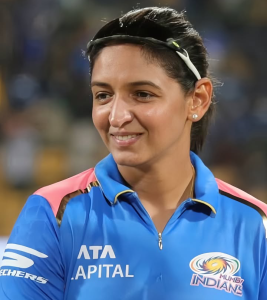
Harmanpreet Kaur Punjab Roots: Where Champions Are Forged
Harmanpreet’s story begins in Moga, a modest town in Punjab known more for its agricultural heritage than its cricketing pedigree. Born into a middle-class Sikh family, she was the daughter of Harmandar Singh Bhullar and Satwinder Kaur. Her father worked in the agricultural department, and like many Punjabi families, sports were valued but cricket for girls was not exactly encouraged in the late 1990s and early 2000s.
Growing up, Harmanpreet was naturally athletic and showed interest in various sports. Initially, she was drawn to athletics and even considered focusing on track and field events. However, destiny had different plans. Her introduction to cricket came somewhat by chance, but once she held a cricket bat, something clicked. The young girl from Moga found her calling, though the path ahead would be far from easy.
Punjab has a rich sporting tradition, particularly in hockey and athletics, but cricket infrastructure for women was limited. Harmanpreet’s family, particularly her father, recognized her talent and passion. Despite societal pressures and the uncertain future of women’s cricket in India at that time, they supported her ambitions. This family support would prove crucial in the years to come, as Harmanpreet navigated the challenges of pursuing a sporting career in an environment that wasn’t always welcoming to female athletes.
Her early training took place in local grounds where facilities were basic and opportunities to play competitive cricket were scarce. She often practiced with boys, as there weren’t enough girls playing cricket in her area. These early experiences, playing against stronger and faster opponents, helped develop the aggressive batting style and competitive mindset that would become her trademark. The young Harmanpreet wasn’t content with just participating; she wanted to dominate, to prove that she belonged on any cricket field regardless of gender.
Rising Through the Ranks: Harmanpreet Kaur Domestic Cricket Journey
Harmanpreet’s talent soon caught the attention of coaches and selectors in Punjab cricket circles. She began representing Punjab in various age-group tournaments, where her powerful batting and useful medium-pace bowling made her stand out. Unlike many of her contemporaries who focused solely on batting or bowling, Harmanpreet developed as a genuine all-rounder, adding immense value to any team she played for.
Her performances in domestic cricket were nothing short of spectacular. Playing for Punjab in the Women’s Cricket Association tournaments, she consistently delivered match-winning performances. Her ability to score quickly and build innings when needed demonstrated a cricket intelligence beyond her years. The domestic circuit in those days received minimal attention and even less financial support, but for Harmanpreet, it was a proving ground where she honed her skills and built her reputation.
The transition from junior to senior cricket brought new challenges. The standard of cricket was higher, and expectations increased. However, Harmanpreet thrived under pressure. Her performances in the Senior Women’s One Day League and other domestic tournaments made her impossible to ignore. Selectors looking for fresh talent to inject energy into the Indian women’s team found in Harmanpreet exactly what they were searching for a player with the skills, temperament, and hunger to succeed at the highest level.
Harmanpreet Kaur International Debut and Early Career
Harmanpreet Kaur’s international career began on March 5, 2009, when she made her Women’s One Day International debut against Pakistan in Jaipur. At just 20 years old, she was stepping into the Indian team during a transitional phase. The senior players who had carried Indian cricket for years were gradually moving on, and young players like Harmanpreet represented the future.
Her debut was modest, but it marked the beginning of what would become one of the most illustrious careers in Indian women’s cricket. She made her Women’s Twenty20 International debut later that same year on August 2, 2009, against England in Derby. The T20 format, with its emphasis on aggressive batting and innovative shot-making, would eventually become the stage where Harmanpreet would truly shine and make her mark on world cricket.
The early years of her international career were about learning and adaptation. Playing against seasoned international bowlers was a different proposition from dominating domestic cricket. Harmanpreet had to adjust her game, understand international standards, and find ways to be consistently effective. There were successes and failures, innings of brilliance interspersed with disappointing dismissals. But through it all, she persevered, learning from every experience and continuously working on her game.
Her all-round abilities made her valuable even when her batting wasn’t firing. Her medium pace could break partnerships, and her fielding was athletic and committed. Harmanpreet was building a reputation as a team player, someone who contributed in multiple facets and could be relied upon in crucial moments. These qualities would serve her well as she progressed in her international career.
The 2013 Women’s Cricket World Cup: Harmanpreet Kaur Announcing Arrival
If Harmanpreet’s early international career was about establishing herself, the 2013 ICC Women’s World Cup in India marked her arrival as a genuine match-winner. Playing on home soil with the added pressure of expectations, she delivered performances that captured the nation’s attention and announced to the world that Indian cricket had found a special talent.
Throughout the tournament, Harmanpreet was consistent and impactful. Her ability to accelerate innings and play crucial knocks in pressure situations helped India reach the finals. Though India eventually lost to Australia in the final, the tournament showcased Harmanpreet’s capabilities on a big stage. She had proven she could perform when it mattered most, handling pressure with composure and delivering when her team needed her.
The exposure from the World Cup transformed her career. She was no longer just another promising player; she was now recognized as one of India’s key performers. The confidence gained from excelling at a home World Cup propelled her forward, and she began to establish herself as an indispensable member of the Indian team across formats.
The 2017 World Cup Masterclass: The Innings That Changed Everything
Every great cricketer has defining moments that elevate them from very good to legendary. For Harmanpreet Kaur, that moment came on July 20, 2017, at the County Ground in Derby, England. What transpired that day would go down as one of the greatest innings in the history of women’s cricket and would fundamentally change how Indian women’s cricket was perceived both within the country and internationally.
India was facing Australia in the semi-final of the ICC Women’s World Cup. Australia, the defending champions and dominant force in women’s cricket, were overwhelming favorites. India had fought hard to reach the semi-finals, but few gave them a realistic chance against the mighty Australians. What followed was an exhibition of power-hitting, timing, and sheer dominance that left spectators, commentators, and opponents stunned.
Harmanpreet walked to the crease with India in a precarious position. What she produced was pure magic. She scored an unbeaten 171 runs off just 115 balls, an innings that included 20 fours and seven sixes. This wasn’t just about the numbers, though they were staggering. It was about the manner of destruction. She took on Australia’s vaunted bowling attack and treated them with disdain, playing shots all around the ground with a combination of power and timing that was mesmerizing to watch.
The innings had everything classical cover drives, powerful pulls, innovative sweeps, and towering sixes that sailed into the stands. Australian bowlers, used to dominating opponents, were left helpless as Harmanpreet put on a masterclass in limited-overs batting. The crowd was on its feet, teammates were in awe, and back in India, millions watched in disbelief and joy as their champion dismantled one of the strongest teams in cricket.
That knock did more than just take India to the World Cup final; it changed the landscape of Indian women’s cricket. Suddenly, women’s cricket was headline news. Social media exploded with praise for Harmanpreet. Cricket legends, including Sachin Tendulkar and Virat Kohli, tweeted their admiration. The innings was compared to some of the greatest in cricket history, and rightfully so. It proved that Indian women cricketers could compete with and defeat the best in the world, and it did so in the most emphatic manner possible.
Though India would eventually lose a rain-affected final to England, the 2017 World Cup established Harmanpreet as a superstar. She returned to India as a hero, and women’s cricket in the country would never be the same. Sponsorships increased, media coverage expanded, and a new generation of girls saw in Harmanpreet a role model who proved that cricket could offer them glory, recognition, and opportunity.
Leadership Journey: Harmanpreet Kaur Captaining India
Harmanpreet’s leadership journey began with vice-captaincy roles before she was appointed the captain of the Indian women’s T20I team in 2018. Taking over the captaincy mantle is never easy, particularly in Indian cricket where expectations are enormous and scrutiny is intense. However, Harmanpreet brought to leadership the same qualities that made her a great player courage, tactical acumen, and the ability to lead from the front.
Her captaincy style reflects her personality on the field, aggressive, positive, and unafraid to take risks. She believes in proactive cricket, encouraging her team to play with freedom and confidence rather than being constrained by fear of failure. Under her leadership, India has had notable successes, including series victories against quality opposition and strong performances in major tournaments.
In 2022, she was appointed captain across all formats, taking over the ODI captaincy as well. This made her one of the most important figures in Indian cricket, responsible for leading the team’s transition from one generation to the next. The role comes with immense pressure, as every decision is analyzed and every defeat scrutinized. Balancing her own performance with captaincy responsibilities requires exceptional mental strength and organizational ability.
Her leadership hasn’t been without challenges. India has experienced disappointing exits from major tournaments, and Harmanpreet has faced criticism for tactical decisions and team selections. However, she has shown resilience in handling these setbacks, learning from defeats, and working to build a team capable of winning major championships. Her commitment to Indian cricket and her willingness to take on leadership responsibilities during a crucial phase speak to her character and dedication.
As captain, she has been instrumental in nurturing young talent, providing them opportunities, and creating an environment where players can express themselves freely. Her own journey from a small town to international stardom makes her uniquely positioned to understand the challenges young players face, and she has been a mentor to the next generation of Indian women cricketers.
Harmanpreet Kaur Trailblazer in Franchise Cricket
Harmanpreet Kaur holds a special distinction in Indian women’s cricket, she was the first Indian woman to play in overseas franchise T20 leagues. In 2015, she was signed by Sydney Thunder in Australia’s Women’s Big Bash League, a groundbreaking moment that opened doors for Indian women cricketers to gain experience in competitive T20 leagues worldwide.
Her stint in the WBBL was successful and educational. Playing alongside and against some of the best players in the world, adapting to Australian conditions, and experiencing professional cricket environments helped Harmanpreet grow as a cricketer. The exposure to different coaching methods, training regimens, and team cultures broadened her cricketing perspective and brought new dimensions to her game.
She subsequently played in England’s Kia Super League and other franchise tournaments before these opportunities were restricted by the BCCI’s policy changes. Nevertheless, her pioneering role in franchise cricket paved the way for other Indian players and demonstrated the value of such exposure for skill development and mental conditioning.
The launch of the Women’s Premier League in 2023 brought franchise cricket to India, and Harmanpreet was a marquee player, signed by Mumbai Indians. As one of the most recognized faces in Indian women’s cricket, her presence in the WPL added star power and legitimacy to the tournament. Playing in a high-profile league in front of packed stadiums in India represented a culmination of everything she had worked for women’s cricket finally receiving the recognition and platform it deserved.
Harmanpreet Kaur Playing Style and Technical Excellence
Harmanpreet Kaur’s batting is characterized by explosive power combined with excellent timing and technique. She is a right-handed batter who can dominate bowling attacks across all formats. Her ability to clear boundaries with ease makes her particularly dangerous in limited-overs cricket, where quick scoring is crucial. What distinguishes her from many power hitters is that her aggression is built on a solid technical foundation rather than just brute force.
Her range of shots is comprehensive. She can play classical cricket strokes with textbook precision, but she also possesses the innovative shots required in modern cricket, the scoop, the reverse sweep, the ramp shot. This versatility makes her difficult to bowl to because she can score runs all around the ground. Bowlers cannot simply bowl to a defensive field and expect to contain her; she finds gaps, pierces fields, and when necessary, hits over them.
Against pace bowling, Harmanpreet is particularly effective on the pull and cut shots, using the bowler’s pace to generate power. Her footwork against spin is nimble, allowing her to use her feet to get to the pitch of the ball or rock back and cut or pull. The ability to adapt her approach based on match situations—building innings when required or going on the attack from the first ball, demonstrates her cricket intelligence and maturity.
As a bowler, while not her primary role, Harmanpreet’s medium pace has provided crucial breakthroughs over her career. She bowls at a decent pace with good control and can move the ball both ways. Captains use her bowling primarily as a stock option to control the scoring rate, but she has proven capable of taking key wickets, particularly in the middle overs when batters try to accelerate.
Her fielding has always been a strong suit. Athletic and agile, she covers ground quickly in the outfield and has a strong, accurate throw. In close catching positions, her reflexes and safe hands make her reliable. In modern cricket where fielding standards have risen dramatically, Harmanpreet’s abilities in this department add another dimension to her overall value.
Harmanpreet Kaur Records and Achievements
Harmanpreet Kaur’s career is studded with records and achievements that underscore her status as one of the greats of women’s cricket. She became the first Indian woman to score a century in a Women’s T20 International, a feat she accomplished against New Zealand. Her 171 not out against Australia in the 2017 World Cup semi-final remains one of the highest individual scores in Women’s ODI cricket and is widely regarded as one of the finest innings in the format’s history.
She has represented India in multiple ICC tournaments, including World Cups and World T20s, consistently performing on the biggest stages. Her longevity at the international level, playing for over fifteen years, speaks to her fitness, adaptability, and continued relevance despite the emergence of new talent. Crossing significant milestones in terms of runs scored and matches played, she has been a pillar of Indian women’s cricket through different eras and team compositions.
As captain, she has led India to series victories and memorable wins against top-ranked teams. Her leadership during transitional phases has helped maintain India’s competitive standards even as the team has evolved. Recognition of her contributions has come in various forms, including national sports awards and accolades from cricket boards and organizations worldwide.
Beyond individual statistics, her impact on the growth and popularity of women’s cricket in India is perhaps her greatest achievement. She has been central to the transformation of the sport from a niche activity to one that commands significant media attention, attracts sponsorships, and inspires millions of young girls across the country.
Harmanpreet Kaur Challenges and Controversies
No long career in international sport is without challenges and controversies, and Harmanpreet’s journey has had its share of difficult moments. As captain, she has faced criticism following disappointing tournament exits, with questions raised about team selections, tactical decisions, and her own form during crucial matches. The 2023 Women’s T20 World Cup semi-final loss to Australia was particularly scrutinizing, with Harmanpreet’s visible emotion and post-match comments drawing mixed reactions.
Her captaincy has occasionally been questioned when India has failed to capitalize on winning positions or when team combinations haven’t worked out as planned. The challenge of managing senior players while integrating young talent has sometimes resulted in difficult decisions that not everyone agrees with. Critics have pointed to instances where her own batting form has dipped, raising questions about whether captaincy responsibilities have affected her personal performance.
There have also been moments of on-field frustration where her emotions have gotten the better of her, leading to disciplinary issues or controversial incidents. These moments, while rare, have drawn criticism and raised discussions about temperament and professionalism. However, Harmanpreet has generally learned from these experiences and demonstrated maturity in handling setbacks.
The pressure of being a leading figure in Indian women’s cricket means constant scrutiny. Every innings, every captaincy decision, and every public statement is analyzed and debated. Managing this pressure while continuing to perform and lead effectively requires extraordinary mental resilience, something Harmanpreet has largely demonstrated throughout her career despite occasional struggles.
Harmanpreet Kaur Personal Life and Character
Off the field, Harmanpreet maintains a relatively private personal life while being accessible and approachable. She remains close to her family, particularly her parents, who have been her biggest supporters throughout her journey. The values instilled during her upbringing in Punjab—hard work, humility, and resilience—continue to guide her even as she has achieved fame and success.
She is known among teammates and colleagues as a warm, supportive presence who genuinely cares about the development of younger players. Her own struggles and experiences climbing from obscurity to stardom make her empathetic to the challenges others face. She often speaks about the importance of mental health in sport and the need for support systems that help players handle the pressures of international cricket.
Harmanpreet has been vocal about issues affecting women’s cricket, including pay disparity, lack of infrastructure, and the need for greater investment in the women’s game. While careful not to create controversies, she has used her platform to advocate for improvements that benefit not just current players but future generations. Her willingness to speak on these issues, while maintaining professionalism, has earned her respect both within cricket and beyond.
Her interests outside cricket include fitness training, spending time with family, and engaging with fans through social media. She maintains an active presence online, sharing glimpses of her training, travels, and personal moments while using the platform to inspire and connect with supporters, particularly young girls who see her as a role model.
Harmanpreet Kaur Impact and Legacy
Assessing Harmanpreet Kaur’s impact on Indian cricket requires looking beyond statistics to understand how she transformed perceptions and possibilities. Before her generation, women’s cricket in India existed on the margins, receiving minimal attention and even less support. Players struggled with inadequate facilities, lack of financial security, and societal attitudes that didn’t take women’s cricket seriously.
Harmanpreet’s performances, particularly the 2017 World Cup heroics, forced a shift in this narrative. She proved that women’s cricket could be entertaining, competitive, and commercially viable. Her success opened doors for increased investment, better infrastructure, and professional opportunities through initiatives like the Women’s Premier League. The current generation of Indian women cricketers benefits from conditions that Harmanpreet and her contemporaries fought to create.
As a role model, her influence extends across India. Young girls from small towns see in Harmanpreet proof that their dreams of playing cricket professionally are achievable. Parents who might have discouraged daughters from pursuing cricket have reconsidered after seeing Harmanpreet’s success. She represents possibility, showing that talent and determination can overcome social barriers and geographical limitations.
Her legacy will be measured not just in runs scored or matches won, but in the transformation she helped bring about in Indian women’s cricket. Future historians will note that when Indian women’s cricket reached new heights of popularity and professionalism, Harmanpreet Kaur was at the forefront, leading through example and performance.
The Road Ahead
As Harmanpreet approaches the latter stages of her playing career, questions naturally arise about her future and what comes next. At 35 years old, she remains a vital part of the Indian team, but thoughts inevitably turn to succession planning and life after retirement. Her experience and leadership remain valuable, particularly as India prepares for upcoming World Cups and major tournaments where her big-match temperament could prove decisive.
The challenge for Harmanpreet is maintaining peak performance while managing the wear and tear that comes with a long career. Modern sports science and conditioning methods allow athletes to extend their careers, and there’s no reason Harmanpreet cannot continue playing at the highest level for a few more years if she remains fit and motivated.
Beyond playing, her future likely involves remaining connected to cricket in some capacity. Her knowledge, experience, and understanding of the game would make her valuable as a coach, mentor, or administrator. She could play a crucial role in shaping the next generation of Indian cricketers, passing on the lessons learned during her remarkable journey.
Whatever path she chooses, Harmanpreet’s place in Indian cricket history is secure. She will be remembered as a pioneer, a match-winner, and a leader who helped transform women’s cricket in India from an afterthought to a sport that captures the nation’s imagination and commands respect worldwide.

Frequently Asked Questions about Harmanpreet Kaur
How did Harmanpreet Kaur’s 2017 World Cup innings change the perception of women’s cricket in India?
Harmanpreet’s extraordinary 171 not out against Australia in the 2017 World Cup semi-final was a watershed moment for Indian women’s cricket that transcended sport and entered mainstream consciousness. Before this innings, women’s cricket in India existed largely in the shadows, receiving minimal media coverage and public attention despite years of effort by talented players. When Harmanpreet demolished the Australian bowling attack in Derby, she didn’t just score runs; she made a statement heard around the world. The innings was broadcast live to millions in India and immediately went viral on social media, with cricket legends like Sachin Tendulkar and Virat Kohli publicly praising her performance. This mainstream validation was crucial. Suddenly, women’s cricket was front-page news, discussed in offices and homes across the country. Parents who had discouraged daughters from playing cricket began reconsidering. Corporate sponsors saw commercial potential. The Board of Control for Cricket in India and government bodies recognized the need for greater investment. That single innings demonstrated that women’s cricket could be just as entertaining, competitive, and worthy of attention as men’s cricket, fundamentally shifting public perception and opening doors for the transformation that followed, including the eventual launch of the Women’s Premier League.
What makes Harmanpreet Kaur’s leadership style effective as captain of the Indian women’s cricket team?
Harmanpreet’s leadership effectiveness stems from a combination of personal credibility, tactical aggression, and emotional intelligence developed through her own journey in cricket. Unlike leaders who rely primarily on authority, Harmanpreet leads from the front, consistently performing in crucial situations and setting high standards through personal example. Her willingness to take risks and play positive, attacking cricket creates an environment where players feel empowered to express themselves rather than being constrained by fear of failure. Having experienced the struggles of establishing herself in international cricket from a small-town background, she brings empathy and understanding to her interactions with younger players, making them feel supported rather than pressured. Her tactical approach is proactive rather than reactive, often making bold decisions that might not always succeed but demonstrate confidence in her team’s abilities. She understands the importance of building team culture and cohesion, working to create an atmosphere where diverse personalities can thrive together. While her captaincy has faced criticism during challenging periods, her resilience in handling setbacks and her commitment to learning from defeats demonstrate the mental toughness required for leadership at the highest level. Her communication skills, both in motivating players and in representing the team publicly, add another dimension to her leadership effectiveness.
How has Harmanpreet Kaur’s experience in overseas franchise leagues contributed to her development as a cricketer?
Being the first Indian woman to play in overseas franchise leagues, particularly Australia’s Women’s Big Bash League, was transformative for Harmanpreet’s cricketing development in ways that extended far beyond just playing matches. These leagues exposed her to professional cricket environments where training standards, coaching methods, and sports science applications were more advanced than what existed in India at that time. Playing alongside and against the world’s best players in highly competitive settings pushed her to elevate various aspects of her game, from technical adjustments to tactical awareness. The franchise environment taught her about professionalism, time management, and maintaining peak performance throughout a condensed tournament schedule. She experienced different playing conditions, adapted to varied pitch types, and learned to adjust her game to different tactical situations. The coaching she received from experienced international coaches brought new perspectives on batting technique, match strategy, and mental preparation. Perhaps most importantly, the confidence gained from succeeding in these leagues, proving she could perform consistently in the world’s most competitive domestic competitions—translated to greater self-belief in international cricket. The financial security from franchise contracts allowed her to focus entirely on cricket without worrying about alternative income sources. When she returned to play for India, she brought back knowledge, techniques, and approaches that she shared with teammates, effectively raising the overall standard of Indian women’s cricket.
What challenges has Harmanpreet Kaur faced as a female cricketer from a small town in Punjab?
Harmanpreet’s journey from Moga to international cricket stardom involved overcoming multiple layers of challenges that extended well beyond merely developing cricket skills. Growing up in a small Punjab town in the late 1990s and early 2000s, when women’s cricket had virtually no visibility or infrastructure, pursuing the sport professionally was considered impractical if not inappropriate by many. Social attitudes viewed cricket as a male domain, and families often discouraged daughters from spending time playing sports when they could focus on education or preparing for conventional careers. The practical challenges were equally daunting, lack of proper coaching facilities, limited opportunities to play competitive matches, inadequate equipment, and virtually no local role models who had succeeded in women’s cricket. Financial constraints meant her family had to make sacrifices to support her ambitions, investing in training and travel to tournaments without any guarantee of returns. Even after breaking into state and national teams, the financial insecurity of women’s cricket meant players earned minimal income, forcing many talented cricketers to abandon their dreams for stable careers. Harmanpreet faced the additional challenge of often being the only girl practicing with boys, which required thick skin to handle skepticism and sometimes outright hostility. The lack of media coverage meant exceptional performances went unnoticed, making it difficult to gain recognition that could lead to better opportunities. Throughout her early career, she battled not just opposition bowlers but also doubt—from society about whether she was wasting her time, and occasionally from within about whether her dreams were achievable.
How has Harmanpreet Kaur influenced the next generation of Indian women cricketers?
Harmanpreet’s influence on the next generation extends far beyond her role as a player or captain; she has fundamentally altered what young girls across India believe is possible in cricket. Her visibility and success have made cricket a viable career aspiration for girls who previously might not have considered it seriously. When young cricketers like Richa Ghosh, Shafali Verma, or Jemimah Rodrigues talk about their inspirations, Harmanpreet’s name frequently appears, demonstrating her direct impact on those currently representing India. She has shown that cricketers from small towns and non-traditional cricket centers can succeed at the highest level, geography is not destiny. Her playing style, aggressive, fearless, and uncompromising, has influenced how young batters approach the game, encouraging them to play with freedom and confidence rather than being overly cautious. As captain and senior player, she has actively mentored younger team members, providing guidance on both cricket and handling the pressures that come with international sport. Her advocacy for better conditions, pay equity, and infrastructure improvements has created opportunities and facilities that the next generation now benefits from. The Women’s Premier League, which provides young cricketers with financial security and development opportunities, exists partly because players like Harmanpreet proved the commercial viability of women’s cricket in India. Perhaps most importantly, she has normalized the idea of women playing cricket professionally, gradually shifting social attitudes that previously created barriers for aspiring female cricketers. Parents pointing to Harmanpreet’s success now encourage rather than discourage their daughters’ cricket ambitions.
Conclusion
Harmanpreet Kaur’s biography is not just the story of one remarkable cricketer; it is the story of transformation, perseverance, and the power of sport to change lives and perceptions. From her early days in Moga, where cricket for girls was viewed with skepticism, to becoming one of the most recognized and respected figures in women’s cricket globally, her journey embodies the evolution of women’s cricket in India.
The statistics and records, while impressive, tell only part of the story. Harmanpreet’s true legacy lies in what she represents—the breaking of social barriers, the expansion of possibilities for women in sport, and the demonstration that excellence knows no gender. Her 171 against Australia in 2017 will be remembered not just as a great innings but as the moment when Indian women’s cricket stepped out of the shadows and demanded—and received—the recognition it deserved.
As a player, she brought power, grace, and consistency to Indian cricket across formats. Her ability to perform on the biggest stages, delivering match-winning performances when it mattered most, established her as one of the finest limited-overs cricketers of her generation. The aggressive, fearless batting style she exemplified influenced how cricket is played, encouraging a generation to be bolder and more ambitious in their approach.
As a leader, Harmanpreet has guided Indian cricket through transitional phases, handling the pressures of captaincy while continuing to perform at the highest level. Her leadership style, emphasizing positive cricket and player empowerment, has helped create an environment where young talent can flourish. The challenges and criticisms she has faced have tested her resilience, but she has consistently demonstrated the character required to lead at the international level.
Beyond cricket, Harmanpreet’s advocacy for women’s cricket, her willingness to speak about issues affecting female athletes, and her role as a mentor to younger players demonstrate a commitment to the sport that extends beyond personal achievement. She understands that her success creates pathways for others and has embraced the responsibility that comes with being a trailblazer.
As her playing career eventually winds down, Harmanpreet’s influence will endure through the players she inspired, the standards she set, and the transformation she helped bring about in Indian women’s cricket. Young girls across India now grow up in a world where women’s cricket is visible, valued, and viable as a career—a world that Harmanpreet and her contemporaries fought to create.
The journey from Moga to sporting superstardom was never guaranteed and often seemed improbable. That Harmanpreet made it, and in the process changed the landscape for everyone who followed, is testament to her talent, determination, and unwavering belief in herself and her sport. Indian cricket, and indeed women’s cricket globally, is richer for her contributions.
Harmanpreet Kaur’s story continues to be written, with more chapters still to come. But already, her place in cricket history is assured, not just as a great player, but as a pioneer who helped transform what was possible for women in Indian sport. That legacy will endure long after the final runs are scored and the last ball is bowled.
Leave a Reply