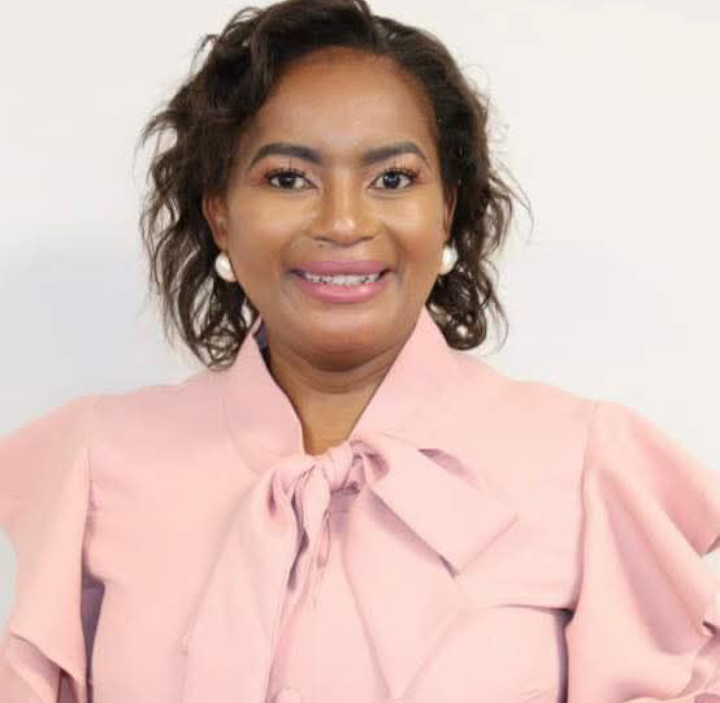
Who is Loyiso Masuku?
Today let’s talk about Loyiso Masuku Biography: In the complex landscape of South African journalism, where the past’s shadows still loom large and the present demands constant vigilance, Loyiso Masuku has emerged as a distinctive voice—sharp, principled, and unafraid to ask difficult questions. As a journalist and media commentator, he has carved out a space for rigorous analysis, accountability journalism, and fearless engagement with power. His work represents a generation of South African media professionals grappling with their country’s democracy, working to ensure that the hard-won freedoms of the post-apartheid era translate into genuine accountability and justice for all citizens.
Loyiso Masuku Biography
Loyiso Masuku Roots in a Transforming Nation
Loyiso Masuku’s story is inseparable from South Africa’s own journey. Born in the waning years of apartheid or the early days of democracy, he came of age during one of the most remarkable political transformations of the twentieth century. The South Africa of his youth was a country wrestling with its past while trying to build something entirely new—a non-racial democracy on the ruins of institutionalized racism, a society seeking reconciliation without forgetting injustice, a nation attempting to address centuries of economic disparity while building a modern economy.
Growing up in this environment meant witnessing history unfold in real time. The Truth and Reconciliation Commission hearings brought the horrors of apartheid into public view, forcing the nation to confront what had been done in its name. The new constitution, among the most progressive in the world, promised rights and dignity to all. New democratic institutions were being built from scratch. Yet alongside these hopeful developments, challenges emerged—corruption, service delivery failures, rising inequality, and the slow pace of economic transformation for the majority.
This context shaped Masuku’s worldview fundamentally. He understood that democracy wasn’t just about voting or formal freedoms but about whether ordinary people’s lives actually improved. He saw that the promises of liberation could be undermined by corruption, incompetence, or the capture of state institutions by narrow interests. He learned that vigilance was required to protect democratic gains, and that journalism played a crucial role in that vigilance.
His educational background, while specific details may not be widely publicized, clearly provided him with the tools for critical analysis and effective communication. Like many of his generation, he likely witnessed the transformation of South African education from the racially segregated, unequal system of apartheid to a theoretically integrated system still grappling with vast inequalities in resources and outcomes. Education for Black South Africans who came of age in the transition period represented both opportunity and ongoing challenge.
Loyiso Masuku Entry Into Journalism
Loyiso Masuku’s entry into journalism came during a period when South African media was itself transforming. The apartheid-era press had been characterized by a struggle between government control and independent voices trying to report truth despite censorship, detention, and harassment. The democratic era brought press freedom enshrined in the constitution, but also new challenges, commercial pressures, political pressure from the ruling party unused to critical coverage, and questions about media ownership and transformation.
The journalism Masuku entered was diverse and contentious. There were legacy media institutions trying to adapt to the new South Africa, new outlets created to serve previously marginalized audiences, community media giving voice to local concerns, and increasingly, digital platforms changing how news was produced and consumed. Finding one’s place and voice in this landscape required both skill and strategic thinking about what kind of journalist one wanted to be.
Masuku gravitated toward political and investigative journalism, the work of holding power accountable, uncovering wrongdoing, and asking uncomfortable questions of those who claimed to serve the public interest. This was demanding, sometimes dangerous work. South Africa’s democracy, while robust in many respects, still saw journalists facing intimidation, legal threats, and sometimes violence when their reporting touched on powerful interests.
His early work established him as someone willing to tackle difficult subjects. He wasn’t content with simply reporting official statements or covering the surface of political events. He wanted to understand what was really happening, who benefited, who suffered, and whether the promises made to South African citizens were being kept. This approach to journalism, skeptical of power, centered on accountability, focused on impact on ordinary people—would become his hallmark.
Loyiso Masuku Building a Reputation at 702
Loyiso Masuku became particularly well-known through his work with 702, Johannesburg’s premier talk radio station. Radio has special significance in South African media, it reaches across literacy levels, language barriers, and economic circumstances more effectively than print or even television. Talk radio in particular creates public conversation spaces where citizens can engage with issues, politicians can be questioned, and debate can happen in real time.
At 702, Masuku found a platform that matched his skills and approach. The station, part of the Primedia Broadcasting network, had a reputation for serious journalism and robust debate. Its audience was largely urban, educated, and engaged, people who wanted more than headlines, who appreciated depth and analysis, and who expected their media to hold power accountable.
As a political analyst and commentator at 702, Masuku brought incisive analysis to South African politics. He could break down complex political maneuvering, explain the significance of policy decisions, and connect developments to their impact on ordinary citizens. His commentary combined knowledge of political history, understanding of institutional processes, and ability to see through political spin to underlying realities.
He also conducted interviews that became notable for their rigor. When politicians appeared on his segments, they couldn’t expect soft treatment or questions that allowed them to simply recite talking points. Masuku asked follow-up questions, challenged inconsistencies, and pressed for substantive answers. This approach occasionally created friction but earned respect from audiences tired of media that seemed to give powerful figures an easy ride.
His work at 702 also involved daily engagement with breaking news and ongoing stories. South African politics moves quickly, with coalition negotiations, scandals, policy debates, and institutional conflicts constantly developing. Providing analysis and context for these developments in real time requires not just knowledge but quick thinking and the ability to see patterns and significance in rapidly unfolding events.
The eNCA Era
Loyiso Masuku’s profile rose further when he joined eNCA (eNews Channel Africa), South Africa’s first 24-hour television news channel. Television brought both opportunities and challenges, a broader audience and greater visibility, but also the constraints of visual media and the even faster pace of 24-hour news cycles.
At eNCA, Masuku worked as both a journalist and news anchor, roles that required different but complementary skills. As a journalist, he could pursue investigative work, develop sources, and report on stories in depth. As an anchor, he had to manage live broadcasts, conduct interviews, provide breaking news coverage, and maintain composure regardless of what was happening. The combination demonstrated his versatility and professionalism.
eNCA gave him visibility across South Africa and the broader region. Television’s reach meant that his reporting and analysis touched millions of viewers. This visibility came with responsibility, television journalists become public figures whose words carry particular weight. It also brought scrutiny, with both political figures and ordinary citizens watching and responding to his work.
His television work maintained the standards he’d established in radio, rigorous questioning, commitment to accountability, and focus on what developments meant for ordinary South Africans. Whether covering elections, corruption scandals, service delivery protests, or policy debates, he approached stories with the same fundamental questions: Who benefits? Who suffers? Are the powerful being honest? Are citizens being served?
The visual medium also allowed for different types of storytelling. Television could show viewers the human impact of political decisions in ways that audio or text alone couldn’t capture. Coverage of service delivery protests could show the conditions people were living in. Reports on corruption could reveal the luxury enjoyed by those stealing public resources. This visual dimension added power to the accountability journalism Masuku practiced.
Loyiso Masuku Focus on Accountability and Anti-Corruption
A defining aspect of Loyiso Masuku’s journalism has been his focus on accountability and anti-corruption work. This wasn’t coincidental—South Africa’s post-apartheid story has been significantly shaped by corruption that undermined state capacity, diverted resources from service delivery, and eroded public trust in democratic institutions. The phenomenon of “state capture” under the Zuma administration represented the apex of this corruption, with powerful networks systematically looting state resources.
Masuku was among the journalists who consistently covered corruption stories, even when doing so was politically uncomfortable or dangerous. Reporting on corruption in South Africa required navigating complex webs of political, business, and criminal networks. It meant understanding sophisticated financial schemes, following money trails across borders, and making sense of deliberately obscured transactions. It also meant facing potential legal action, political pressure, and sometimes threats from those exposed by reporting.
The state capture era, during which the Gupta family and their political allies essentially captured key state institutions for personal enrichment, demanded sustained investigative journalism. Revelations came through leaked documents, brave whistleblowers, and painstaking investigative work by journalists at various outlets. Masuku’s contribution to this coverage helped keep these issues in public view, maintaining pressure for accountability even when political will to act seemed absent.
His focus extended beyond just reporting wrongdoing to demanding consequences. He consistently asked why those implicated in corruption weren’t being prosecuted, why stolen resources weren’t being recovered, and why institutions meant to prevent and punish corruption seemed ineffective. This relentless focus on consequences, not just revelation, distinguished his approach from journalism that treats scandals as mere entertainment.
The anti-corruption work also connected to broader issues of social justice. Every rand stolen through corruption was a rand not spent on housing, education, healthcare, or infrastructure in a country where millions still lived in poverty. Corruption wasn’t just about individual greed but about the systematic denial of resources to those who needed them most. Masuku’s reporting consistently made these connections explicit, framing corruption as not just illegal but profoundly unjust.
Loyiso Masuku Political Commentary and Analysis
Beyond breaking news and investigative work, Loyiso Masuku established himself as an important political commentator whose analysis helped South Africans make sense of their complex political landscape. South African politics involves multiple parties, coalition governments at various levels, factional battles within parties, the interplay of race and class, regional dynamics, and the ongoing negotiation of the country’s post-apartheid identity. Making sense of this requires not just following current events but understanding historical context and structural forces.
His commentary often focused on the African National Congress, the liberation movement turned governing party. The ANC’s dominance of South African politics since 1994 made understanding its internal dynamics crucial to understanding national politics. Masuku analyzed factional battles, leadership contests, policy debates, and the tension between the party’s liberation heritage and its governing record. He wasn’t reflexively anti-ANC, but he was consistently critical when the party failed to live up to its stated values or when its actions harmed South African citizens.
He also provided analysis of opposition politics—the Democratic Alliance’s evolution from its apartheid-era origins, the rise of the Economic Freedom Fighters under Julius Malema, and the role of smaller parties in an increasingly fragmented political landscape. His commentary helped audiences understand not just what different parties were saying but what their strategies were, who they represented, and what their rise or fall meant for South Africa’s future.
His political analysis often connected domestic politics to broader social and economic issues. He understood that political maneuvering wasn’t just about power for its own sake but about competing visions for South Africa’s future, about who would benefit from different policy choices, and about whether the promises of liberation would be fulfilled. This contextual approach made his commentary substantive rather than merely tactical.
Loyiso Masuku Engagement with Social Justice Issues
While politics and governance formed the core of Loyiso Masuku’s work, he also engaged with broader social justice issues that shaped South African society. In a country still marked by profound inequality, racial injustice, gender-based violence, and uneven access to opportunities, journalism that ignores these structural issues misses much of what matters in people’s lives.
His engagement with racial justice reflected the ongoing challenges of building non-racial democracy in a country where apartheid’s legacies remained visible in spatial segregation, economic inequality, and social relationships. He could discuss the tensions around land reform, the debate over affirmative action and economic transformation, and the persistence of racism decades after apartheid’s formal end. These weren’t abstract issues but lived realities affecting millions of South Africans daily.
Gender-based violence, which reaches crisis levels in South Africa, also received attention in his work. The murder of women by intimate partners, the high rates of sexual violence, and systemic failures in protecting women and prosecuting perpetrators represented another area where South Africa’s reality fell tragically short of its constitutional promises. Journalists like Masuku who consistently covered these issues helped keep them in public consciousness rather than letting them fade into normalized background tragedy.
Economic inequality and the struggle for economic transformation also featured in his commentary. The persistence of extreme poverty alongside great wealth, unemployment particularly among youth, the slow pace of Black economic empowerment, and debates about how to achieve more equitable distribution of resources and opportunities—these issues shaped South African politics and society fundamentally. Masuku’s reporting and analysis connected political developments to these underlying economic realities.
Loyiso Masuku Digital Presence and Social Media Engagement
Like many contemporary journalists, Loyiso Masuku has maintained an active digital presence, particularly on social media platforms like Twitter. This digital engagement represents both an opportunity and a challenge for journalists—it allows direct connection with audiences, immediate sharing of information, and participation in real-time public conversations, but it also exposes journalists to harassment, requires constant availability, and can blur lines between personal opinion and professional journalism.
Masuku’s social media presence reflects his journalistic priorities—sharing breaking news, offering quick analysis of developing stories, engaging with other journalists and commentators, and sometimes sparking or participating in debates about media, politics, and social issues. His Twitter account has become an extension of his journalistic work, a space where he can provide context, ask questions, and engage more directly with audiences than traditional media allows.
This digital engagement also demonstrates the changing nature of journalism. Traditional media’s gatekeeping role has been challenged by social media, where anyone can share information or opinion. For professional journalists, this means both competition and collaboration—working with citizen journalists and sources who break stories on social media, while also providing the verification, context, and analysis that distinguishes professional journalism from mere information sharing.
However, social media has also exposed journalists to new forms of pressure and attack. Organized harassment campaigns, often with political or ideological motivations, target journalists whose work threatens powerful interests. Female and Black journalists in particular face intense abuse. Masuku, like many of his colleagues, has had to navigate these digital spaces while managing the risks they present to personal wellbeing and professional effectiveness.
Loyiso Masuku Navigating a Challenging Media Environment
Working in South African journalism during recent years has meant navigating an increasingly challenging environment. Media freedom, while constitutionally protected, faces pressures from multiple directions—political intimidation, economic constraints, legal threats, social media harassment, and public skepticism toward media institutions.
The Zuma era saw particular pressure on critical media, with the president and his allies regularly attacking journalists as part of “white monopoly capital” or as agents of regime change. These attacks, often racial in their framing, sought to delegitimize critical journalism by suggesting it represented narrow interests rather than serving the public. For Black journalists like Masuku who criticized the government, this framing presented particular complications—their criticism couldn’t easily be dismissed as racial antagonism, challenging narratives that positioned all criticism as motivated by racism or colonial mindsets.
Economic pressures also affected journalism. Declining advertising revenues, especially for traditional media, led to newsroom cuts, reduced investigative capacity, and pressure toward cheaper, click-driven content. Maintaining quality journalism in this environment required both personal commitment and institutional support. Media houses that prioritized journalism as public service over pure profit-seeking created space for journalists to do meaningful work despite economic headwinds.
Legal threats represented another challenge. Defamation lawsuits, whether legitimate or strategic attempts to silence criticism through expensive litigation, could drain media resources and create chilling effects on investigative work. Access to information, theoretically guaranteed by legislation, often proved difficult in practice, with government departments refusing or delaying responses to media requests. Working in this environment required legal knowledge, institutional backing, and determination to pursue stories despite obstacles.
Loyiso Masuku Impact and Influence
Assessing the impact of individual journalists is complex—journalism’s influence often manifests indirectly, shaping public discourse, informing citizen decisions, and contributing to accountability over time rather than through immediate, measurable outcomes. However, Loyiso Masuku’s work has clearly influenced South African public discourse and contributed to accountability journalism during a crucial period.
His consistent focus on corruption helped maintain public pressure for accountability even when political will seemed absent. By persistently asking questions about consequences for wrongdoing, he contributed to an environment where impunity became harder to maintain. The eventual establishment of the Zondo Commission investigating state capture, while resulting from many factors, was partly enabled by journalism that kept these issues alive in public consciousness.
His political commentary has helped audiences understand complex developments, providing context that enables more informed citizen engagement with politics. In a democracy, informed citizenship is fundamental, people can’t make good decisions about who to vote for or what policies to support without understanding what’s actually happening. Journalists who provide this understanding perform an essential democratic function.
His presence as a Black journalist asking tough questions of a Black-led government also carried particular significance. It challenged simplistic racial narratives about media criticism and demonstrated that accountability journalism transcends racial identity. This representation mattered for showing young Black South Africans that journalism could be a path for them, that they could be the ones asking questions and demanding answers.
His work has also influenced the journalism profession itself, providing a model of rigorous, principled accountability journalism. Young journalists watching his work learn what substantive political journalism looks like—the preparation required, the tough questions to ask, the importance of follow-up, and the commitment to serving the public rather than power.
Loyiso Masuku Awards and Recognition
While specific awards and honors for Loyiso Masuku may not be extensively documented in public sources, recognition in journalism comes in multiple forms. Professional respect from colleagues, audience trust and following, and the impact of one’s work all represent meaningful recognition beyond formal awards.
In South African journalism, various organizations recognize excellence through awards like the Taco Kuiper Awards for investigative journalism, the South African National Editors’ Forum Awards, and others. Whether or not Masuku has received specific awards, his body of work represents the kind of journalism these awards seek to honor—rigorous, impactful, and serving the public interest.
Recognition also comes from sources who trust journalists enough to provide information, from politicians who take journalists seriously enough to engage substantively (even if uncomfortably), and from audiences who regularly consume and share journalists’ work. By these measures, Masuku has clearly achieved significant recognition and influence within South African media.
Loyiso Masuku Challenges and Controversies
No journalist working on controversial issues avoids all controversy themselves. The nature of accountability journalism means occasionally getting things wrong, facing criticism from those whose actions are questioned, and navigating disputes about fairness or interpretation. While specific controversies involving Loyiso Masuku aren’t widely documented, the general challenges facing journalists in his position are significant.
Critical journalists face accusations of bias, unfairness, or pursuing personal or political agendas. These accusations come from political figures, their supporters, and sometimes from audiences who disagree with coverage or analysis. Distinguishing between legitimate criticism that helps improve journalism and bad-faith attacks meant to intimidate or discredit requires judgment and thick skin.
The racial dynamics of South African media add complexity to these challenges. Black journalists critical of Black-led government face accusations of serving white interests or of being “clever blacks” manipulated by white power structures. These attacks, often racialized and personal, seek to undermine journalists’ credibility by questioning their identity and loyalties rather than engaging with their actual reporting.
Social media has amplified these challenges, allowing coordinated attacks on journalists to mobilize quickly. Hashtags calling for journalists to be fired, personal insults, threats, and campaigns to pressure employers all form part of the contemporary environment that critical journalists navigate. Maintaining professional integrity and personal wellbeing in this context requires resilience and support systems.
The Broader Context: Media and Democracy in South Africa
Loyiso Masuku’s work must be understood within the broader context of media’s role in South African democracy. The country’s constitution guarantees press freedom, recognizing media as essential to democratic accountability. Yet this freedom exists in tension with other imperatives—transformation of historically white-dominated media, concerns about media serving narrow political or economic interests, and debates about what responsible journalism looks like.
South African media remains contested terrain. Debates continue about ownership patterns, with concerns about concentration and about who controls major media outlets. Questions persist about newsroom demographics and whether media institutions reflect South Africa’s diversity. Discussions happen about media’s relationship to power, with some arguing media is too cozy with opposition politics while others see media as appropriately independent and critical.
The rise of alternative media, often online and explicitly politically aligned, has challenged traditional media’s authority. Some of these outlets provide valuable perspectives absent from mainstream media, while others spread misinformation or serve as propaganda vehicles. The media landscape is thus increasingly fragmented, with different audiences consuming entirely different information ecosystems with little overlap.
In this complex environment, journalists like Masuku who maintain professional standards while working in mainstream media play important roles. They demonstrate that serious journalism still has value and audience, that standards of accuracy and fairness matter, and that media can serve democratic accountability without becoming mere political players themselves.
Loyiso Masuku Personal Philosophy and Professional Ethics
While Loyiso Masuku’s personal life remains largely private, his professional work reveals clear principles and commitments. His journalism is animated by belief in accountability—that those exercising power must answer for their actions, that citizens deserve to know what’s done in their name, and that journalism serves this democratic function.
His approach reflects commitment to South Africa’s constitutional values—equality, dignity, and social justice. His focus on how political decisions affect ordinary people, particularly marginalized communities, demonstrates this value orientation. He practices journalism that asks not just what is happening but whether what’s happening is just, whether it serves the public interest, whether it lives up to the promises made during liberation.
His work also shows commitment to professional standards—verification before publication, fairness in representation even toward those criticized, transparency about sources and methods, and willingness to correct errors. In an era when these standards sometimes seem quaint or inefficient compared to the speed and impact of unverified social media posts, maintaining them represents a choice to prioritize accuracy and fairness over speed and sensation.
The courage his work requires—to ask difficult questions, to pursue uncomfortable stories, to persist despite pressure—suggests personal fortitude and conviction that the work matters. Journalism that holds power accountable always faces resistance. Continuing despite that resistance requires believing that the work serves something larger than personal comfort or career advancement.
Loyiso Masuku Mentorship and Industry Contribution
Experienced journalists like Loyiso Masuku contribute to their profession not just through their own work but through influence on younger colleagues and broader industry standards. While specific mentorship relationships may not be publicly documented, his visible example provides guidance for aspiring journalists about what political and investigative journalism entails.
Young journalists watching his interviews see how to ask follow-up questions, how to challenge evasions, and how to maintain composure and respect while still being tough. They observe what preparation looks like—the knowledge of history and context required to ask substantive questions beyond surface talking points. They learn that journalism can combine professional rigor with commitment to justice, that technical skill and ethical purpose aren’t opposed but complementary.
His presence in prominent media positions also matters for representation. Aspiring Black journalists can see someone who looks like them asking the toughest questions and holding the most powerful accountable. This visibility helps challenge lingering assumptions about who gets to be a serious political journalist and helps expand the profession’s diversity.
The Digital Future and Evolving Journalism
As media continues its digital transformation, journalists like Loyiso Masuku must navigate evolving platforms, formats, and audience expectations while maintaining core journalistic values. The future likely involves even greater integration of digital and traditional media, with journalists working across multiple platforms simultaneously.
This evolution presents opportunities—digital platforms allow for multimedia storytelling, direct audience engagement, and immediate distribution without traditional gatekeepers. Long-form investigative journalism can live online alongside shorter updates. Data journalism and interactive formats can present complex information in accessible ways. Crowdsourced information and citizen journalism can supplement professional reporting.
However, challenges abound as well. The economic model for quality journalism remains uncertain, with digital advertising revenue insufficient to replace declining traditional media income. Social media platforms control distribution and can change algorithms in ways that dramatically affect media organizations’ reach. Misinformation spreads rapidly, forcing journalists into constant debunking mode. The attention economy rewards sensationalism over substance, creating pressure even on serious journalists.
Navigating this landscape requires both adaptation and steadiness—embracing new tools and platforms while maintaining standards of accuracy, fairness, and depth that distinguish journalism from mere content creation. Masuku’s career to date suggests the combination of skills necessary for this navigation—technological adaptability joined to unwavering commitment to journalism’s democratic function.
Loyiso Masuku Looking Forward: Unfinished Business
South Africa’s democratic journey remains incomplete, with enormous challenges still facing the country—persistent poverty and inequality, inadequate education and healthcare systems, corruption that continues despite reform efforts, political instability, and the ongoing legacy of apartheid’s spatial and economic segregation. These challenges ensure that accountability journalism remains urgently needed.
Loyiso Masuku’s work continues as part of the broader effort to strengthen South African democracy through informed citizenship and institutional accountability. Each story investigated, each tough question asked, each analysis provided contributes to the slow, difficult work of building a society that actually delivers on its constitutional promises.
The issues he has covered corruption, accountability, social justice, democratic governance remain as relevant as ever. New challenges emerge constantly, requiring journalism that can keep pace while maintaining quality and integrity. The need for journalists willing to ask uncomfortable questions of the powerful, to persist despite resistance, and to center ordinary people’s wellbeing in their reporting will not diminish.
His career thus far represents significant achievement, but the work is necessarily ongoing. Democracy requires constant vigilance, corruption constantly seeks new forms, and justice remains an aspiration requiring continuous effort. Journalists committed to these issues don’t finish their work but contribute to generational struggles that extend beyond individual careers.
Conclusion: Journalism as Democratic Practice
Loyiso Masuku’s career in South African journalism represents more than individual professional success, it embodies journalism’s role in democratic societies and the particular challenges facing that role in post-apartheid South Africa. His commitment to accountability journalism, his focus on how power affects ordinary people, and his willingness to ask difficult questions demonstrate what journalism can be at its best.
In a country still grappling with apartheid’s legacy and seeking to build genuine democracy, the work of journalists like Masuku is essential. They help ensure that the formal freedoms enshrined in South Africa’s constitution translate into actual accountability and justice. They provide citizens with information needed to participate meaningfully in democracy. They give voice to those often unheard and ask tough questions of those accustomed to deference.
His work reminds us that press freedom isn’t just an abstract principle but a practical necessity for democratic accountability. Without journalists willing to investigate wrongdoing, to challenge official narratives, and to demand answers, powerful actors face little check on their behavior. Democracy’s promise becomes hollow when corruption goes unexposed, when malfeasance faces no consequences, when citizens lack accurate information about what’s done in their name.
The challenges facing journalism in South Africa and globally—economic pressures, political intimidation, technological disruption, public skepticism—are real and significant. Yet the need for quality journalism has never been greater. In an era of information overload and misinformation, professional journalists who maintain standards of accuracy, fairness, and depth provide invaluable service.
Loyiso Masuku’s contribution to South African journalism stands as testament to journalism’s continuing relevance and importance. His work shows that serious, principled journalism still finds audiences, still makes difference, and still serves democracy’s fundamental needs. As South Africa continues its complex journey toward fully realizing its constitutional ideals, journalists like Masuku will remain essential to that ongoing struggle.
Frequently Asked Questions about Loyiso Masuku
What media outlets has Loyiso Masuku worked for?
Loyiso Masuku has worked for several prominent South African media outlets during his journalism career. He is particularly well-known for his work with 702, Johannesburg’s premier talk radio station where he served as a political analyst and commentator. This platform allowed him to provide in-depth political analysis and conduct rigorous interviews with political figures and other newsmakers. He also worked with eNCA (eNews Channel Africa), South Africa’s first 24-hour television news channel, where he served as both a journalist and news anchor. These positions at major media institutions gave him significant visibility and platforms to pursue accountability journalism and political commentary. His work across both radio and television demonstrated his versatility as a journalist and his ability to engage audiences across different media formats. These mainstream media platforms provided the institutional support and reach necessary for the kind of investigative and analytical work that has characterized his career.
What is Loyiso Masuku known for in South African journalism?
Loyiso Masuku is known primarily for his accountability journalism and rigorous political analysis in South African media. He has established a reputation for asking tough, probing questions of political figures and refusing to accept evasive answers or political spin. His work has focused particularly on corruption and state capture, issues that have plagued South African democracy and undermined service delivery to citizens. He is recognized for his commitment to holding power accountable regardless of who holds that power, and for connecting political developments to their real-world impact on ordinary South Africans. His interview style is characterized by thorough preparation, substantive questions that go beyond surface issues, and persistent follow-up when responses are inadequate. He is also known for his political commentary that provides context and analysis helping audiences understand complex political developments. His presence as a Black journalist rigorously questioning a Black-led government has been particularly significant, challenging simplistic racial narratives about media criticism and demonstrating that accountability journalism transcends racial identity.
What role do journalists like Loyiso Masuku play in South African democracy?
like Loyiso Masuku play a crucial role in South African democracy by serving as watchdogs holding powerful institutions and individuals accountable to the public. In a country still building democratic traditions and institutions, where corruption has significantly undermined state capacity and public trust, accountability journalism is essential for exposing wrongdoing and demanding consequences. These journalists help ensure that the press freedom guaranteed by South Africa’s constitution translates into actual scrutiny of power rather than remaining an abstract right. They provide citizens with the information necessary to make informed decisions about political leadership and policy directions. By persistently asking difficult questions and investigating corruption, they help create an environment where impunity becomes harder to maintain and where public officials face consequences for betraying public trust. They also contribute to public discourse by providing analysis and context that helps citizens understand complex political, economic, and social issues. In a country where the liberation movement transitioned to governing party, journalists who can critique government actions without being dismissed as opposing liberation itself play particularly important roles in ensuring democratic accountability.
How has the media environment changed in South Africa since apartheid ended?
The South African media environment has undergone dramatic transformation since apartheid ended in 1994. During apartheid, media faced censorship, journalists were detained or harassed, and the press struggled between government control and independent voices trying to report truth despite severe restrictions. The democratic constitution enshrined press freedom as a fundamental right, eliminating formal censorship and legal restrictions on reporting. However, new challenges emerged in the democratic era. Commercial pressures intensified as media competed for advertising revenue and audiences, sometimes pushing coverage toward sensationalism over substance. Political pressure continued but took different forms—rather than direct censorship, the government and ruling party sometimes used accusations of bias, racial framing of criticism, or legal threats to pressure critical media. Media ownership concentration raised concerns about whose interests media served. The digital revolution fragmented audiences and created new economic pressures as advertising moved online and traditional media revenue declined. Social media enabled both greater information access and rapid spread of misinformation. The rise of state capture under the Zuma administration brought renewed pressure on critical journalism, with coordinated attacks on journalists investigating corruption. Despite constitutional protections, journalists still face intimidation, harassment, and sometimes violence. Throughout these changes, questions about media transformation, diversity in newsrooms, and whose perspectives are represented in media have remained contested issues.
Why is accountability journalism particularly important in South Africa?
Accountability journalism is particularly crucial in South Africa for several interconnected reasons rooted in the country’s history and contemporary challenges. First, South Africa is still building democratic institutions and traditions after decades of authoritarian apartheid rule, making vigilant oversight essential to prevent democratic backsliding. Second, corruption has significantly undermined the post-apartheid state, with phenomena like state capture systematically looting public resources meant for service delivery, making exposure and consequences for corruption vital for protecting democracy and citizens’ wellbeing. Third, extreme inequality inherited from apartheid means that corruption and governance failures disproportionately harm poor and marginalized communities who depend most on public services, making it a profound justice issue beyond mere legality. Fourth, the ruling party’s dominance since 1994 meant limited electoral accountability for much of the democratic period, making media accountability even more important as a check on power. Fifth, South Africa’s progressive constitution promises rights and dignity that remain unrealized for many citizens, and journalism that examines whether government delivers on these promises helps maintain pressure for fulfilling constitutional commitments. Finally, the historical role of media in exposing apartheid’s injustices creates expectations that post-apartheid media will similarly expose wrongdoing and advocate for justice. Accountability journalism helps bridge the gap between South Africa’s democratic promises and often disappointing realities, providing information and pressure necessary for the ongoing work of building a just society.
Leave a Reply