
Who.is Mahima Chaudhry?
Today let’s talk about Mahima Chaudhry Biography: Mahima Chaudhry was born Ritu Chaudhry on September 13, 1973, in Darjeeling, West Bengal, India. She came from a middle-class family with no connections to the film industry, which made her eventual success in Bollywood all the more remarkable during an era when the industry was still largely dominated by film families and established networks. Growing up in the picturesque hill station of Darjeeling, known for its tea plantations, stunning views of the Himalayas, and colonial-era charm, Mahima had a relatively sheltered and conventional upbringing far removed from the glitz and glamour of Mumbai’s film world.
Her family valued education above all else, and there were no initial indications that she would pursue a career in the unpredictable world of Hindi cinema. The tranquil environment of Darjeeling, with its slower pace of life and traditional values, shaped her grounded personality and the simple, girl-next-door demeanor that would later become an integral part of her screen appeal. The contrast between her quiet hill-town upbringing and the eventual spotlight of Bollywood stardom would remain a defining aspect of her identity throughout her career.
Mahima Chaudhry Biography
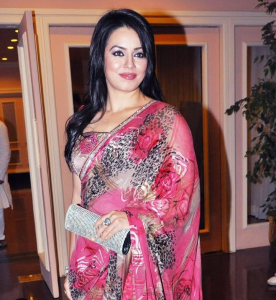
Early Life and Background (1973-1996)
Mahima completed her schooling in Darjeeling before moving to Delhi for higher education. She graduated from Jesus and Mary College, University of Delhi, one of the premier women’s colleges in India known for its academic excellence and for producing accomplished women across various fields. During her college years, she was known among peers for her beauty and grace, but acting was not yet on her radar as a serious career option. Like many young women of her generation, she was focused on completing her education and building what was expected to be a conventional professional life, perhaps in teaching, business, or civil services.
After completing her education, Mahima initially worked as a model, a path that many aspiring actresses took during the 1990s as the modeling industry in India experienced significant growth following economic liberalization. The opening up of the Indian economy had brought multinational brands to the country, creating unprecedented opportunities in advertising and fashion. Mahima’s striking looks, particularly her large expressive eyes, natural charm, and photogenic face made her a successful model. She appeared in numerous television commercials and print advertisements, gradually building a portfolio that showcased her ability to connect with the camera and convey emotions through her expressions.
Her modeling career provided her first taste of being in front of the camera and working in the entertainment industry. She learned about lighting, angles, how to take direction, and how to convey specific emotions or messages quickly and effectively within the constraints of thirty-second commercials or single-frame photographs. These skills would prove invaluable when she later transitioned to acting in films, where the ability to communicate complex emotions through facial expressions and body language is crucial. Little did she know that her work in advertising would become the unexpected launching pad for a film career she had never seriously contemplated.
Mahima Chaudhry Entry into Advertising and the Pepsi Phenomenon (1993-1996)
Mahima’s breakthrough in the public consciousness came through her appearance in television commercials, particularly her memorable role in a Pepsi advertisement that became a cultural phenomenon in mid-1990s India. During this period, multinational brands were aggressively marketing in the newly liberalized Indian economy, and television commercials were becoming increasingly sophisticated, moving beyond simple product announcements to create mini-narratives that captured public imagination. The advertising industry was discovering that memorable commercials could become part of popular culture, generating discussion and recall value that extended far beyond the immediate purpose of selling products.
Her most famous advertisement was for Pepsi, where she appeared alongside Aamir Khan, who was already an established film star with a reputation for choosing interesting projects and bringing intelligence to his roles. The commercial became enormously popular and is still remembered and referenced decades later, having achieved iconic status in Indian advertising history. In the ad, Mahima played a bride who escapes from her own wedding ceremony to spend time with her boyfriend played by Aamir Khan, sharing a Pepsi together in a moment of rebellion and romance. The playful narrative, which subtly challenged traditional expectations about arranged marriages and female behavior while maintaining enough lightness to avoid controversy, resonated with young Indians who were themselves navigating between tradition and modernity in the rapidly changing 1990s.
The chemistry between Mahima and Aamir Khan was palpable and natural, creating a romantic tension that made the thirty-second commercial feel like a compressed love story. The tagline and the visual storytelling caught the audience’s imagination, and virtually overnight, Mahima became known across India as “the Pepsi girl,” a moniker that gave her instant recognition in a country of nearly a billion people. Young men admired her beauty and spirit, young women related to her character’s desire for choice and romance, and the commercial became a talking point in colleges, offices, and homes across the country.
This commercial was significant for several reasons beyond its immediate popularity. First, it gave Mahima national recognition even before she entered films, making her a familiar face to millions of Indians who saw her on their television screens during prime-time programming. This pre-existing public awareness and goodwill would prove invaluable when she made her film debut. Second, it established her screen presence and demonstrated her ability to hold her own opposite an established star like Aamir Khan, showing that she had the charisma and natural talent to share screen space with accomplished actors without being overshadowed. Third, and most importantly, it brought her to the attention of filmmakers who were constantly scouting for fresh faces with screen appeal and the indefinable quality that makes audiences want to watch someone.
Beyond Pepsi, Mahima appeared in several other commercials for major brands, building an advertising portfolio that showcased her versatility and range. She had the girl-next-door appeal that brands sought for products targeting middle-class Indian families, the demographic with increasing purchasing power in the liberalizing economy. At the same time, she possessed sufficient glamour and aspirational quality to make products desirable to consumers who wanted to improve their lifestyles. This combination of relatability and aspiration would serve her extremely well when she transitioned to films, where the most successful actresses often embody this same duality, seeming both attainable and special, familiar yet extraordinary.
Her work in advertising taught her invaluable lessons about camera technique, the importance of expressions and timing, how to convey emotions quickly and effectively within severe time constraints, and how to take direction from creative professionals. These skills, learned in the condensed format of commercial production, translated directly to film acting where the ability to deliver authentic emotions on cue, often in multiple takes and out of sequence from the narrative, is essential. The advertising industry in the 1990s served as a crucial training ground and launching pad for several actresses who would go on to successful film careers, and Mahima was among the most successful of these transitions, her Pepsi commercial having achieved a level of cultural penetration that opened doors directly to the highest levels of Hindi cinema.
Mahima Chaudhry Bollywood Debut and Breakthrough: “Pardes” (1997)
Mahima’s entry into Bollywood came through one of the most successful and culturally significant films of 1997, “Pardes” meaning “Foreign Land,” directed by Subhash Ghai, one of the most powerful filmmaker-producers in the industry. Ghai had earned the title “showman” for his ability to deliver lavish, melodramatic films that often became massive commercial successes while also engaging with social themes. He was particularly known for his ability to spot and launch new talent, having previously introduced successful actresses like Madhuri Dixit and Manisha Koirala to Hindi cinema, both of whom had gone on to become major stars. His reputation for taking risks with newcomers and his track record of success meant that being chosen by Subhash Ghai for a lead role was considered a golden opportunity that could launch a major career.
According to various accounts, Subhash Ghai noticed Mahima in her Pepsi commercial and was immediately impressed by her screen presence, natural charm, and the way she connected with audiences through the camera. He was in the planning stages of “Pardes,” a film exploring the experiences of Indians living abroad and the complex questions of cultural identity that the diaspora faced. He was specifically looking for a fresh face to play the female lead opposite Shah Rukh Khan, who by 1997 had already established himself as one of the biggest stars in Bollywood following successes like “Dilwale Dulhania Le Jayenge” and “Dil To Pagal Hai.” Ghai had a reputation for believing that fresh faces brought authenticity to certain roles that established stars, with their accumulated public personas and previous screen histories, might struggle to convey. He saw in Mahima’s commercial performance a naturalness and emotional expressiveness that he felt would be perfect for the character of Ganga, the small-town Indian girl at the heart of his story.
Mahima was initially hesitant about accepting the role when it was offered to her. She had no formal training in acting, having stumbled into modeling almost by accident and never having imagined herself as a film actress. The prospect of making her debut in such a high-profile project opposite one of Bollywood’s biggest superstars was both exciting and terrifying. She was uncertain about her ability to carry a major film and worried about the potential for failure on such a visible platform. The pressure of working opposite Shah Rukh Khan, who was not only a major star but also known as an accomplished actor, was particularly daunting. However, Ghai was convinced of her potential and apparently spent considerable time persuading her to take the role, assuring her that he would guide her through the process and that her natural talent and authenticity were more important than formal training. His confidence in her, combined with the once-in-a-lifetime nature of the opportunity, eventually convinced Mahima to take the leap into Hindi cinema.
“Pardes” told the story of Ganga, a traditional Indian girl from a small town whose life becomes complicated when she is arranged to marry Rajiv, an NRI or Non-Resident Indian living in America. Rajiv’s wealthy father, wanting to ensure that his son’s bride would be suitable, sends his foster son Arjun, played by Shah Rukh Khan, to India to assess whether Ganga can adapt to American life and whether she embodies the traditional Indian values the father holds dear despite having made his fortune in America. As Arjun spends time with Ganga and her family, conducting what amounts to a test of her suitability, he finds himself drawn to her innocence, her strong values, her devotion to family, and her essential goodness. Meanwhile, Ganga is initially excited about the prospect of marrying Rajiv and going to America, seeing it as an adventure and an opportunity. However, when she actually arrives in the United States for the wedding, she discovers that Rajiv is thoroughly Americanized in the worst sense, disrespectful to his parents, involved in drinking and questionable behavior, and fundamentally lacking the character and values she was raised to cherish.
The film explored complex themes of cultural identity and belonging, asking what it means to be Indian regardless of where one lives geographically. It examined the tension between maintaining traditional values and adapting to modern Western life, a tension that millions of Indians in the diaspora were navigating in their daily lives. The film also dealt with questions of authenticity and superficiality, contrasting Rajiv’s shallow Americanization with Arjun’s deeper understanding that cultural identity is about values and character rather than geography or lifestyle markers. Through Ganga’s journey, the film examined how a traditional woman could maintain her core identity while engaging with modernity, and how strength of character could manifest in standing up for one’s values even when it meant rejecting a materially advantageous marriage.
Mahima’s performance as Ganga was widely praised by critics and audiences for its naturalness and emotional depth. She brought an authenticity to the role of a small-town girl that resonated with audiences across India and among the Indian diaspora abroad. Her portrayal captured multiple facets of Ganga’s character and her evolution throughout the narrative. In the early portions of the film set in India, she portrayed Ganga’s initial innocence and excitement about her upcoming marriage and journey to America with a lightness and joy that made the character immediately likable. Her interactions with her family, particularly her father and mother, established Ganga as deeply rooted in traditional family values while also possessing curiosity about the wider world.
The scenes between Mahima and Shah Rukh Khan, as Arjun tests Ganga’s suitability and they gradually develop feelings for each other, were handled with remarkable subtlety and sensitivity. Despite being a newcomer working opposite one of Bollywood’s biggest stars, Mahima held her own in every scene, creating a chemistry that made their growing attraction believable and moving. The romantic tension between Arjun and Ganga, developing gradually through small moments of connection and understanding, was portrayed with great delicacy. Their scenes together showed Mahima’s ability to convey complex emotions through subtle expressions and body language rather than relying on theatrical gestures or melodramatic dialogue delivery.
As the narrative moved to America and Ganga discovered the reality of Rajiv’s character, Mahima effectively portrayed her disappointment and disillusionment. The contrast between Ganga’s expectations and the reality she encountered was conveyed through Mahima’s expressive face and her physical withdrawal in scenes where Rajiv behaved inappropriately. Her growing realization that she had been deceived about what her marriage would be like, and her internal conflict about what to do given that backing out would bring shame to her family, was portrayed with nuanced emotional work that showed remarkable maturity for a debut performance.
The climactic scenes where Ganga finds her voice, stands up to Rajiv’s unacceptable behavior, and makes the difficult decision to break off her engagement despite the social consequences demonstrated Mahima’s ability to portray strength and agency. Her transformation from a somewhat passive figure whose life was being determined by others to a woman who asserts her right to be treated with respect and to make her own choices was the emotional and thematic core of the film. Mahima navigated this transformation convincingly, making Ganga’s journey feel earned rather than simply imposed by the screenplay’s requirements.
The film’s music, composed by the popular duo Nadeem-Shravan, was hugely successful and contributed significantly to the film’s popularity and cultural impact. Songs like “I Love My India,” which became an anthem of sorts for Indians proud of their heritage, “Yeh Dil Deewana,” a romantic number that captured the growing attraction between Arjun and Ganga, and “Do Dil Mil Rahe Hain,” another beautiful romantic song, became chartbusters that dominated radio and music television for months. Mahima was effectively picturized in these songs, and her graceful movements and expressive face made the musical sequences memorable and emotionally resonant. While she was not primarily known as a dancer and did not have the technical dance training that some actresses possessed, she performed the choreography competently and brought emotional depth to the songs that made them more than just visual spectacles or excuses for elaborate dance numbers.
“Pardes” was a major commercial success both in India and in overseas markets, becoming one of the highest-grossing films of 1997. It performed particularly well among the Indian diaspora in North America, the United Kingdom, the Middle East, and other regions where significant numbers of Indians had settled. The film’s themes of cultural identity, the tension between maintaining traditional values and adapting to new environments, and the question of what constitutes authentic Indian identity resonated powerfully with these audiences, who were living these questions in their daily lives as they navigated between their Indian heritage and their adopted countries’ cultures.
The critical response to the film and particularly to Mahima’s performance was overwhelmingly positive. Reviewers praised her natural acting style, her emotional expressiveness, her ability to make Ganga feel like a real person rather than a symbolic figure, and her chemistry with Shah Rukh Khan. Many critics noted that her performance had a freshness and authenticity that came precisely from her lack of formal training and previous film work, as she had not yet developed the mannerisms or self-consciousness that sometimes afflict more experienced actors.
Mahima’s performance earned her several prestigious awards that confirmed her arrival as a major new talent in Hindi cinema. She won the Filmfare Award for Best Female Debut in 1998, one of the most coveted awards for newcomers in the industry and an acknowledgment from both critics and the film industry establishment that she had delivered something special. More significantly, she also won the Filmfare Critics Award for Best Performance, an award given based on critical assessment rather than popular voting and one that is not typically given to debut performances. Winning both the popular and critics’ awards was highly unusual and signaled that Mahima was viewed as a serious actress with genuine talent and range, not just another pretty face who had gotten lucky with her first film or who was being promoted solely based on commercial considerations.
The success of “Pardes” and the acclaim for her performance positioned Mahima as one of the most promising newcomers in Bollywood. At just twenty-four years old, having never imagined she would become a film actress, Mahima found herself at the beginning of what seemed destined to be a long and successful career in Hindi cinema. Top production houses wanted to sign her, leading actors wanted to work with her, and directors saw her as someone who could bring authenticity and emotional depth to their films. The future looked extraordinarily bright, and there was widespread expectation in the industry that she would become one of the major actresses of her generation, potentially achieving the kind of sustained success and iconic status that only a handful of actresses manage to achieve in the competitive and unpredictable world of Bollywood.
Mahima Chaudhry Career Peak and Notable Films (1998-2002)
Following the spectacular success of “Pardes,” Mahima was flooded with offers from major production houses and opportunities to work with leading actors and directors. The period from 1998 to 2002 represented the peak of her career, during which she delivered several commercially successful films and memorable performances that established her as one of the leading actresses in Bollywood. During these years, she worked with the top heroes of the industry including Akshay Kumar, Ajay Devgn, Sanjay Dutt, and Sunil Shetty, and appeared in films from prestigious production houses that had the budgets and resources to mount major productions.
Among all the films she did during this fertile period, “Dhadkan” released in 2000 is widely considered Mahima’s finest performance and the role for which she is most remembered and celebrated. Directed by Dharmesh Darshan, who was known for making emotional romantic dramas with strong musical elements, the film was a love triangle that explored profound themes of love, sacrifice, duty, and redemption. The story centered on Anjali, played by Mahima, a young woman from a middle-class family who is deeply in love with Dev, a poor but passionate young man portrayed by Sunil Shetty. Their love is genuine and intense, the kind of first love that feels all-consuming and eternal. However, Anjali’s parents oppose the match due to Dev’s lack of financial resources and uncertain prospects, reflecting the harsh reality that romantic love often collides with practical considerations in Indian society.
Under pressure from her family and circumstances, Anjali is forced into an arranged marriage with Raam, played by Akshay Kumar, a wealthy man who falls deeply in love with Anjali the moment he sees her photograph. The film depicted Anjali’s internal conflict as she tried to be a dutiful wife to Raam, who treated her with respect and devotion, while still harboring feelings for her first love Dev. Raam represents a different kind of love, quieter and less dramatic than the passion she shared with Dev, but no less genuine in its depth and commitment. He accepts that Anjali’s heart belongs to another but believes that through his devotion and goodness he can eventually win her love. The situation becomes more complicated when Dev reenters Anjali’s life after several years, having become successful and wealthy, able now to offer her the life her family had wanted for her. Anjali must navigate between her passionate past with Dev and her duty-bound present with Raam, ultimately making choices about the meaning of love, commitment, and what kind of person she wants to be.
Mahima delivered a nuanced, layered performance that captured Anjali’s emotional complexity with great sensitivity and depth. The role required her to portray multiple dimensions of a woman in an impossible situation, and she rose to the challenge magnificently. In the early portions of the film, she portrayed Anjali’s youthful passion for Dev with an intensity and joy that made their love feel genuine and worth fighting for. The romantic scenes between Anjali and Dev had an urgency and abandon that conveyed the intoxicating nature of first love. Her devastation when forced to separate from Dev and marry Raam was portrayed through subtle emotional work, showing a woman whose spirit was being crushed by circumstances beyond her control.
The sequences depicting her reluctant entry into marriage with Raam conveyed the complex mix of resentment, guilt, and resigned acceptance that Anjali felt. She portrayed a woman going through the motions of married life while emotionally absent, physically present but spiritually elsewhere. The evolution of her relationship with Raam from cold formality to gradual warming was handled with great subtlety. Small moments showed Anjali beginning to recognize and appreciate Raam’s goodness, his patience with her emotional unavailability, his genuine care for her wellbeing, and his willingness to give her time and space to adjust to their marriage. Mahima conveyed this slow thawing through minute changes in body language, the softening of her expressions when looking at Raam, and brief moments of connection that suggested the possibility of genuine partnership developing.
The confrontation scenes when Dev returns to her life showed Mahima at her best as an actress. She portrayed the internal turmoil of a woman torn between past passion and present commitment through conflicted expressions and physical tension. The scenes where Anjali must choose between the dramatic passion of her first love and the quieter, steadier love her husband offers required tremendous emotional range and authenticity. She had to make the audience understand her attraction to both men while also conveying her growing recognition that passionate intensity is not the only, or necessarily the best, foundation for a life partnership.
The final portion of the film, where Anjali affirms her commitment to her marriage and rejects Dev despite her lingering feelings, demonstrated both Mahima’s acting abilities and the moral complexity at the heart of the film. She portrayed a woman who chooses duty and loyalty not out of weakness or mere social obligation, but from a mature recognition that Raam’s unconditional love and respect had earned her commitment, and that real love involves choice and dedication rather than just following one’s immediate desires. The final scenes between Anjali and Raam, where she finally fully opens her heart to him, were moving and redemptive, showing a marriage that had been tested and emerged stronger.
The film required Mahima to convey this entire emotional journey through subtle expressions and body language as much as through dialogue. Critics particularly praised her scenes with Akshay Kumar, where she portrayed a wife gradually overcoming her past and building a genuine relationship with her husband. The chemistry between Mahima and Akshay Kumar was electric, making their relationship’s evolution from arranged marriage to genuine love not just believable but deeply moving. Her chemistry with Sunil Shetty in the flashback sequences and the scenes where Dev returns was equally strong, conveying passionate intensity that made Anjali’s conflict understandable and her final choice all the more powerful.
“Dhadkan” featured highly successful music by Nadeem-Shravan, with songs that became not just commercial hits but enduring classics that are still played at weddings and romantic occasions decades later. “Dil Ne Yeh Kaha Hai Dil Se,” “Tum Dil Ki Dhadkan Mein,” and “Aksar Is Duniya Mein” became massive hits that dominated music charts for months. Mahima’s picturization in these songs was both glamorous and tasteful. She looked beautiful in the elaborate costumes and jewelry, styled in ways that enhanced her natural beauty without overwhelming it. Her expressions in the romantic songs conveyed the emotional states of her character at different points in the story, making the songs integral to the narrative rather than just interruptive musical numbers.
“Dhadkan” was a major commercial success, becoming one of the highest-grossing films of 2000. More importantly, it achieved the status of a classic in Hindi romantic cinema, the kind of film that audiences return to repeatedly and that continues to be shown regularly on television. The film’s exploration of different kinds of love and its validation of duty and loyalty as legitimate bases for romantic commitment resonated with audiences in ways that more conventional romantic narratives did not. Mahima’s performance earned her several nominations for Best Actress at various award ceremonies, and while she did not win the top prizes, her performance was widely acknowledged as career-defining. Many critics, film scholars, and audiences consider “Dhadkan” her finest work, the performance that best showcased her abilities as an actress and that represents her most enduring contribution to Hindi cinema.
Beyond “Dhadkan,” Mahima appeared in numerous other films during this peak period of her career. In “Daag: The Fire” released in 1999 and directed by Raj Kanwar, she starred opposite Sanjay Dutt and Chandrachur Singh in an action-drama dealing with themes of love, betrayal, and revenge. She played Kavita, a woman caught in a love triangle that turns tragic when circumstances beyond her control destroy her happiness. While the film had only moderate commercial success and was primarily an action vehicle showcasing Sanjay Dutt’s star power and physical presence, Mahima’s performance was praised for bringing emotional depth to what could have been a one-dimensional role. The film gave her an opportunity to work with Sanjay Dutt, one of Bollywood’s biggest and most intense stars, and she held her own in dramatic scenes opposite him, demonstrating that she could match the intensity of experienced actors known for their powerful screen presence.
“Kurukshetra” released in 2000 was an ambitious action thriller starring Sanjay Dutt, with Mahima playing the female lead in a film inspired by Hollywood action movies. The film featured elaborate action sequences with helicopters, explosions, complex fight choreography, and high-octane stunts that were unusual for Hindi cinema at the time. While primarily focused on showcasing Dutt’s action hero credentials, Mahima brought warmth and emotional credibility to her role, providing the human element in a film otherwise dominated by spectacle. She gave the audience someone to care about amid all the violence and pyrotechnics, grounding the fantastic action in relatable human emotions.
In “Deewane” released in 2000, Mahima starred opposite Ajay Devgn in a romantic thriller that explored darker themes of obsession and dangerous attraction. The film allowed her to demonstrate her versatility by portraying a more complex, layered character than the simple, traditional roles she had initially played. She effectively conveyed both vulnerability and strength, fear and determination, making her character more than just a victim but rather a woman actively fighting for her safety and autonomy. The role showed her ability to handle material that was more psychologically complex than straightforward romantic dramas.
“Lajja” released in 2001 was perhaps the most significant film of this period in terms of artistic ambition and social relevance, representing a deliberate departure from conventional romantic narratives. Directed by Rajkumar Santoshi, known for his ability to make both commercial entertainers and socially conscious films, “Lajja” was an ensemble production featuring several leading actresses including Manisha Koirala, Rekha, Madhuri Dixit, and Mahima. The film was a hard-hitting social drama that addressed various forms of oppression and violence against women in Indian society through interconnected stories. Each actress played a woman facing different challenges including domestic violence, honor killing, religious discrimination, and exploitation, with their stories linked through encounters with a mysterious woman who appears at crucial moments.
Mahima played Janki, a theater actress who faces exploitation and sexual assault, experiencing the brutal reality of how women in the entertainment industry can be victimized and how society often silences victims rather than supporting them. Her segment of the film was particularly powerful and difficult, dealing unflinchingly with sexual violence and its psychological aftermath. The role required Mahima to portray extreme vulnerability and trauma while also showing the character’s journey toward finding her voice and refusing to accept the shame that society attempts to impose on victims. She had to depict the psychological aftermath of assault, the struggle to reclaim dignity in a society that blames victims, and the courage required to speak truth to power even when doing so brings more suffering in the short term.
“Lajja” was important for Mahima’s career because it demonstrated her willingness to take on socially relevant, challenging roles that went beyond conventional romantic narratives and commercial considerations. The film received critical acclaim for its bold, unflinching treatment of women’s issues and for not softening or romanticizing the violence it depicted. While it had limited commercial success due to its dark subject matter and the discomfort many audiences felt watching such brutal honesty about violence against women, it was respected as an important film that used Hindi cinema’s reach to address urgent social problems.
Mahima’s performance in “Lajja” was praised for its honesty and emotional rawness. She convincingly portrayed the journey from victimhood to empowerment, from shame and silence to defiance and public testimony. Her scenes were among the film’s most impactful, showing that she was capable of handling complex, serious material that demanded more than the pleasant romanticism of conventional Bollywood films. The film showed industry professionals and audiences that she had greater range and depth as an actress than her earlier roles had required her to demonstrate.
During this fertile period, Mahima also appeared in “Pyaar Koi Khel Nahin” released in 1999 opposite Sunil Shetty in a romantic thriller that achieved moderate success, “Dil Kya Kare” also released in 1999 opposite Ajay Devgn and Kajol in a love triangle drama where she played the other woman who disrupts an established marriage, “Raju Chacha” released in 2000 with Ajay Devgn attempting a family entertainer, “Yeh Teraa Ghar Yeh Meraa Ghar” released in 2001 opposite Sunil Shetty in a comedy-drama about housing conflicts in Mumbai, “Dil Hai Tumhaara” released in 2002 where she had a supporting role alongside Preity Zinta and Arjun Rampal, and “Om Jai Jagadish” released in 2002, a multi-starrer family drama featuring Abhishek Bachchan, Fardeen Khan, and Anil Kapoor.
Not all these films were commercially successful, and some were poorly received by both critics and audiences. However, the sheer volume of work kept Mahima visible and demonstrated that she was in demand from production houses and was being offered opportunities to work with top actors. The variety of genres she attempted during this period, from romantic dramas to action thrillers to social issue films, showed her willingness to experiment and avoid being completely typecast in a single kind of role. Nevertheless, by 2002, there were troubling signs that her career momentum was beginning to slow despite only five years having passed since her spectacular debut.

Mahima Chaudhry Career Decline and Personal Challenges (2003-2008)
After the successful run from 1997 to 2002, Mahima’s career began to decline significantly, and the period from 2003 to 2008 saw her professional opportunities diminish substantially. She struggled to maintain the momentum she had built during her peak years, and the combination of personal setbacks and changing industry dynamics created a perfect storm that derailed what had seemed like a promising long-term career. Several interconnected factors contributed to this unfortunate downturn, some within her control and others representing forces much larger than any individual actress could resist.
The most dramatic and consequential setback was a serious car accident that Mahima suffered in 1999 while returning from a shooting schedule. The accident occurred when her car collided with a truck, and Mahima sustained severe facial injuries with glass shards from the shattered windshield embedding in her face, particularly around her eyes and cheeks. For an actress whose face was her primary professional asset in an industry obsessed with beauty and youth, such injuries were potentially career-ending. The accident’s impact extended far beyond the immediate physical trauma, creating ripple effects that would influence her career trajectory for years to come.
The physical consequences were substantial and frightening. Mahima’s face was severely cut and lacerated, with multiple pieces of glass embedded that required careful surgical removal to prevent permanent scarring and nerve damage. She underwent multiple surgeries including plastic surgery procedures aimed at minimizing scarring and restoring her appearance as much as possible. The medical interventions were largely successful, and when she eventually returned to films, audiences could barely detect any lasting damage, which was testament to both excellent medical care and perhaps fortunate circumstances that the injuries, while severe, had not caused irreparable harm. However, the recovery process took many months during which she could not work, and there was considerable uncertainty about whether her face would heal properly and whether she could continue her acting career at all.
The psychological impact of such a traumatic accident, while less visible than physical injuries, was equally significant and perhaps more lasting. The sudden violence of the accident, the fear and pain of the immediate aftermath, the uncertainty about her future and whether her career was over, and the psychological trauma of having one’s appearance, which had been a source of professional success and personal identity, suddenly threatened, all created tremendous stress and anxiety. While Mahima has maintained her characteristic privacy and not spoken extensively about the emotional toll of the accident, such experiences inevitably affect confidence, mental health, and one’s approach to work and life. The fear of permanent disfigurement, the anxiety about whether she would ever look the same, and the forced confrontation with the fragility of a career built on physical appearance would have been psychologically devastating for anyone, but particularly for a young woman in her mid-twenties at the peak of her career.
The career disruption caused by the accident was perhaps the most damaging consequence in professional terms. The accident occurred precisely when Mahima was riding high on the success of “Pardes” and building momentum with upcoming films like “Dhadkan.” The months spent in recovery meant missing shooting schedules for films she had already signed, potentially losing roles to other actresses who replaced her when she was unavailable, and most damagingly, being out of public view during a crucial period when maintaining visibility was essential for career momentum. In Bollywood, being hot is extremely time-sensitive, with audience interest and industry perception capable of shifting rapidly. The fickle nature of public attention means that absence from screens and public consciousness can quickly lead to being forgotten or replaced by the next new face. During Mahima’s absence, other actresses filled the space she had occupied, and producers and directors moved on to new favorites.
The accident also created uncertainty among filmmakers about her reliability and future prospects. Film productions operate on tight schedules and budgets, with delays costing significant money and potentially derailing entire projects. Producers are understandably wary of casting someone whose health might be uncertain or who might require additional time off for medical treatments. Even after Mahima returned to work and her face had healed, some damage to her career trajectory had already occurred. The momentum she had built coming off “Pardes” had dissipated, and she had to work harder to regain lost ground in an increasingly competitive industry that had moved on during her absence.
Beyond the accident, changing industry dynamics were working against Mahima in ways that would have been challenging even without the career interruption. The early 2000s saw dramatic changes in Bollywood with a new generation of actresses emerging who captured audience attention and producer interest. Kareena Kapoor, who came from the prestigious Kapoor film dynasty, was establishing herself as a major star with a more contemporary, bold image. Preity Zinta was enjoying success with her bubbly, modern persona that contrasted with Mahima’s more traditional screen image. Rani Mukerji, who also had film family connections, was delivering acclaimed performances in both commercial films and more serious, content-driven projects. Later in the decade, actresses like
Leave a Reply