
Who is Martin Kpebu?
Today let’s talk about Martin Kpebu Biography: In a nation where speaking truth to power can be professionally dangerous and where challenging the establishment often comes with significant personal costs, Martin Luther Kpebu stands out as one of Ghana’s most fearless legal voices. Born on October 15, 1978, in Accra, Ghana, Kpebu has built a reputation as a human rights lawyer who doesn’t just practice law but uses it as a tool for social transformation. Now forty-six years old, he has become a household name across Ghana, known equally for his landmark Supreme Court victories that have expanded the rights of accused persons, his passionate advocacy for press freedom and juvenile justice, and his willingness to publicly criticize government policies regardless of which political party is in power. His journey from a business administration student to one of Ghana’s most respected and outspoken legal minds is a testament to the power of courage, principle, and unwavering commitment to justice.
Martin Kpebu Biography
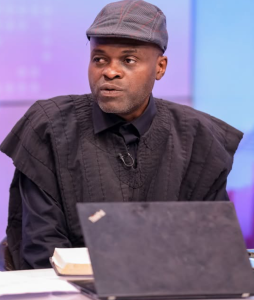
Martin Kpebu Early Life and Family Background
Martin Luther Kpebu was born into a family identified simply as Mr. and Mrs. Kpebu, about whom specific details remain largely private. This privacy surrounding his family background is characteristic of Kpebu’s approach to his personal life; he has consistently maintained a clear boundary between his very public professional advocacy and his private family affairs. While he has been forthcoming about his professional work, his legal philosophy, and his views on Ghana’s governance, he has been much more guarded about personal details, protecting his family from the spotlight that inevitably follows someone as outspoken as he has become.
What is known is that Kpebu belongs to the Akan tribe, one of Ghana’s major ethnic groups that includes the Ashanti, Fante, Akuapem, Akyem, and other subgroups. The Akan people have played significant roles in Ghana’s history and continue to be influential in the country’s political, economic, and cultural life. Growing up in Accra, Ghana’s bustling capital city, Kpebu was exposed from an early age to the complexities of urban Ghanaian life, with its mix of traditional and modern influences, its stark economic inequalities, and its vibrant political culture.
Accra in the late 1970s and 1980s, when Kpebu was growing up, was a city experiencing significant political and economic turmoil. Ghana had gone through multiple coups, was under military rule for much of Kpebu’s childhood, and was grappling with severe economic challenges. These formative years, witnessing both state power and state failure, likely planted early seeds of his later commitment to accountability, rule of law, and protection of rights against arbitrary state action. Growing up seeing how political instability and poor governance affected ordinary Ghanaians may have inspired his eventual choice to pursue law as a tool for social change rather than merely as a profession.
Martin Kpebu Education: From Business to Law
Martin Kpebu’s educational journey took an unexpected turn that would ultimately define his career. He began his tertiary education at St. Charles Minor Seminary for his high school years, an institution that combined academic education with religious formation. This early exposure to Catholic seminary education, with its emphasis on service, moral reasoning, and social justice, may have influenced the ethical framework that would later guide his legal career.
In 2002, Kpebu completed a Bachelor of Science degree in Business Administration, specializing in Banking and Finance, at the University of Ghana, Legon. This prestigious institution, Ghana’s premier university, provided him with a solid understanding of financial systems, corporate structures, and business operations. The choice to study banking and finance suggested a career path toward the corporate world, perhaps in banking, finance, or business management—conventional, stable career options that might appeal to a young man from a middle-class family.
However, somewhere during or shortly after completing this degree, Kpebu experienced what he would later describe as a calling toward law. Perhaps witnessing injustices in Ghanaian society, or recognizing that financial and business knowledge alone wouldn’t address the deeper systemic problems facing his country, or simply discovering a passion for legal reasoning and advocacy, Kpebu made the decision to pivot entirely and pursue legal education.
In 2005, he obtained a Bachelor of Laws (LL.B) from the University of Ghana. This degree represented not just three additional years of study but a fundamental reorientation of his career trajectory. The LL.B program at Leg on is rigorous and competitive, requiring mastery of multiple areas of law, development of analytical reasoning skills, and understanding of both Ghanaian law and its foundations in English common law. Kpebu’s previous business education would have given him advantages in understanding commercial and corporate law, but he now had to master constitutional law, criminal law, torts, contracts, and the many other subjects that form the foundation of legal practice.
After completing the LL.B, Kpebu enrolled at the Ghana School of Law, the professional law school that all aspiring lawyers in Ghana must attend after their university law degree. The Ghana School of Law provides practical legal training, teaching students how to actually practice law rather than just understand legal theory. In 2007, Kpebu completed his Qualifying Certificate in Law and was called to the Ghana Bar, officially becoming a lawyer entitled to practice in Ghana’s courts.
But Kpebu wasn’t finished with his education. Recognizing that specialized knowledge would be increasingly valuable in Ghana’s developing economy, particularly given the country’s recent oil discoveries, Kpebu pursued a Master of Laws (LL.M) in Oil and Gas Law from the University of Ghana in 2013. This specialization positioned him to handle complex commercial matters in Ghana’s emerging petroleum sector, an area where significant legal work and substantial fees were available. It demonstrated his understanding that effective advocacy for the poor and vulnerable would be enhanced by also having expertise in areas that could provide financial stability and connect him with Ghana’s business and political elite.
Martin Kpebu Building a Legal Career: Corporate Law and Litigation
After being called to the Ghana Bar in 2007, Martin Kpebu began building his legal career in both corporate law and litigation. He became a partner at GT Legal Africa, a law firm specializing in corporate law and litigation. Later, he also became associated with Blackstar Legal, expanding his practice and professional network. This dual focus on corporate matters and litigation was strategically sound: corporate work provided steady income and connected him with Ghana’s business community, while litigation allowed him to engage with the kinds of cases that could make meaningful social impact.
His practice at Fugar & Company, another firm he worked with, focused on litigation, mining law, and corporate law. Mining law was particularly significant given Ghana’s status as a major gold producer and the increasing concerns about illegal mining’s environmental and social impacts. Corporate law work involved advising businesses on compliance, contracts, structuring deals, and navigating Ghana’s regulatory environment. This work was lucrative and professionally satisfying, but it wasn’t where Kpebu would make his most significant contributions.
From early in his career, Kpebu showed a willingness to take on cases that other lawyers might avoid: cases challenging government actions, cases involving accused persons with few resources, cases that pitted him against powerful interests. He developed a reputation as a lawyer who was technically skilled, thoroughly prepared, and absolutely fearless in court. His business and finance background gave him credibility when dealing with commercial matters, but his passion clearly lay in using law as a tool for social change and protecting individual rights against state power.
Martin Kpebu Landmark Supreme Court Victories: Changing Ghana’s Legal Landscape
Martin Kpebu’s most significant professional achievements came through a series of landmark Supreme Court cases that fundamentally changed Ghana’s criminal justice system. Successfully arguing cases before Ghana’s highest court is difficult under any circumstances, as the justices are the country’s most experienced and sophisticated legal minds. Arguing cases that challenge established laws and practices, asking the court to strike down provisions that have existed for decades, requires not just legal skill but courage and conviction.
Kpebu successfully argued four different cases before the Supreme Court of Ghana that led to the court striking down two laws that infringed on human rights and interpreting two other laws in ways that enhanced protections for accused persons and their sureties. These weren’t minor technical adjustments; they were fundamental reforms that changed how Ghana’s criminal justice system operates.
Perhaps his most celebrated victory was ensuring that all criminal offenses in Ghana are now bailable. Previously, certain serious offenses were considered non-bailable, meaning accused persons could be held in prison indefinitely while awaiting trial, sometimes for years. This effectively meant punishment before conviction, as people who were legally innocent until proven guilty could languish in often terrible prison conditions simply because they were accused of certain crimes. Kpebu’s successful argument before the Supreme Court established that denying bail entirely violated constitutional protections, and that while bail conditions could be strict for serious offenses, no one could be denied the possibility of bail altogether.
His other major victory involved protecting sureties (people who guarantee that an accused person will appear for trial) from imprisonment if the accused person absconded. Under the previous law, if someone stood surety for an accused person and that person fled, the surety could be imprisoned. This created a situation where innocent people who were simply trying to help a relative or friend could end up in jail themselves, which obviously discouraged people from standing surety and made it harder for accused persons to secure bail. Kpebu successfully argued that imprisoning sureties violated their rights and was unconstitutional, leading the Supreme Court to strike down this provision.
These victories were groundbreaking not just in their immediate legal effects but in their broader impact on how Ghanaians understood rights and justice. They demonstrated that even long-standing laws could be successfully challenged if they violated constitutional protections. They showed ordinary Ghanaians that the legal system could be reformed through strategic litigation. And they established Kpebu as someone who could win cases against the state even when powerful interests preferred the status quo.
The cases also demonstrated Kpebu’s legal philosophy: that the rights of accused persons must be vigorously protected, that procedural protections aren’t mere technicalities but fundamental safeguards against state overreach, and that Ghana’s Constitution provides powerful tools for protecting individual rights if lawyers are willing to use them creatively and courageously.
Martin Kpebu Academic Contributions: Teaching the Next Generation
Beyond his litigation practice, Martin Kpebu has been deeply committed to legal education and mentoring the next generation of Ghanaian lawyers. He has served as a lecturer at the University of Ghana, his alma mater, and has also taught at Central University and Accra Technical University. These teaching roles reflect his belief that lasting change in Ghana’s legal system requires not just winning individual cases but also shaping how future lawyers think about law, justice, and their professional responsibilities.
As a lecturer, Kpebu brings practical experience from his litigation practice directly into the classroom. His students don’t just learn abstract legal theories; they learn from someone who has actually argued landmark cases before the Supreme Court, who has faced down powerful opponents, and who has experienced both the possibilities and limitations of using law as a tool for change. This combination of theoretical knowledge and practical wisdom makes him a particularly effective educator.
His teaching also serves another purpose: identifying and mentoring young lawyers who share his commitment to social justice and public interest law. The legal profession in Ghana, as elsewhere, often pulls talented young lawyers toward lucrative corporate practice and away from the less financially rewarding work of human rights advocacy and public interest litigation. By teaching and mentoring, Kpebu helps ensure that at least some of each generation’s brightest legal minds dedicate themselves to justice and social reform rather than purely to profit.
Law students across Ghana study Kpebu’s Supreme Court cases as examples of bold and brilliant legal advocacy. His arguments have become teaching tools, his victories are celebrated examples of what’s possible, and his career path is held up as a model for those who want to combine professional success with social impact.
Martin Kpebu Founder of the Juvenile Justice Project: Protecting the Vulnerable
Perhaps no initiative better exemplifies Martin Kpebu’s commitment to social justice than his founding of the Juvenile Justice Project, a non-governmental organization that provides free legal representation to juveniles in Accra. Ghana’s juvenile justice system, like those in many developing countries, often fails the young people it’s supposed to serve. Children and teenagers accused of crimes frequently lack legal representation, don’t understand the proceedings against them, and can end up in detention facilities that damage rather than rehabilitate them.
The Juvenile Justice Project addresses this gap by ensuring that minors facing criminal charges have competent legal representation regardless of their ability to pay. The organization doesn’t just provide lawyers for court appearances; it provides holistic support, working with families, social workers, and other stakeholders to address the underlying issues that often contribute to juvenile delinquency. The goal isn’t just to win acquittals but to help young people get back on track toward productive lives.
Running this organization requires significant resources—lawyers must be compensated or volunteer their time, administrative costs must be covered, and the organization needs sustainable funding to continue its work. That Kpebu founded and maintains this initiative while also running his private practice demonstrates his genuine commitment to using law for social good rather than just professional advancement. Many lawyers talk about giving back or helping the vulnerable; Kpebu actually does it in a sustained, institutionalized way.
The focus on juveniles is particularly important in Ghana’s context. Young people who enter the criminal justice system without proper representation and support often emerge more damaged than when they entered, their futures foreclosed by criminal records acquired while they were still children. By intervening early, providing good representation, and connecting young people with support services, the Juvenile Justice Project gives vulnerable youth a chance to avoid the downward spiral that criminal justice involvement can trigger.
Martin Kpebu Champion of Press Freedom: Defending Journalists
Martin Kpebu has been an outspoken and active defender of press freedom and journalists’ safety in Ghana. In a country where investigative journalists face threats, violence, and legal harassment when they expose corruption or challenge powerful interests, having a prominent lawyer willing to stand up for press freedom is crucial. Kpebu has gone beyond just legal representation; he has organized crowdfunding initiatives to support injured journalists, publicly condemned attacks on the press, and consistently advocated for laws that protect rather than restrict journalism.
Ghana is often celebrated as one of West Africa’s strongest democracies, and its press is generally considered relatively free by regional standards. However, journalists still face significant risks, particularly those investigating corruption, organized crime, or abuse of power by government officials. Threats, physical attacks, and legal harassment through criminal defamation charges are tools used to silence critical journalism. When journalists face these pressures, having lawyers like Kpebu willing to defend them makes the difference between press freedom in theory and press freedom in practice.
Kpebu understands that a free press is essential to democracy and accountability. Journalists uncover the corruption and malfeasance that lawyers like him can then challenge in court. By defending journalists, Kpebu is defending the ecosystem of accountability that makes good governance possible. His advocacy for press freedom is consistent with his broader philosophy: that speaking truth and exposing wrongdoing, whether done by lawyers, journalists, or ordinary citizens, must be protected against attempts to silence it.
The Public Intellectual: Television Appearances and Political Commentary
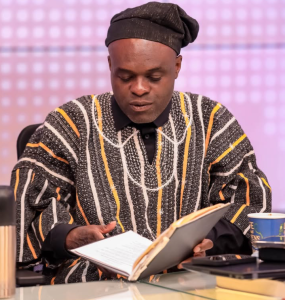
What truly sets Martin Kpebu apart from many accomplished lawyers is his willingness to engage with the public directly through television appearances, radio interviews, and social media. In Ghana’s vibrant media landscape, political and legal commentators regularly appear on television to discuss current events, analyze government policies, and offer expert perspectives. Kpebu has become one of the most recognizable and sought-after commentators, known for his clear explanations of complex legal issues and his willingness to criticize government actions regardless of political consequences.
His appearances on programs like those on TV3 Ghana, JoyNews, Adom TV, and 3News have made him a household name far beyond Ghana’s legal community. When major legal or political controversies arise, producers call Kpebu knowing he will provide informed, articulate, and often strongly critical analysis. Unlike some commentators who speak in careful, hedged language designed to avoid offense, Kpebu is direct, passionate, and unafraid to call out what he sees as wrongdoing or incompetence.
This public profile comes with risks. Politicians don’t appreciate criticism, particularly from someone as articulate and influential as Kpebu. Being constantly in the public eye invites scrutiny of one’s own life and conduct. Some colleagues in the legal profession have likely advised him to be more cautious, to avoid being so publicly outspoken, to protect his commercial practice by not alienating potential clients connected to government. Yet Kpebu has consistently chosen to use his platform to speak truth regardless of these concerns.
His commentary extends across a wide range of issues: corruption investigations, parliamentary procedures, judicial decisions, police conduct, electoral integrity, and general governance matters. He has been equally willing to criticize the New Patriotic Party (NPP) government and the opposition National Democratic Congress (NDC), maintaining political independence even as some have tried to label him as aligned with one party or another. This independence is crucial to his credibility; if he were seen as simply a partisan advocating for one side, his voice would carry much less weight.
Martin Kpebu Political Independence and Critique of Governance
One of Martin Kpebu’s defining characteristics is his determined political independence. In Ghana’s intensely partisan political environment, where most prominent figures are identified with either the NPP or NDC, Kpebu has maintained a stance of holding all political leaders accountable regardless of party affiliation. He has publicly stated that he does not align himself with any political party, focusing instead on ensuring justice and accountability in governance.
This independence is rare and valuable. It means that when Kpebu criticizes government policies or actions, it’s understood to reflect his genuine assessment of whether those actions serve justice and the public good, not partisan calculations about helping one party against another. It also means that his praise, when given, carries weight because it’s not reflexive party loyalty but considered judgment.
His criticism of both current and past administrations has been fearless and sometimes scathing. He has condemned corruption, incompetence, abuse of power, and failure to deliver on promises, regardless of who is responsible. This has earned him enemies across the political spectrum but has also earned him respect from Ghanaians who are tired of partisan cheerleading masquerading as analysis.
This independence came with an interesting twist in December 2024 when President-elect John Dramani Mahama appointed Kpebu to his transition team’s anti-corruption initiative. Some might have seen this as compromising his independence, but Kpebu’s appointment alongside other respected anti-corruption figures suggested it was recognition of his expertise and track record rather than an attempt to co-opt him. How he navigates this role while maintaining his reputation for independent critique will be closely watched.
Martin Kpebu Operation Recover All Loot: A New Chapter
In December 2024, as John Dramani Mahama prepared to assume office as Ghana’s President, Martin Kpebu found himself appointed to one of the most high-profile and politically sensitive roles of his career. On December 18, 2024, Mahama’s transition team announced the formation of a preparatory team for Operation Recover All Loot, an ambitious anti-corruption initiative that had been a central promise of Mahama’s 2024 presidential campaign.
The five-member team, chaired by Member of Parliament Samuel Okudzeto Ablakwa, included some of Ghana’s most respected anti-corruption figures. Alongside Kpebu were Daniel Yao Domelevo, Ghana’s former Auditor-General who had earned a reputation as a fearless corruption fighter before being forced from office; retired Commissioner of Police Nathaniel Kofi Boakye, bringing law enforcement expertise; and investigative journalist Raymond Archer, whose reporting had exposed numerous corruption scandals.
According to the transition team’s statement, signed by spokesperson Felix Kwakye Ofosu, the team’s mandate was to gather information from the public and other credible sources about suspected acts of corruption. This preparatory work would lay the groundwork for Mahama’s Operation Recover All Loot initiative, which aimed to reclaim proceeds from corrupt practices and hold perpetrators accountable. The statement emphasized that “Anti-corruption, with Operation Recover All Loot (ORAL) as a major plank, formed a core part of H.E. John Dramani Mahama’s policy platform in the 2024 campaign, and he intends to hit the ground running on these commitments.”
The team launched various platforms for public engagement, including a website at oralgh.org, a toll-free number (0800 900 111), and an email address, encouraging Ghanaians to submit information on suspected corruption. The transition team assured the public that all information would be “handled expeditiously and with utmost discretion.”
For Kpebu, this appointment represented both validation and challenge. It validated his years of anti-corruption advocacy, his legal expertise, and his reputation for integrity. Being chosen for such a high-profile role alongside figures like Domelevo demonstrated that his work was recognized at the highest levels. However, it also presented significant challenges. Anti-corruption work is inherently difficult and dangerous, particularly when it targets powerful individuals who have resources to resist investigation. Moreover, working with an incoming government could potentially compromise the political independence that had been one of Kpebu’s greatest assets.
The ORAL initiative faces formidable obstacles. Ghana has struggled with corruption for decades, and while successive governments have promised to fight it, progress has been limited. Powerful interests benefit from corrupt systems and will resist efforts to dismantle them. Ghana’s legal system, while generally functional, can be slow and subject to political influence. International cooperation will be necessary to recover assets hidden abroad, but such cooperation is often difficult to secure. And perhaps most challenging, there’s the risk that ORAL itself could become politicized, used to target opposition figures while protecting allies of the new government.
How Kpebu navigates these challenges will be watched closely. Will he maintain his independence and willingness to pursue corruption wherever it leads, even if that includes figures connected to the Mahama administration? Will the initiative be given the resources and political support necessary to succeed, or will it become another well-intentioned effort that accomplishes little? Can Kpebu balance his role on this team with his ongoing private practice, his teaching, and his other commitments? These questions will be answered in the months and years ahead.
Martin Kpebu Personal Life: Faith Kpebu and Family
Despite his very public professional life, Martin Kpebu has maintained considerable privacy around his personal life. He is married to Mrs. Faith Kpebu, who has been described as a significant source of support throughout his career. While specific details about their relationship, how they met, when they married, and their life together remain private, those who know Kpebu have noted that Faith has been a stabilizing presence, providing the emotional support and domestic stability that allows him to pursue his demanding professional commitments.
The couple has children, though specific details about how many children they have, their ages, and other information has not been publicly disclosed. This privacy is deliberate and understandable. Given Kpebu’s high public profile and his willingness to challenge powerful interests, protecting his family from unwanted attention and potential threats is wise. By keeping details about his children out of the public sphere, he shields them from the scrutiny and pressure that inevitably accompanies being the child of a controversial public figure.
Kpebu’s ability to balance his intense professional commitments with family life speaks to both his own discipline and likely his family’s understanding and support of his work. His schedule is undoubtedly demanding: maintaining a legal practice, teaching at multiple universities, running the Juvenile Justice Project, making regular media appearances, preparing for court cases, and now serving on the ORAL preparatory team. That he manages all this while maintaining a marriage and raising children suggests strong support at home and careful prioritization.
Those who have worked closely with Kpebu describe him as someone who, despite his public fierceness and willingness to engage in confrontation when principles are at stake, is personally warm, gracious, and collegial. He is known to be generous with his time when mentoring young lawyers, patient in explaining complex legal concepts to non-lawyers, and capable of maintaining professional relationships even with those he disagrees with strongly on substantive matters.
Martin Kpebu Net Worth and Financial Philosophy
Martin Kpebu’s estimated net worth is between $270,000 and $600,000 USD. This relatively modest wealth for someone of his prominence and legal accomplishments reflects his commitment to public service over personal enrichment. Lawyers with Kpebu’s skills, education, and reputation could easily earn substantially more by focusing exclusively on lucrative corporate work, representing wealthy clients, or engaging in the kinds of transactional legal work that generates large fees.
Instead, Kpebu has chosen to dedicate significant time and resources to work that doesn’t generate substantial income: representing juveniles through his NGO, taking on human rights cases that may have little or no fee, spending time on media appearances that raise awareness but don’t directly generate revenue, and teaching at universities where academic salaries are modest compared to private practice earnings. His specialization in oil and gas law provides opportunities for well-compensated work, and his corporate law practice generates steady income, but these revenue streams support both his personal needs and his ability to do public interest work.
This financial philosophy reflects his values and priorities. He has chosen meaningful work over maximum wealth, social impact over purely personal gain. This doesn’t mean he lives in poverty or struggles financially; his income provides a comfortable middle-class lifestyle for his family. But it does mean he’s foregone the possibility of becoming truly wealthy, which he could have achieved by making different choices about how to deploy his legal talents.
In Ghana’s context, where lawyers with international training and Supreme Court experience can command very high fees, particularly in commercial and corporate matters, Kpebu’s relative financial modesty is notable. It also enhances his credibility as an anti-corruption advocate; he can’t be accused of hypocritically criticizing others’ pursuit of wealth while single-mindedly pursuing his own.
Martin Kpebu Social Media Presence and Public Engagement
In the digital age, Martin Kpebu has effectively leveraged social media to extend his reach and influence beyond traditional media appearances. His presence on platforms like Twitter (X), Facebook, and others allows him to engage directly with the Ghanaian public, share quick reactions to breaking news, explain legal developments, and maintain visibility between his television appearances and courtroom battles.
His social media style mirrors his television persona: direct, informative, and unafraid of controversy. He shares analyses of current events, comments on government actions, promotes press freedom and human rights causes, and engages with followers who ask questions or challenge his positions. This direct engagement makes him accessible to ordinary Ghanaians in a way that lawyers of previous generations never were.
Videos of his television appearances regularly go viral on social media, shared widely by Ghanaians who appreciate his willingness to articulate criticisms that many people feel but fear to express publicly. When he makes a particularly pointed critique of government policy or eloquently defends a controversial position, clips of those moments circulate on WhatsApp, Twitter, and Facebook, reaching audiences far beyond those who saw the original broadcast.
This social media presence serves multiple purposes for Kpebu. It keeps him visible and relevant in Ghana’s fast-moving public discourse. It allows him to shape narratives around legal and political issues. It provides a platform for advocating his causes: press freedom, juvenile justice, human rights, and accountability. And it builds his personal brand as Ghana’s outspoken lawyer for justice, which in turn enhances his ability to influence public opinion and government action.
Martin Kpebu Recognition and Awards
Throughout his career, Martin Kpebu has received numerous awards and recognition for his contributions to legal reform and human rights advocacy. While specific details of all awards aren’t publicly catalogued, he has been honored by legal associations, human rights organizations, and civil society groups that recognize his impact on Ghana’s legal landscape and his dedication to social justice.
His placement among Ghana’s most respected legal minds isn’t just based on awards but on measurable impact: the Supreme Court cases won, the laws changed, the juveniles represented, the journalists defended, and the public discourse shaped. In legal circles, respect is often earned through sustained excellence over time rather than through any single achievement, and Kpebu has demonstrated that sustained excellence throughout his career.
Perhaps the most meaningful recognition came not from formal awards but from being chosen for the ORAL preparatory team alongside Daniel Domelevo, whose reputation as an incorruptible corruption fighter is legendary in Ghana. Being placed in that company, being trusted with that responsibility, reflected confidence in Kpebu’s integrity, competence, and commitment that no trophy or certificate could match.
Martin Kpebu Legacy and Impact
At just forty-six years old, Martin Kpebu is at the height of his career, with potentially decades more of productive work ahead of him. Yet he has already left a significant legacy that will outlive him. The Supreme Court decisions he won have permanently changed Ghana’s legal landscape, expanding rights and protections in ways that benefit every Ghanaian accused of a crime. Future generations of lawyers will study his arguments and seek to emulate his boldness and skill.
The juveniles represented through his Justice Project, given a chance they would never have had otherwise, represent lives changed and futures salvaged. Some of those young people will themselves become productive citizens, parents, professionals, perhaps even advocates for others, creating ripple effects from Kpebu’s intervention that will spread far into the future.
His public advocacy and media presence have shifted how Ghanaians think about accountability, governance, and their rights as citizens. By demonstrating that lawyers can speak truth to power and survive professionally, he has made space for other legal voices to be more courageous. By showing that legal reform is possible through strategic litigation, he has inspired other lawyers to take on cases they might have previously thought hopeless.
His students, learning from someone who has actually done what many lawyers only talk about doing, will carry his influence forward into their own careers. Some will become corporate lawyers, but they’ll do so having been exposed to a different model of what legal practice can be. Others will follow more directly in his footsteps, becoming human rights advocates and public interest lawyers who continue the work he pioneered.
Frequently Asked Questions about Martin Kpebu
Who is Martin Kpebu and what is he famous for?
Martin Luther Kpebu is a Ghanaian lawyer, human rights activist, and legal educator born on October 15, 1978, in Accra, Ghana. He is most famous for his fearless advocacy for justice, his landmark Supreme Court victories that reformed Ghana’s criminal justice system, and his outspoken public commentary on governance and political issues. Kpebu holds multiple degrees including a Bachelor of Science in Business Administration (Banking and Finance) from the University of Ghana (2002), a Bachelor of Laws from the same institution (2005), and a Master of Laws in Oil and Gas Law (2013). He was called to the Ghana Bar in 2007 after completing his Qualifying Certificate in Law at the Ghana School of Law. His greatest legal achievements include successfully arguing before Ghana’s Supreme Court to ensure all criminal offenses are bailable and to prevent the imprisonment of sureties when suspects abscond. He is a partner at GT Legal Africa and Blackstar Legal, a lecturer at multiple universities including the University of Ghana, founder of the Juvenile Justice Project providing free legal aid to minors, and a passionate defender of press freedom. In December 2024, he was appointed to President-elect John Dramani Mahama’s Operation Recover All Loot (ORAL) preparatory team alongside other respected anti-corruption figures.
What are Martin Kpebu’s major legal achievements?
Martin Kpebu’s most significant legal achievements came through groundbreaking Supreme Court cases that fundamentally reformed Ghana’s criminal justice system. He successfully argued four different cases before the Supreme Court of Ghana, resulting in the court striking down two laws that infringed on human rights and interpreting two other laws to provide greater protections for accused persons. His most celebrated victory was establishing that all criminal offenses in Ghana are now bailable, overturning previous laws that denied bail for certain serious offenses and allowing people to remain free while awaiting trial rather than being imprisoned before conviction. His second major achievement was abolishing the practice of imprisoning sureties (people who guarantee an accused person will appear for trial) if the accused person absconded, which had previously discouraged people from standing surety and made it harder for accused persons to secure bail. Beyond these landmark cases, Kpebu has built a respected practice specializing in corporate law, litigation, and mining law at firms including GT Legal Africa and Blackstar Legal. He has also taught law at the University of Ghana, Central University, and Accra Technical University, mentoring future generations of lawyers and contributing to legal education across Ghana.
What is the Juvenile Justice Project and why did Martin Kpebu found it?
No, Martin Kpebu has consistently maintained that he does not align himself with any political party in Ghana, despite operating in Ghana’s intensely partisan political environment where most prominent figures are identified with either the New Patriotic Party (NPP) or the National Democratic Congress (NDC). He has been equally willing to criticize both the NPP government and the opposition NDC, maintaining political independence that is rare and valuable in Ghanaian public discourse. His focus is on ensuring justice and accountability in governance rather than advancing partisan interests. He advocates for legal reforms and the protection of human rights regardless of which party is in power, and his criticism of government policies reflects his genuine assessment of whether those actions serve justice and the public good rather than partisan calculations. This independence means that when Kpebu offers criticism, it carries weight because it’s understood to reflect principle rather than party loyalty, and when he offers praise, it’s recognized as considered judgment rather than reflexive cheerleading. His appointment in December 2024 to President-elect John Dramani Mahama’s Operation Recover All Loot preparatory team raised questions about his independence, but the appointment alongside other respected anti-corruption figures like Daniel Domelevo suggested it was recognition of his expertise and track record rather than partisan co-optation.
Is Martin Kpebu affiliated with any political party in Ghana?
No, Martin Kpebu has consistently maintained that he does not align himself with any political party in Ghana, despite operating in Ghana’s intensely partisan political environment where most prominent figures are identified with either the New Patriotic Party (NPP) or the National Democratic Congress (NDC). He has been equally willing to criticize both the NPP government and the opposition NDC, maintaining political independence that is rare and valuable in Ghanaian public discourse. His focus is on ensuring justice and accountability in governance rather than advancing partisan interests. He advocates for legal reforms and the protection of human rights regardless of which party is in power, and his criticism of government policies reflects his genuine assessment of whether those actions serve justice and the public good rather than partisan calculations. This independence means that when Kpebu offers criticism, it carries weight because it’s understood to reflect principle rather than party loyalty, and when he offers praise, it’s recognized as considered judgment rather than reflexive cheerleading. His appointment in December 2024 to President-elect John Dramani Mahama’s Operation Recover All Loot preparatory team raised questions about his independence, but the appointment alongside other respected anti-corruption figures like Daniel Domelevo suggested it was recognition of his expertise and track record rather than partisan co-optation.
What is Martin Kpebu’s role in Operation Recover All Loot?
In December 2024, President-elect John Dramani Mahama appointed Martin Kpebu as a member of the five-person preparatory team for Operation Recover All Loot, an ambitious anti-corruption initiative that was a central promise of Mahama’s 2024 presidential campaign. The team, announced on December 18, 2024, is chaired by Member of Parliament Samuel Okudzeto Ablakwa and includes former Auditor-General Daniel Yao Domelevo, retired Commissioner of Police Nathaniel Kofi Boakye, and investigative journalist Raymond Archer. According to the transition team’s mandate, the preparatory team is responsible for gathering information from the public and other credible sources about suspected acts of corruption, laying groundwork for Mahama’s initiative to reclaim proceeds from corrupt practices and hold perpetrators accountable.
Leave a Reply