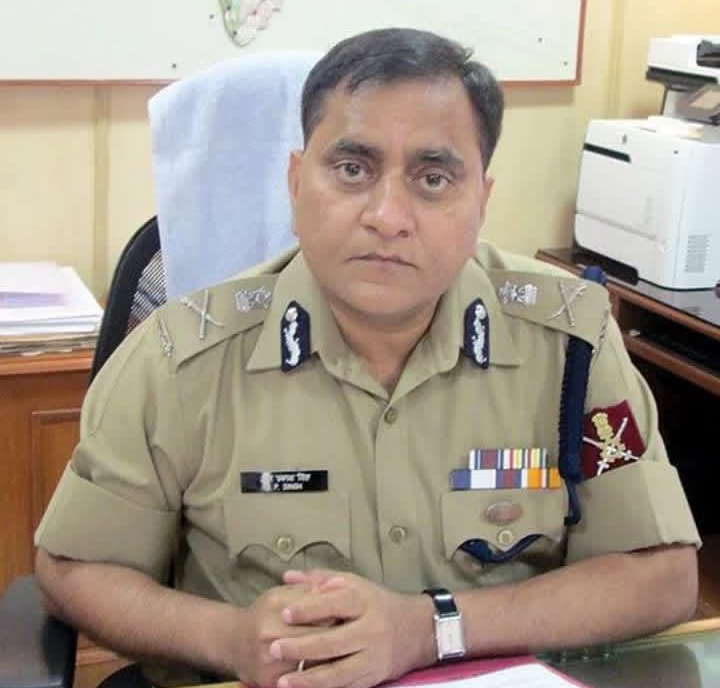
Who is OP Singh IPS?
Today let’s talk about OP Singh IPS Biography: In the annals of modern Indian policing, certain officers transcend their professional duties to become agents of societal transformation. Om Prakash Singh, affectionately known as OP Singh, represents precisely this rare breed of police administrators who view their role not merely as enforcers of law but as architects of community trust, youth empowerment, and progressive governance. As the current Director General of Police for Haryana, this 1992-batch IPS officer brings over three decades of distinguished service characterized by innovation, intellectual depth, and an unwavering commitment to reimagining the relationship between police and citizens.
OP Singh IPS Biography
OP Singh IPS Roots and Early Life: A Bihar Beginning
Born in the Jamui district of Bihar, OP Singh’s origins lie in one of India’s most challenging yet culturally rich states. Bihar, known for producing some of India’s finest civil servants and intellectuals, provided the cultural and social context that shaped his early worldview. Growing up in Bihar during a period of significant socio-political ferment exposed him to the complexities of Indian society, the challenges of governance, and the aspirations of ordinary citizens navigating difficult circumstances.
His educational journey took him beyond Bihar’s borders, reflecting the aspirational mobility characteristic of talented individuals from smaller towns seeking quality higher education. He pursued his graduation from St. Xavier’s College, one of India’s most prestigious educational institutions with a legacy spanning centuries. The Jesuit tradition of St. Xavier’s emphasizes intellectual rigor, social consciousness, and ethical grounding, values that would later manifest in Singh’s administrative approach.
He further enriched his academic credentials by completing studies at both Allahabad University and Delhi University, institutions that have produced generations of India’s administrative elite. This exposure to multiple academic environments across northern India broadened his intellectual horizons and connected him with diverse peer networks that would prove valuable throughout his career. His academic pursuits extended to postgraduate education, earning an M.Phil. from Madras University, demonstrating commitment to scholarly depth beyond the baseline requirements for civil service entry.
The decision to pursue the Indian Police Service rather than other civil services or professional paths reflected a conscious choice to engage directly with public safety, law enforcement, and the complex interface between state authority and citizen welfare. Clearing the rigorous civil services examination and joining the 1992 batch of IPS officers marked the formal beginning of a career that would span multiple decades and leave indelible marks on Haryana’s police administration.
OP Singh IPS Personal Dimensions: The Sushant Singh Rajput Connection
Beyond his professional identity, OP Singh’s personal life includes a connection to one of Bollywood’s most discussed tragedies. He is married to Ritu Singh, the elder sister of late actor Sushant Singh Rajput, whose death in 2020 sent shockwaves through Indian cinema and sparked nationwide conversations about mental health, industry pressures, and justice systems. This family connection placed Singh in proximity to intense public scrutiny and media attention during an emotionally challenging period.
Sushant Singh Rajput, before his rise to Bollywood stardom, spent considerable time with his sister and brother-in-law in Panchkula during his childhood and teenage years. The actor’s early theatrical performances and even his cricket playing occurred during these Panchkula visits, making the Singh household part of Sushant’s formative years. This personal relationship with a figure who became central to national discourse demonstrates how private and public lives intertwine for senior officials, bringing both privilege and responsibility.
Rather than seeking publicity from this connection, Singh maintained dignified privacy during the investigations and public discussions following Sushant’s death, focusing on his professional responsibilities while supporting family through personal grief. This balance between personal tragedy and professional duty exemplifies the character that has defined his career.
OP Singh IPS Building a Career: Diverse Postings Across Haryana
OP Singh’s three-decade career in the Indian Police Service has been marked by diverse responsibilities across Haryana’s police machinery. His journey through various positions provided comprehensive exposure to different aspects of policing, from district-level law enforcement to specialized units requiring technical expertise and strategic planning.
He served as Commissioner of Police for both Ambala-Panchkula and Faridabad, two distinctly different urban environments within Haryana. Ambala-Panchkula, with its military cantonment area and proximity to Chandigarh, presents unique security challenges and requires coordination with defense establishments. Faridabad, part of the National Capital Region and Haryana’s industrial hub, demands management of urban crime, industrial disputes, and the complex social dynamics of a rapidly growing city with migrant populations and economic disparities.
His tenure as Inspector General of Police for Hisar and Rewari ranges gave him command responsibility over multiple districts simultaneously, requiring strategic oversight, resource allocation across different locations, and coordination among various police units. These range IG positions are crucial in Indian police administration, serving as the operational bridge between state headquarters and district police operations.
At the state level, he took on specialized responsibilities that showcased his versatility. As Director of the Haryana Sports Department between 2008 and 2012, he stepped outside traditional police roles to lead a completely different government function. This unusual deputation demonstrated administrative flexibility and produced one of his most celebrated achievements: transforming Haryana into a national sporting powerhouse through innovative policy frameworks and grassroots engagement strategies.
His appointment as Managing Director of the Haryana Police Housing Corporation addressed the critical issue of police welfare and infrastructure. Housing remains a persistent challenge for police personnel across India, affecting morale, retention, and professional effectiveness. Under his leadership, the corporation accelerated infrastructure projects, improved facilities for police families, and modernized police stations, recognizing that improved living and working conditions directly impact policing quality.
As Director of the Forensic Science Laboratory in Madhuban, he strengthened Haryana’s scientific investigation capabilities. In an era where forensic evidence increasingly determines judicial outcomes, modernizing forensic facilities and promoting scientific investigation methods became crucial for effective crime solving and justice delivery. His tenure emphasized evidence-based policing and technological robustness in criminal investigations.
Perhaps his most impactful specialized role has been as Director General of the Haryana State Narcotics Control Bureau, a position he continues to hold. Given the drug abuse crisis afflicting Punjab and spreading into neighboring states including Haryana, this assignment placed him at the forefront of one of northern India’s most pressing social challenges. His approach to anti-narcotics operations combined enforcement rigor with public engagement, recognizing that purely punitive measures cannot solve addiction problems without addressing demand-side factors.
OP Singh IPS Ascending to the Top: Becoming DGP Haryana
In October 2025, OP Singh assumed charge as Director General of Police for Haryana in an additional capacity, following the state government’s decision to send then-DGP Shatrujeet Kapur on leave amid controversy surrounding the alleged suicide of IPS officer Y. Puran Kumar. This appointment came during a sensitive period when the Haryana Police faced criticism and public scrutiny following Kumar’s death, which was accompanied by a detailed note alleging caste-based discrimination and harassment by senior officers.
Taking charge during such circumstances required not only administrative competence but also moral authority and the ability to reassure both the police force and the broader public. Singh’s reputation for integrity, his clean service record spanning over three decades, and his previous work building community trust positioned him as a stabilizing choice during institutional turbulence.
Upon assuming the DGP position, Singh immediately articulated a clear vision for policing in Haryana. In his first interactions with senior officers, he emphasized “friction-free policing” as the guiding principle, urging officers to maintain courteous and cooperative attitudes toward the public. This wasn’t mere rhetoric but a philosophical shift in how police-citizen interactions should function.
He instructed officers to “step out of your offices and among the people,” emphasizing physical presence, accessibility, and genuine engagement rather than remote administration from behind desks. This directive reflected understanding that police legitimacy derives not from authority alone but from visible service, responsive behavior, and demonstrated concern for citizen welfare.
He identified empathy, respect for women, and youth engagement as key pillars of effective contemporary policing. This framework acknowledged that modern policing must address gender sensitivity, protect vulnerable populations, and connect meaningfully with younger generations who often view police with skepticism or fear. His emphasis on these themes signaled intention to make Haryana Police more inclusive, sensitive, and forward-looking.
The War on Drugs: OP Singh IPS Strategic Innovation in Narcotics Control
As head of the Haryana State Narcotics Control Bureau, OP Singh has brought innovative thinking to the state’s fight against drug trafficking and abuse. Rather than relying solely on traditional enforcement approaches, he has emphasized intelligence-driven operations, technology integration, and community engagement as complementary strategies.
Under his leadership, the Bureau compiled and circulated a comprehensive list of hundreds of high-profile drug smugglers, each with three or more cases under the Narcotic Drugs and Psychotropic Substances Act in the past decade. This list was distributed to all field units with strict orders for targeted enforcement, moving from reactive policing to proactive targeting of repeat offenders who form the backbone of drug distribution networks.
He has emphasized harnessing both human intelligence and technological capabilities to streamline anti-drug operations. This dual approach recognizes that while technology provides data analytics, surveillance capabilities, and communication monitoring, human intelligence from informants, community members, and field officers remains irreplaceable for understanding ground realities and anticipating smuggler tactics.
Perhaps most innovatively, Singh recognized that enforcement alone cannot solve drug abuse problems without addressing the demand side through education and cultural engagement. In 2023, he was instrumental in the Haryana Police producing a musical drama titled “Ram Gurukul Gaman,” which represented a radical departure from traditional anti-drug campaigns that typically rely on slogans and scare tactics.
This cultural initiative sought to engage youth through storytelling, music, and uplifting messaging rather than preaching or fear-mongering. By blending entertainment with education, the musical drama aimed to make anti-drug messages more palatable and memorable for young audiences who often tune out conventional awareness campaigns. This approach demonstrated understanding that changing youth behavior requires meeting them in cultural spaces they already inhabit rather than expecting them to respond to authority-driven messaging.
Singh also launched a podcast series personally led by him, aimed at bringing citizens closer to the frontline of Haryana’s battle against drugs. These podcasts feature authentic, unfiltered narratives from ground operatives involved in enforcement efforts, providing public insight into the complexities, challenges, and human dimensions of anti-narcotics work. By making himself and his officers accessible through modern communication platforms, Singh built bridges between police and public, fostering understanding and partnership in addressing shared challenges.
OP Singh IPS Revolutionizing Sports: The PIE Model and SPAT Program
One of OP Singh’s most celebrated achievements came during his tenure as Director of Haryana’s Sports Department from 2008 to 2012, a period that witnessed the state’s transformation into a national sporting powerhouse. His work in this domain demonstrates how administrative vision combined with systematic implementation can produce extraordinary outcomes even without massive financial resources.
He devised the PIE Model—Participation, Inclusion, and Excellence—as the conceptual framework for sports promotion in Haryana. This three-pronged approach recognized that sporting success requires broad-based participation at grassroots levels, inclusive practices that don’t exclude based on gender or social background, and sustained focus on excellence that produces medal winners at national and international levels.
The centerpiece of his sports strategy was the Sports Scholarship Programme under the “Play for India” campaign, known by its acronym SPAT. This program attracted over a million children annually to sports across Haryana, representing a scale of mobilization rarely achieved in Indian sports administration. The genius of SPAT lay in its systematic structure: it used merit-based testing to identify talent, provided scholarships that conferred dignity and recognition rather than mere financial assistance, and linked sporting achievement to career opportunities through job incentives.
By connecting sports performance to tangible life outcomes including education support and employment prospects, Singh made sports aspirational for families who might otherwise prioritize academic pursuits exclusively. Parents, teachers, and students engaged with sports programs because they represented genuine pathways for social mobility and career development, not just recreation.
He also pioneered district marathons that inspired mass participation across Haryana. These events transformed territorial pride into collective synchrony, bringing together people across social divides in shared physical activity. The marathons served multiple purposes: promoting fitness, building community spirit, showcasing local identity, and dissolving caste and class barriers through common participation.
The “Raahgiri” initiative, which brought officials and citizens together in shared spaces of recreation, further fostered trust through periodic inclusion. By creating regular events where government officials shed their “majestic aloofness” and engaged with citizens informally in public spaces, these programs humanized governance and built social capital that extended beyond sports into broader civic engagement.
Haryana’s emergence as a sporting powerhouse, particularly in wrestling, boxing, and athletics, owes much to the infrastructure, cultural shift, and systematic talent identification that Singh’s programs established. His work in sports demonstrated that with vision, structure, and genuine commitment to inclusion, even resource-constrained states can produce world-class athletes.
OP Singh IPS Intellectual Contributions: Author and Public Thinker
Beyond his administrative roles, OP Singh has established himself as a serious author and public intellectual whose writings address fundamental questions about governance, society, policing, and human resilience. His literary output reflects a mind engaged with ideas beyond daily operational concerns, seeking to articulate frameworks and philosophies that can guide both policy and personal conduct.
His book “HauslaNama” explores themes of courage and resilience, drawing from real-life incidents that demonstrate how ordinary people overcome extraordinary challenges through determination. The title itself, which roughly translates to “chronicle of courage,” signals the book’s focus on human perseverance as the essential quality for navigating life’s difficulties. The Chief Minister of Haryana personally released this book, underscoring the esteem in which Singh is held within state leadership.
“Jin Dhoondha Tin Paaiyan,” written in Hindi and spanning 174 pages with 45 chapters, represents Singh’s most comprehensive work to date. Released by then-Chief Minister Manohar Lal Khattar in 2019, the book addresses a wide range of issues including crime, violence, policing, sports, and social media. Its central message urges readers to continuously upgrade their worldview and avoid intellectual obsolescence in a rapidly changing world.
The book particularly emphasizes promoting a culture of fact-checking in the internet era, where information floods overwhelm discernment and misinformation spreads with viral velocity. Singh recognizes that in an age of digital abundance, critical thinking and verification skills become essential civic competencies. His call for readers to question assumptions and align their worldview with reality rather than comfortable myths reflects both philosophical commitment to truth and practical understanding that governance depends on citizens who can distinguish fact from fiction.
“Say Yes to Sports” documents Haryana’s transformation into a sporting powerhouse, providing a case study of how policy innovation, grassroots engagement, and systematic implementation can achieve remarkable outcomes. The book offers insights valuable for administrators in other states seeking to replicate Haryana’s sporting success.
His latest work, “Crowd Engineering: From Control to the New Science of Collective Behaviour,” represents perhaps his most intellectually ambitious project. The book proposes a fundamental reorientation in how governments approach public gatherings, arguing that crowds should be viewed as opportunities for civic engagement rather than disturbances requiring dispersion or control.
Drawing on his decades of experience managing public order situations, Singh articulates a philosophy succinctly: “Suppression disperses a crowd for an hour. Design builds legitimacy for years.” This insight challenges the default police approach of viewing crowds primarily as law-and-order threats requiring containment. Instead, he suggests that properly designed public gatherings—what he calls “designed crowds”—can channel collective energy into constructive outcomes that build social capital, strengthen community bonds, and enhance state legitimacy.
He cites three examples from his Haryana experience: sports scholarship programs that conferred dignity and mobilized families; district marathons that transformed territorial pride into inclusive participation; and Raahgiri events that brought officials and citizens together in shared recreational spaces. Each, he argues, represented a “designed crowd” that produced lasting positive outcomes far exceeding what suppressive approaches could achieve.
The book’s most ambitious proposal is establishing crowd engineering as an independent field of academic study, complete with theoretical frameworks, empirical research methodologies, and practical applications for governance. This reflects Singh’s conviction that modern governance requires moving beyond reactive control toward proactive design of collective experiences that serve both public interest and governmental legitimacy.
Singh is also a regular contributor to leading national newspapers, writing on topics including internal security, governance reform, personal well-being, and global geopolitics in the post-globalization era. These columns demonstrate engagement with contemporary policy debates and willingness to articulate positions on controversial issues, unusual for serving police officers who typically maintain public silence on matters beyond their immediate jurisdictions.
OP Singh IPS Awards and Recognition: A Distinguished Service Record
OP Singh’s exceptional service has been formally recognized through India’s prestigious police medals. He received the President’s Police Medal for Meritorious Service in 2008, an honor bestowed on officers demonstrating exceptional competence, dedication, and impact in their duties. This recognition came relatively early in his career, acknowledging the quality of his work even before his most prominent assignments.
In 2017, he was awarded the President’s Police Medal for Distinguished Service, a higher honor reserved for officers whose contributions significantly advance police administration and public service. This medal recognized his sustained excellence across multiple challenging assignments and his innovations in areas like sports promotion and community engagement.
These official recognitions complement the informal respect he commands within police circles and among civil society organizations. His reputation for integrity, intellectual depth, and genuine commitment to public welfare extends beyond formal awards to include trust from citizens, respect from colleagues, and credibility with political leadership across party lines.
OP Singh IPS Philosophy of Policing: Trust Over Control
Throughout his career, OP Singh has consistently articulated and demonstrated a policing philosophy centered on one core insight: “People don’t trust systems. They trust the people behind them.” This understanding that institutional legitimacy ultimately rests on individual relationships and personal integrity rather than formal authority has guided his approach across different roles.
He believes that police effectiveness depends not primarily on resources, technology, or legal powers—though these matter—but on the quality of relationships between officers and communities. When citizens trust individual police officers as human beings who care about their welfare, they cooperate with investigations, share information, comply with laws voluntarily, and view police as partners rather than adversaries.
This trust-based approach requires police to demonstrate empathy, maintain accessibility, communicate honestly, deliver on promises, and treat citizens with dignity regardless of their social status. Singh has consistently emphasized these qualities in his interactions with subordinate officers, making clear that technical competence alone doesn’t suffice for effective policing in democratic society.
His emphasis on “friction-free policing” extends this philosophy into operational terms. The metaphor suggests that police-citizen interactions should be smooth, comfortable, and productive rather than abrasive, adversarial, and counterproductive. Achieving this requires changing organizational culture, training officers in interpersonal skills, holding them accountable for behavior, and rewarding those who build positive community relationships.
Singh’s work in narcotics control, sports promotion, and community engagement consistently reflects this philosophy. Rather than relying solely on authority and enforcement, he creates partnerships, designs positive collective experiences, and builds legitimacy through demonstrated service. This approach recognizes that sustainable social change requires willing participation from citizens who see government as serving their interests rather than merely imposing control.
OP Singh IPS Challenges and Controversies: Leading During Crisis
OP Singh’s appointment as DGP came amid one of the most sensitive periods for Haryana Police: the aftermath of IPS officer Y. Puran Kumar’s suicide and the serious allegations in his suicide note about caste-based discrimination and harassment by senior officers. The deceased officer’s family, supported by opposition political parties and civil society groups, demanded accountability and systemic reforms to address discrimination within the force.
Taking charge during such circumstances placed Singh in a difficult position. He needed to reassure the police force that he would support officers facing challenging duties while also acknowledging legitimate concerns about caste discrimination and toxic work cultures. He had to maintain operational effectiveness despite demoralization within ranks, restore public confidence in an institution facing criticism, and navigate intense political scrutiny from opposition parties using the incident to attack the state government.
Singh’s approach emphasized listening to all stakeholders, committing to thorough investigation of allegations, and focusing on institutional reforms that could prevent future tragedies. Rather than becoming defensive about the institution he leads, he acknowledged that problems exist and require systematic attention. This balanced approach—supporting officers while recognizing institutional failures—reflects mature leadership unwilling to paper over difficult realities.
The situation also highlighted challenges inherent in Indian police administration: persistent caste consciousness that affects professional relationships, hierarchical cultures that sometimes enable abuse of authority, inadequate grievance redressal mechanisms for officers facing harassment, and political pressures that complicate professional decision-making.
How Singh navigates these complex challenges in his tenure as DGP will significantly shape his legacy. The circumstances of his appointment provide opportunity to implement meaningful reforms, but also create constraints and expectations that will test his administrative skills, moral courage, and political acumen.
OP Singh IPS Legacy and Ongoing Impact
As OP Singh approaches the end of his illustrious career—he is scheduled to retire on December 31, 2025, the question of his lasting impact on Haryana’s police and broader governance becomes relevant. Several dimensions of legacy appear already established even before his retirement.
His transformation of Haryana into a sporting powerhouse through the PIE Model and SPAT program created infrastructure, cultural shifts, and systematic approaches that continue producing national and international athletes years after his departure from the Sports Department. The programs he initiated became institutionalized rather than personality-dependent, ensuring sustainability beyond his tenure.
His intellectual contributions through books, articles, and the podcast series have sparked conversations about governance philosophy, crowd management, sports policy, and community policing that extend far beyond Haryana. By articulating frameworks like crowd engineering and trust-based policing, he has contributed concepts that other administrators and scholars can build upon.
His demonstration that police officers can be multifaceted personalities—authors, podcasters, public intellectuals, community mobilizers—while maintaining professional effectiveness has expanded conceptions of what police leadership can look like in democratic India. His example may inspire younger officers to develop broader intellectual and civic engagement beyond narrow operational focus.
Most fundamentally, his consistent emphasis on trust, empathy, community engagement, and youth mobilization as central to effective governance has influenced how both police and citizens in Haryana understand their relationship. While cultural change occurs slowly and unevenly, the direction he has pointed toward—away from purely coercive approaches toward partnership and co-creation—represents a significant shift in governance philosophy.
Frequently Asked Questions about OP Singh IPS
What is OP Singh’s current position in Haryana Police?
OP Singh currently serves as the Director General of Police for Haryana, holding this position in an additional charge capacity since October 2025. This appointment came after the state government sent the previous DGP on leave amid controversy following IPS officer Y. Puran Kumar’s suicide. Simultaneously, Singh continues holding three other critical positions: Director General of the Haryana State Narcotics Control Bureau, where he leads the state’s comprehensive fight against drug trafficking and abuse; Managing Director of the Haryana Police Housing Corporation, overseeing infrastructure development and welfare facilities for police personnel; and Director of the Forensic Science Laboratory in Madhuban, where he has strengthened scientific investigation capabilities. This combination of roles reflects the state government’s confidence in his administrative capacity and the trust placed in him during a sensitive institutional period requiring steady, experienced leadership to maintain operational effectiveness while addressing systemic concerns.
What are OP Singh’s major achievements in his policing career?
OP Singh’s career achievements span multiple domains, demonstrating remarkable versatility beyond traditional policing. His most celebrated accomplishment came during his 2008-2012 tenure as Director of Haryana’s Sports Department, where he devised the PIE Model—Participation, Inclusion, and Excellence—and launched the SPAT Sports Scholarship Programme that attracted over a million children annually to sports across Haryana, transforming the state into a national sporting powerhouse particularly in wrestling, boxing, and athletics. In narcotics control, he has brought sweeping strategic innovation including intelligence-driven operations, comprehensive targeting of repeat offenders, and creative public engagement through initiatives like the musical drama “Ram Gurukul Gaman” and podcast series that bridge police-citizen understanding. He has modernized infrastructure through his work with the Police Housing Corporation and strengthened forensic capabilities at the Madhuban laboratory, promoting evidence-based investigation. Beyond operational achievements, his intellectual contributions through multiple books addressing governance, courage, sports policy, and crowd management have established him as a serious public thinker whose ideas influence policy discourse beyond Haryana.
What books has OP Singh authored?
OP Singh has authored multiple books that explore themes of governance, resilience, sports policy, and social behavior. His book “HauslaNama” examines courage and human resilience through real-life narratives, demonstrating how ordinary people overcome extraordinary challenges through determination; this work was personally released by Haryana’s Chief Minister, reflecting its significance. “Jin Dhoondha Tin Paaiyan,” a 174-page Hindi work with 45 chapters released by then-Chief Minister Manohar Lal Khattar in 2019, addresses crime, violence, policing, sports, and social media while urging readers to continuously upgrade their worldview and practice fact-checking in the internet age. “Say Yes to Sports” documents Haryana’s transformation into a sporting powerhouse, providing insights into how policy innovation and grassroots engagement produced remarkable outcomes. His latest and most intellectually ambitious work, “Crowd Engineering: From Control to the New Science of Collective Behaviour,” proposes that governments should view crowds as opportunities for civic engagement rather than disturbances, advocating for establishing crowd engineering as an independent academic field. He also contributes regularly to national newspapers on internal security, governance reform, and geopolitics.
How did OP Singh transform Haryana into a sporting powerhouse?
OP Singh’s transformation of Haryana’s sporting landscape during his 2008-2012 tenure as Sports Director combined conceptual innovation with systematic implementation. He devised the PIE Model—Participation, Inclusion, and Excellence—recognizing that sporting success requires broad grassroots participation, inclusive practices transcending gender and social boundaries, and sustained focus on producing medal winners. The centerpiece was the SPAT Sports Scholarship Programme under the “Play for India” campaign, which used merit-based testing to identify talent systematically, provided scholarships that conferred dignity and recognition beyond mere financial support, and crucially linked sporting achievement to career opportunities through job incentives. By making sports aspirational for families who might otherwise prioritize academics exclusively, he attracted over a million children annually to sports across Haryana. He pioneered district marathons that inspired mass participation and dissolved social divides, and created “Raahgiri” events bringing officials and citizens together in shared recreational spaces. This comprehensive approach—combining structure, incentives, mass mobilization, and cultural shift—created sustainable infrastructure and attitudes that continue producing national and international athletes years after his departure from the department.
What is OP Singh’s philosophy on modern policing?
OP Singh’s policing philosophy centers on a fundamental insight he frequently articulates: “People don’t trust systems. They trust the people behind them.” This understanding that institutional legitimacy ultimately rests on personal relationships and individual integrity rather than formal authority guides his approach across different roles. He advocates for “friction-free policing” where police-citizen interactions are smooth, comfortable, and productive rather than abrasive or adversarial. Upon becoming DGP, he instructed officers to “step out of your offices and among the people,” emphasizing physical presence, accessibility, and genuine engagement over remote administration. He identifies empathy, respect for women, and youth engagement as key pillars of contemporary policing, acknowledging that effectiveness depends on gender sensitivity, protection of vulnerable populations, and meaningful connection with younger generations who often view police skeptically. His approach emphasizes partnership over coercion, demonstrated through innovations like using cultural programming to address drug abuse, designing mass participation events that build community bonds, and creating communication platforms that make police work transparent and accessible. This trust-based philosophy recognizes that sustainable social change requires willing citizen participation viewing government as serving their interests rather than merely imposing control.
Conclusion
OP Singh’s journey from a young man in Bihar’s Jamui district to becoming Director General of Police for Haryana represents more than individual career progression. It embodies a particular vision of what public service can achieve when administrative competence combines with intellectual depth, when authority balances with empathy, and when traditional roles expand to embrace innovation and community engagement.
His career demonstrates that police officers need not be confined to narrow enforcement functions but can serve as architects of social transformation. His work in sports created pathways for hundreds of thousands of young people to pursue excellence and find dignity through athletic achievement. His writings have contributed frameworks and concepts that enrich public discourse about governance, crowds, courage, and community. His approaches to narcotics control have shown that law enforcement can blend rigor with creativity, using cultural programming and open communication alongside traditional investigation.
As he assumes the highest position in Haryana Police during a period of institutional challenge, Singh brings not just administrative experience but moral authority earned through decades of clean service, intellectual contributions that extend beyond operational concerns, and demonstrated commitment to principles over expediency. His emphasis on trust-based policing, his insistence on officers stepping out among people they serve, and his vision of police as partners rather than merely enforcers offer hope for transforming police-citizen relationships in ways that enhance both public safety and democratic values.
The circumstances of his appointment—taking charge amid controversy and calls for systemic reform—provide both opportunity and test. How he navigates remaining months before retirement will significantly shape final assessments of his career. But regardless of specific outcomes in this final chapter, OP Singh has already established a legacy as an officer who thought deeply about his profession, wrote publicly about his convictions, engaged creatively with communities, and consistently argued that effective governance requires not just authority but trust, not just control but partnership, not just enforcement but engagement.
For aspiring police officers, his career offers a compelling model of what becomes possible when technical competence combines with humanistic values, when professional duties expand through intellectual curiosity, and when leadership prioritizes building trust over merely exercising power. For citizens of Haryana and beyond, his work provides hope that police institutions can evolve toward greater sensitivity, accessibility, and genuine service despite the many structural and cultural constraints that impede reform. In an era when police-citizen relationships face strain across much of India, OP Singh’s philosophy and practice point toward pathways that might help rebuild the trust essential for both public safety and democratic legitimacy.
Also Read: Chioma Ifemeludike Biography
Leave a Reply