
Who is Sheikh Dahiru Usman?
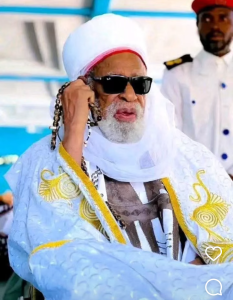
Today let’s talk about Sheikh Dahiru Usman Biography: In the early hours of Thursday, November 27, 2025, Nigeria lost one of its most revered spiritual giants. Sheikh Dahiru Usman Bauchi, the venerable leader of Nigeria’s Tijaniyyah Sufi order and one of Africa’s most influential Qur’anic scholars, passed away at the Abubakar Tafawa Balewa University Teaching Hospital in Bauchi. At 98 years old according to the Gregorian calendar, or nearly 100 by the Islamic lunar calendar, his death marks the end of an extraordinary era of Islamic scholarship, spiritual guidance, and dedication to peace that spanned more than seven decades. As millions of his followers across Nigeria and West Africa mourn his passing, they remember a man who dedicated every breath to the Qur’an, who raised a family of hundreds steeped in Islamic learning, and who stood as a towering symbol of moderate Sufi Islam in a region too often torn by religious extremism.
Sheikh Dahiru Usman Bauchi Biography

Sheikh Dahiru Usman Born Into a Legacy of Learning
Sheikh Dahiru Usman Bauchi was born on June 29, 1927, corresponding to the 2nd of Muharram 1346 in the Islamic calendar, in Nafada town in what was then Bauchi Province, before the creation of Gombe State. He came into the world in a community that was already a center of Islamic learning, born to parents who would shape his destiny as one of Nigeria’s greatest scholars.
His father, Gwani Alhaji Usman Adam, was himself a respected Qur’an reciter and scholar, a Muqaddam or leader in the Tijaniyyah Sufi order founded by the eighteenth-century Algerian ascetic Sheikh Ahmad Al-Tijjani. His mother, Hajiya Maryam Ardo Sule, came from Gamazo in what is now Yobe State. Both parents were of Fulani lineage, part of the ethnic group that has played such a significant role in Islamic scholarship and leadership across West Africa for centuries.
Growing up in this environment of deep Islamic devotion, young Dahiru was immersed in Qur’anic studies from his earliest years. His father served as his first and most important teacher, guiding him through the memorization of the Holy Qur’an with patience and dedication. In an era before modern technology and learning aids, memorizing the entire Qur’an required extraordinary discipline, focus, and natural ability. Young Dahiru possessed all three in abundance.
By the age of nineteen or twenty, he had achieved what only a select few accomplish: he had committed the entire Qur’an to memory, earning the revered status of Hafiz. This remarkable achievement became the foundation upon which his entire life’s work would be built. From that moment forward, the Qur’an was not just a holy text he had memorized but the very center of his existence, the lens through which he would view the world, and the message he would spend seven decades teaching to others.
A Journey Toward Mastery
Having memorized the Qur’an under his father’s tutelage, young Dahiru was given permission to travel and deepen his knowledge under other scholars, as was the tradition in Islamic education. His father, recognizing his son’s exceptional gifts, encouraged him to traverse the Islamic world to advance his theology and understanding. This journey took him to various scholars who would shape his intellectual and spiritual development.
He studied under eminent teachers including Sheikh Abdulkadir Zaria, Sheikh Usman Zangon Barebari, and Sheikh Abubakar Atiku, each of whom contributed to his comprehensive understanding of Islamic jurisprudence, theology, and spiritual practice. But it was his encounter with Sheikh Ibrahim Niasse of Senegal that would prove most transformative and define the trajectory of his life’s mission.
Sheikh Ibrahim Niasse, known in West Africa as Baye Niasse, was the most influential promoter of the Tijaniyyah order in twentieth-century West Africa. His spiritual charisma, scholarly depth, and organizational genius had spread the Tijaniyyah across the region, attracting millions of followers. When the young Dahiru Bauchi met Niasse in Kano, it was a meeting between a seeker and his spiritual master, a connection that would shape Nigerian Islam for generations.
Under Niasse’s guidance, Dahiru Bauchi not only deepened his understanding of Islamic theology but also absorbed the particular spiritual practices and organizational methods of the Tijaniyyah order. He became a devoted disciple of Niasse, and this relationship would define his identity for the rest of his life. Even decades after Niasse’s death, Sheikh Dahiru remained passionately devoted to his teacher’s memory and mission, often speaking of him with reverence and organizing annual commemorations of his life.
Sheikh Dahiru Usman Building a Life of Teaching and Family
In 1948, at the age of twenty-one, Sheikh Dahiru married for the first time, beginning what would become one of the most remarkable families in Nigerian religious history. Over the decades that followed, he would marry multiple wives as permitted under Islamic law, ultimately fathering an extraordinary number of children who would themselves become scholars, teachers, and memorizers of the Qur’an.
The precise number of his children varies by source, with some accounts stating he had ninety-five children, others reporting one hundred, and still others citing different figures. What is consistent across all accounts is that an extraordinary percentage of his children became Hafiz themselves, having memorized the complete Qur’an. According to one detailed account, seventy-eight of his children had achieved this status, a remarkable testament to the Islamic educational environment he created within his household.
But his family legacy extended far beyond his own children. Sheikh Dahiru had over four hundred grandchildren, with nearly two hundred of them also becoming Hafiz. He lived to see one hundred great-grandchildren, with twelve of them also memorizing the Qur’an. When viewed across three generations, the scale of his family’s commitment to Qur’anic learning is staggering and perhaps unprecedented in modern Islamic scholarship.
His home in Bauchi became not just a residence but a school, a spiritual center, and a living demonstration of how Islamic knowledge could be passed from generation to generation. Students came from across Nigeria and beyond to study under him, and many of his biological children became teachers themselves, spreading the knowledge they had received. This multigenerational transmission of Qur’anic learning created a legacy that will extend far beyond Sheikh Dahiru’s own lifetime.
Sheikh Dahiru Usman Seven Decades of Tafsir: Explaining the Qur’an
In 1948, the same year he married for the first time, Sheikh Dahiru began what would become his life’s primary work: tafsir, the detailed explanation and interpretation of the Qur’an. For seventy-six years, he dedicated himself to this task, conducting sessions where he would translate and explain the meaning of the holy text verse by verse, chapter by chapter, making its wisdom accessible to ordinary Muslims who might struggle with classical Arabic or complex theological concepts.
His tafsir sessions became legendary. Initially conducted in person in Bauchi, they reached a much wider audience when they began broadcasting on Bauchi Radio Corporation in 1976. Four years later, in 1980, Radio Nigeria Kaduna also began airing his teachings, and eventually numerous radio stations across northern Nigeria carried his sessions, particularly during the holy month of Ramadan when Muslims are especially focused on Qur’anic study.
What made Sheikh Dahiru’s tafsir so impactful was not just his profound knowledge but his ability to connect the ancient text to contemporary life. He could explain complex theological concepts in language that ordinary people could understand. He addressed social issues, moral questions, and practical challenges that his listeners faced, always grounding his guidance in Qur’anic wisdom. His voice became one of the most recognizable in northern Nigeria, a source of guidance and comfort to millions.
Over the decades, he completed multiple full cycles of tafsir, explaining the entire Qur’an from beginning to end repeatedly. He organized five major annual events that brought his followers together: the closing of his Ramadan tafsir, the celebration of Maulud (the Prophet Muhammad’s birthday), commemorations of both Sheikh Ahmad Al-Tijjani and Sheikh Ibrahim Niasse, and the annual Zikirin Juma’a at the beginning of the Islamic year. These gatherings united Muslims across ethnic, regional, and social divides, creating community around shared devotion.
A Prodigious Record of Worship and Charity
Sheikh Dahiru’s personal devotion to Islam was as remarkable as his public teaching. He recited the complete Qur’an with such frequency that he could finish reading it in just two days, a pace that required hours of daily recitation and demonstrated his extraordinary mastery of the text. This constant engagement with the Qur’an kept its words fresh in his mind and heart even as he reached advanced age.
His commitment to pilgrimage was equally extraordinary. He performed Hajj, the major pilgrimage to Mecca required of all Muslims who are able, fifty-five times over the course of his life. He also completed Umrah, the lesser pilgrimage, an astounding two hundred and five times. These journeys to the holy cities of Mecca and Medina were not mere ritual obligations for him but spiritual renewals, opportunities to connect with the global Muslim community and to experience the sites where Islam was born.
His philanthropy extended to providing housing for his students and followers. Over the years, he provided one thousand houses across Bauchi, Kaduna, and other northern states where his children and students could live free of charge. This extraordinary generosity ensured that poverty would not prevent dedicated students from pursuing Qur’anic education under his guidance. His home and schools became beehives of learning, with seekers of knowledge constantly present.
Through the Sheikh Dahiru Usman Bauchi Foundation, he institutionalized his charitable work, conducting philanthropic activities that supported Islamic education and community development. When criticism arose about the almajiri system of Qur’anic education, where young students traditionally lived away from home and sometimes resorted to begging, Sheikh Dahiru responded constructively by establishing schools within towns where parents resided, allowing families to contribute to their children’s upkeep while still receiving quality Islamic education.
A Symbol of Moderate Islam and National Unity
In a region that has been torn by religious extremism, terrorism, and sectarian violence, Sheikh Dahiru Bauchi stood as a powerful counter-narrative. His teachings emphasized peace, humility, moral conduct, and spiritual balance. He combined strict Qur’anic scholarship with the inner spiritual discipline of the Sufi tariqa, offering a path of Islam that was both intellectually rigorous and emotionally fulfilling, both traditionally grounded and relevant to contemporary challenges.
Remarkably, throughout decades when Nigeria experienced the rise of Boko Haram and other extremist groups that claimed Islamic justification for violence, not a single one of Sheikh Dahiru’s millions of followers was found among the terrorists. This fact, noted by observers of Nigerian Islam, speaks volumes about the nature of his teaching and the character of the community he built. He showed that authentic Islamic devotion leads not to violence but to peace, not to hatred but to tolerance, not to division but to unity.
His voice commanded respect across ethnic, regional, and even religious boundaries. Though he was a deeply committed Muslim scholar, he promoted peaceful coexistence with Nigeria’s Christian population and with Muslims from other traditions. His disciples included people from various ethnic groups, not just Fulani or Hausa but from across Nigeria’s diverse population. He became what one observer called “a living institution” of Islamic knowledge, a unifying figure in a fragmented society.
He was not afraid to speak truth to power, addressing issues of corruption, tyranny, social ills like immorality, cultism, and drug abuse. His moral authority was such that even politicians and traditional rulers would seek his counsel and blessings. He served as Deputy Chairman of the Fatwa Committee of the Nigerian Supreme Council for Islamic Affairs, the highest Islamic decision-making body in Nigeria, a position that affirmed his role as a national religious authority consulted on major matters affecting the Muslim community.
Sheikh Dahiru Usman Recognition, Honors, and a Remarkable Centenary
Sheikh Dahiru’s contributions did not go unrecognized. He received the national honor of Officer of the Order of the Federal Republic (OFR), one of Nigeria’s prestigious civilian awards. He was widely recognized as a Professor of Qur’anic memorization and education and honored as one of the world’s greatest Mufassirun, interpreters of the Qur’an.
In July 2024, his followers marked his centenary celebration according to the Islamic calendar. Though Sheikh Dahiru himself requested no formal celebration, preferring humility over pomp, disciples and clerics across Nigeria offered special prayers in mosques, expressing gratitude for his life and achievements. The celebrations highlighted his unblemished record of service to Islam and humanity, his role as a selfless and steadfast leader, and the rich legacy he had built over a century of life.
At one hundred years old by the Islamic calendar, or ninety-seven by the Gregorian reckoning, Sheikh Dahiru remained remarkably sharp. Though physically frail and wizened as would be expected at such advanced age, his memory and pronouncements remained pleasantly robust. Senility had not found him, and he continued to receive visitors and offer guidance until very near the end of his life.
On the night before his death, Sheikh Dahiru was at his residence receiving visitors as was his custom, still engaged with his community and followers despite his advanced years. Later that night, his condition deteriorated and he was taken to the Abubakar Tafawa Balewa University Teaching Hospital in Bauchi. Despite medical intervention, the nearly century-old scholar passed away in the early hours of Thursday, returning to his Creator as he would have said, his earthly mission complete.
A Nation Mourns
News of Sheikh Dahiru’s death spread rapidly across Nigeria and beyond, triggering an outpouring of grief from religious leaders, political figures, traditional institutions, and millions of ordinary Muslims for whom he had been a spiritual guide. Bauchi State Governor Bala Mohammed described him as “a towering figure in Islamic scholarship, a man of deep faith, humility, and wisdom,” noting that his life was devoted to teaching the Qur’an, propagating Islam, and fostering moral discipline and community development.
The Sultan of Sokoto, Sa’ad Abubakar, leader of Nigerian Muslims and President-General of Jama’atu Nasril Islam, extended deep condolences to Sheikh Dahiru’s family, disciples, and the entire Muslim Ummah. The Jamatu Nasril Islam described him as “a beacon of guidance” whose entire life was dedicated to the Qur’an and its study, noting that through his mentoring of countless young scholars and his numerous biological children who are Qur’an memorizers, his mission will continue.
Political leaders across party lines united in mourning. Religious scholars from different Islamic traditions acknowledged his contributions. Traditional rulers praised his wisdom and guidance. Social media filled with tributes from ordinary Nigerians whose lives had been touched by his teaching, directly or indirectly. The convergence of grief across such diverse groups demonstrated the breadth of his impact and the genuine affection in which he was held.
His body was moved from the hospital to his family residence along Gombe Road in Bauchi, where his funeral prayers were scheduled to be held on Friday, November 28, in accordance with Islamic rites. In Islamic tradition, burial should occur as soon as possible after death, and Sheikh Dahiru’s burial would follow this practice, allowing the community to gather one final time around the man who had guided them for so long.
Frequently Asked Questions about Sheikh Dahiru Usman
Who was Sheikh Dahiru Usman Bauchi?
Sheikh Dahiru Usman Bauchi was one of Nigeria’s most revered Islamic scholars and the leader of the Tijaniyyah Sufi order in Nigeria. Born on June 29, 1927, in Nafada, Gombe State, he memorized the entire Qur’an by age nineteen or twenty and spent over seven decades teaching Qur’anic exegesis. He was Deputy Chairman of the Fatwa Committee of the Nigerian Supreme Council for Islamic Affairs and a recipient of the Officer of the Order of the Federal Republic national honor. He passed away on November 27, 2025.
How many children did Sheikh Dahiru Bauchi have?
Sheikh Dahiru Bauchi had an extraordinarily large family, with various sources reporting between ninety-five and one hundred biological children. Remarkably, seventy-eight of his children became Hafiz, memorizing the complete Qur’an. He also had over four hundred grandchildren, with nearly two hundred of them also becoming Qur’an memorizers, and one hundred great-grandchildren, twelve of whom had memorized the Qur’an. This multigenerational commitment to Islamic learning is considered unprecedented in modern scholarship.
What was Sheikh Dahiru Bauchi’s relationship with Sheikh Ibrahim Niasse?
Sheikh Ibrahim Niasse of Senegal was Sheikh Dahiru’s most influential teacher and spiritual guide. When the young Dahiru met Niasse in Kano, it transformed his life and defined his mission. He became a devoted disciple of Niasse and remained passionately committed to his teacher’s memory throughout his life. Sheikh Dahiru later married the daughter of Sheikh Ibrahim Niasse in a ceremony officiated by Sheikh Baba Laminu Niasse at Ibrahim Niasse Mosque in Kaolack, Senegal, further cementing the spiritual and family connection.
How long did Sheikh Dahiru Bauchi teach Qur’anic interpretation?
Sheikh Dahiru began conducting tafsir, detailed explanation of the Qur’an, in 1948 and continued for an extraordinary seventy-six years until near his death in 2025. His tafsir sessions began broadcasting on Bauchi Radio Corporation in 1976 and on Radio Nigeria Kaduna in 1980, eventually reaching millions of listeners across northern Nigeria. He completed multiple full cycles of explaining the entire Qur’an from beginning to end, making him one of the longest-serving Qur’anic teachers in modern Islamic history.
Why was Sheikh Dahiru Bauchi significant for Nigerian Islam?
Sheikh Dahiru Bauchi represented moderate Sufi Islam at a time when Nigeria faced religious extremism and terrorism. His teachings emphasized peace, tolerance, moral conduct, and spiritual discipline rather than violence or sectarianism. Remarkably, none of his millions of followers were ever found among terrorist or extremist groups. He served as a unifying figure across ethnic and regional divides, promoted peaceful coexistence, and demonstrated that authentic Islamic devotion leads to peace rather than conflict. His influence shaped generations of Muslims across West Africa.
Conclusion
The passing of Sheikh Dahiru Usman Bauchi marks the end of an extraordinary chapter in Nigerian and West African Islam. He lived nearly a century, and he spent virtually every moment of that long life in service to the Qur’an and to his community. From his first memorization of the holy text as a teenager to his final days receiving visitors and offering guidance, his life demonstrated what complete devotion looks like.
What made Sheikh Dahiru truly remarkable was not just his personal piety or his extraordinary memory, though both were exceptional. It was his ability to create a community around Qur’anic learning that transcended family, ethnicity, and region. His biological descendants alone number in the hundreds, with multiple generations of Qur’an memorizers. His students number in the thousands, spread across Nigeria and beyond. His listeners numbered in the millions, tuning in to hear his tafsir during Ramadan and seeking his guidance on matters spiritual and practical.
In an era when religious extremism has claimed so many lives and caused such suffering in northern Nigeria, Sheikh Dahiru stood as living proof that Islam can be a force for peace, education, and community rather than violence and division. The fact that not a single one of his followers joined terrorist groups speaks to the nature of his teaching and the character he instilled in those who learned from him. He showed that strict devotion to Islamic texts and traditions need not lead to intolerance or violence but can instead produce humility, service, and love.
His legacy extends beyond his lifetime in multiple ways. Through his hundreds of descendants who continue teaching the Qur’an, his influence will shape Nigerian Islam for generations. Through the thousands of students who studied under him and now teach others, his methods and insights will be passed forward. Through the recordings of his tafsir sessions that continue to air on radio stations, his voice will continue guiding listeners long after his physical voice has been silenced. Through the Sheikh Dahiru Usman Bauchi Foundation, his charitable work will continue supporting Islamic education and community development.
As his body is laid to rest in accordance with Islamic tradition, millions mourn not just the loss of a scholar but the passing of an era. Sheikh Dahiru was a bridge between traditional Islamic scholarship and modern Nigeria, between the spiritual practices of Sufi mysticism and the practical challenges of contemporary life, between the wisdom of the past and the needs of the present. He lived through colonial rule, independence, military governments, democratic transitions, and all the tumult of twentieth and twenty-first century Nigerian history, yet he remained constant in his devotion to the Qur’an and his service to his community.
His death reminds us that all lives, no matter how long or impactful, eventually end. As he himself would have taught from the Qur’an, every soul shall taste death, and we return to Allah from whom we came. But while lives end, legacies endure. Sheikh Dahiru Usman Bauchi’s legacy of scholarship, devotion, peace, and service will continue to influence Nigerian and West African Islam for generations to come. He taught that the purpose of life is to know, love, and serve Allah through study of His word and service to His creation. By that measure, his nearly century of life was a complete success, a life well-lived in the truest and deepest sense.
May Allah grant him Aljannatul Firdaus, the highest level of Paradise, and may his family, students, followers, and all who mourn him find comfort in the knowledge that his work continues through them. Inna lillahi wa inna ilayhi raji’un—Indeed, to Allah we belong and to Him we shall return.
Leave a Reply