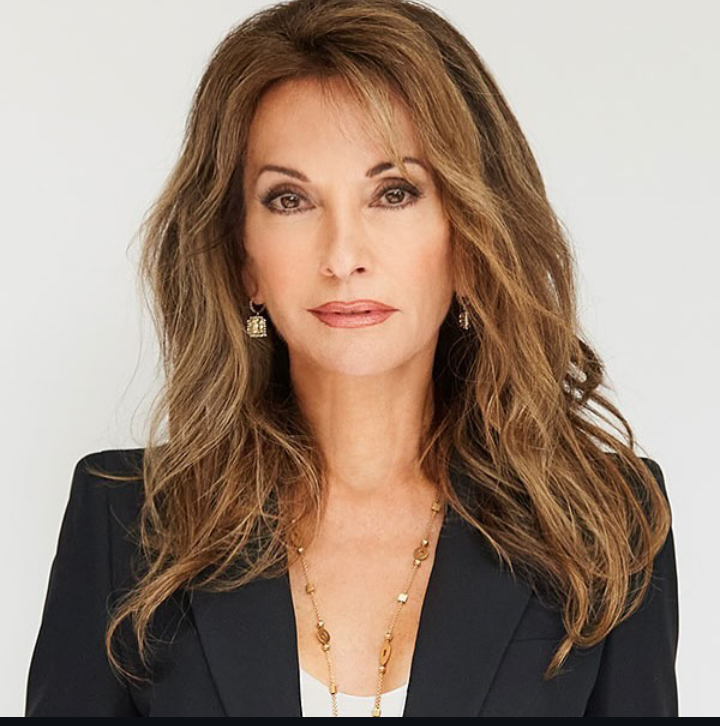
Who is Susan Dell?
Today let’s talk Susan Dell Biography: In the rarefied world of billionaire philanthropy, where fortunes are deployed to address society’s most pressing challenges, Susan Lynn Lieberman Dell stands out not for the size of her donations alone but for the hands-on, strategic approach she brings to transforming lives. As co-founder and chair of the Michael & Susan Dell Foundation, she has helped channel nearly $3 billion to nonprofits and social enterprises across the United States, India, Africa, and Israel over 25 years. On December 3, 2025, she and her husband Michael made headlines with an extraordinary $6.25 billion pledge to fund investment accounts for 25 million American children, more than doubling their lifetime charitable giving in a single day. But behind this staggering generosity lies a more nuanced story: that of a Dallas-born fashion merchandiser and former athlete who married a socially awkward young computer entrepreneur, helped build one of the world’s most valuable technology companies, pursued her own business ventures, raised four children, and emerged as one of America’s most influential and effective philanthropists.
Susan Dell Biography

Susan Dell Dallas Roots and Athletic Ambition
Susan Lynn Lieberman was born in 1963 in Dallas, Texas, into a prosperous Jewish family with deep roots in the community. Her father, Zelig Lieberman, was a prominent physician whose medical practice provided the family with financial security and social standing. Her mother, Marilyn Elyse Lieberman, was a homemaker who dedicated herself to raising Susan and creating a nurturing family environment. Growing up in Dallas’s Jewish community, Susan was exposed to the values of tzedakah, charitable giving, and tikkun olam, repairing the world, principles that would later inform her philanthropic work even as she rarely discusses her faith publicly.
From an early age, Susan displayed a competitive spirit and drive that manifested particularly in athletics. She became an avid sportswoman, excelling in endurance sports that required discipline, determination, and the ability to push through physical and mental barriers. She competed in marathons, testing her limits over 26.2 grueling miles. She participated in triathlons, the ultimate test of versatility requiring excellence in swimming, cycling, and running. She became proficient in cycling, spending hours training on Texas roads, building both physical strength and mental resilience.
These athletic pursuits shaped Susan’s character in ways that would prove valuable throughout her life. Endurance sports teach patience, the understanding that meaningful achievement requires sustained effort over time rather than quick bursts of activity. They teach resilience, the ability to continue when your body and mind are screaming at you to stop. They teach strategic thinking, the careful management of energy and resources to achieve long-term goals. All of these lessons would later apply to her philanthropic work, where meaningful social change requires sustained commitment, the ability to persevere through setbacks, and strategic allocation of resources for maximum impact.
Coming from a professionally driven family where excellence was expected and hard work was valued, Susan developed an independent streak and a determination to achieve on her own merits. She understood from her father’s example that professional success required dedication and continuous effort. From her mother, she learned the importance of creating strong family bonds and nurturing relationships. These dual influences, professional ambition and family devotion, would characterize her entire life.
Susan Dell From Fashion Student to Real Estate Professional
After completing high school in Dallas, Susan pursued her passion for fashion by enrolling at Arizona State University in Tempe, where she studied fashion merchandising and design. This choice reflected her creative side and her interest in aesthetics, style, and the business of fashion. The program at ASU provided comprehensive training in the fashion industry, from design principles to merchandising strategies to retail management. Susan immersed herself in this world, developing an eye for design and an understanding of how fashion operates as both art and commerce.
Upon graduating from college, Susan made a significant decision: rather than pursuing fashion immediately, she moved to Austin, Texas, the state capital and a growing technology hub, to work in real estate for Trammell Crow, one of the nation’s premier commercial real estate development companies. This choice demonstrated pragmatism and business acumen. Real estate offered stable income, professional development opportunities, and exposure to high-stakes business negotiations and deal-making. It was a grounding experience that taught Susan about property markets, client relationships, and the complexities of commercial transactions.
Austin in the mid-1980s was transforming from a sleepy college town into a emerging technology center. The University of Texas attracted talented students and researchers, the city’s quality of life drew entrepreneurs, and forward-thinking business leaders were building the foundations of what would become one of America’s most dynamic tech ecosystems. Susan arrived at a pivotal moment, positioning herself in a city that would soon become synonymous with innovation and entrepreneurship.
Working for Trammell Crow, Susan developed professional skills and built a network of clients and contacts. She proved herself capable in a demanding, male-dominated field where success required technical knowledge, negotiation skills, and the ability to build trust with sophisticated business clients. These experiences prepared her for the world she was about to enter, though she couldn’t have imagined how dramatically her life was about to change.
Susan Dell Meeting Michael: A Love Story Begins
In February 1988, Susan’s life took an unexpected turn when she was introduced to Michael Dell through a client. Michael, just 23 years old, had dropped out of the University of Texas at Austin in 1984 to pursue his computer business full-time. What had started as a dorm room operation called PC’s Limited had evolved into Dell Computer Corporation, a rapidly growing company pioneering the direct-to-consumer model for personal computers that bypassed traditional retail channels.
When Susan met Michael, he was a rising star in the nascent personal computer industry, though nothing like the business titan he would become. By various accounts, he was brilliant but socially awkward, passionate about technology but uncertain in personal situations, a young entrepreneur consumed by building his company but lacking the polished confidence that would come with success and maturity. Their first date revealed an unlikely but powerful connection.
Susan was immediately drawn to something in Michael that others might have missed. Beyond the awkwardness and the single-minded focus on computers, she intuitively recognized his brilliance, his vision, and his potential. She saw someone who wasn’t just building a business but reimagining how computers could be manufactured and sold. She recognized the strategic thinking, the relentless work ethic, and the unwavering belief in his model despite skepticism from established competitors and industry experts.
For Michael, Susan represented something he desperately needed: stability, social grace, emotional support, and a partner who could help him navigate the personal dimensions of life while he focused intensely on business. She brought balance to his life, grounding his technological vision with human connection and helping him develop the interpersonal skills that would later prove crucial as he led a global corporation.
Their courtship coincided with Dell Computer’s explosive growth. In March 1988, just weeks after they met, Michael took the company public. The initial public offering was spectacularly successful, and Dell’s stock holdings soared past 100 million dollars, validating Susan’s intuitive assessment of his potential. Susan watched as the awkward young entrepreneur she had just met transformed before her eyes into one of America’s youngest self-made multimillionaires, a business phenomenon featured in national media.
Susan Dell Building a Life and Family
In spring 1989, Michael and Susan got engaged, and they married in October of that year. Susan was 26, Michael was 24, and they stood at the threshold of an extraordinary journey together. By 1991, just two years into their marriage, Michael Dell ranked among America’s hundred richest citizens, and the spotlight suddenly trained intensely on the young couple and their lives. The attention could have been overwhelming, but Susan handled it with grace and determination to maintain normalcy despite extraordinary circumstances.
The couple established their primary residence in Austin, Texas, choosing to remain in the city where Michael had built his company rather than relocating to traditional centers of wealth like New York or San Francisco. This decision reflected their values and their desire to stay connected to the community that had supported Dell’s early growth. Austin would remain their home base even as their wealth grew to staggering levels and they acquired properties around the world.
Over the years, Michael and Susan welcomed four children into their family: Kira, Alexa, Zachary, and Juliette. Despite Michael’s demanding responsibilities leading a global corporation and Susan’s extensive philanthropic commitments, they prioritized creating a nurturing environment for their children. Susan took the lead in ensuring that despite extraordinary wealth and privilege, the Dell children understood the value of hard work, developed empathy for others, and appreciated the responsibilities that came with their advantages.
Maintaining family cohesion amid the demands of wealth, public attention, and business pressures required deliberate effort. Susan worked to create boundaries that protected family time, to expose her children to diverse experiences that would prevent them from living in a bubble of privilege, and to instill values that would guide them toward purpose-driven lives. The fact that the Dell children have largely avoided the scandals and problems that plague some wealthy families speaks to Susan’s success in this endeavor.
As Michael’s business empire expanded, the Dell family acquired properties befitting their wealth while maintaining a relatively low profile compared to other billionaire families. They own a $100.47 million penthouse in Manhattan’s One57 skyscraper, offering spectacular views of Central Park and serving as their New York base. They own a sprawling oceanfront estate on Hawaii’s Kona Coast, providing a private retreat for family vacations away from public attention. They maintain multiple properties in Austin, including their primary residence.
The Birth of Strategic Philanthropy
The Michael and Susan Dell Foundation was established in 1999, relatively early in Michael’s career when Dell Computer was still climbing toward its peak. The timing was significant. Rather than waiting until retirement or later life to begin serious philanthropy, the Dells started giving strategically while Michael was still actively building his business, applying business principles to their charitable work from the outset.
The foundation’s creation reflected Susan’s drive to give back and her Jewish values of charitable giving, combined with Michael’s analytical approach and business acumen. From the beginning, Susan played the leading role in shaping the foundation’s strategic priorities, program areas, and operational approach. While Michael provided financial resources and business insights, Susan provided the vision, the hands-on engagement, and the sustained attention that transformed the foundation from a checkbook philanthropy into a sophisticated, strategic operation.
The foundation initially focused on children’s health and education issues in Texas, starting close to home where the Dells could see direct impact and learn what worked. Early grants supported children’s healthcare facilities, education programs, and initiatives addressing basic needs in underserved communities. The approach was methodical: identify proven programs or promising pilots, provide substantial multi-year support, measure outcomes rigorously, and scale what works while abandoning what doesn’t.
As the foundation gained experience and resources, it expanded geographically and programmatically. Today it operates across the United States with particular concentration in Texas, and internationally in India, South Africa, and Israel. The foundation manages over 800 active projects worldwide each year, a scale of operation that requires sophisticated systems, talented staff, and sustained leadership attention.
The foundation’s work falls primarily into two major focus areas: education and health. In education, programs include the Dell Scholars Program, which provides not just financial assistance but comprehensive support to talented students from low-income backgrounds, recognizing that paying tuition is necessary but insufficient for student success. The foundation also funds public school improvements, supports organizations like Teach for America and Knowledge is Power Program, and invests in innovative approaches to improving educational outcomes for disadvantaged students.
In health, the foundation has dedicated particular attention to children’s health issues. Programs address childhood obesity, a growing epidemic with lifelong consequences particularly severe in low-income communities. Investments in pediatric healthcare facilities ensure that children have access to quality medical care regardless of their families’ ability to pay. Mental health programs recognize the often-overlooked psychological needs of young people, especially those facing trauma, poverty, and instability.
Susan Dell Hands-On Leadership and Strategic Growth
What distinguishes Susan Dell’s approach to philanthropy is her hands-on engagement. She doesn’t simply write checks and delegate to staff; she personally reviews grant proposals, meets with grantees to understand their work, visits program sites to see results firsthand, and shapes strategy based on what she learns. Foundation staff and partners describe her as deeply engaged, asking tough questions, expecting measurable results, and willing to make difficult decisions when programs don’t deliver expected outcomes.
Her business background and competitive athletic experience inform this approach. Just as businesses measure return on investment and athletes track performance metrics, Susan insists on rigorous evaluation of foundation programs. Grantees must demonstrate impact, not just good intentions. Programs that work receive continued and often increased support; programs that don’t work are modified or defunded regardless of how compelling they sound or how well-intentioned the providers.
This results-focused approach has earned respect from nonprofit professionals and fellow philanthropists who admire her effectiveness even as some find her demands challenging. She prioritizes results over recognition, willing to work quietly behind the scenes rather than seeking public acclaim. Many beneficiaries of Dell Foundation programs don’t realize Susan’s personal involvement in shaping the strategies that changed their lives.
Under Susan’s leadership, the foundation has grown dramatically. By 2017, total donations channeled through the foundation had reached $1.32 billion. In 2023, the Dells pledged $3 billion in cash and stock to accelerate the foundation’s mission, bringing total giving to over $4 billion. Then, on December 3, 2025, came the historic announcement: Michael and Susan Dell would donate $6.25 billion to fund investment accounts for 25 million American children, more than doubling their lifetime charitable giving in a single commitment.
The Historic $6.25 Billion Pledge
The December 3, 2025 announcement represented the culmination of years of thinking about how to create lasting positive impact for the next generation. Michael and Susan Dell committed to providing $250 deposits into investment accounts for 25 million American children under age 10, seeding accounts that could grow significantly over time through compound interest and additional family contributions.
The accounts, formally called Invest America accounts but popularly known as “Trump Accounts” after being included in President Trump’s signature tax and spending legislation, will launch on July 4, 2026, the 250th anniversary of American independence. The Dells chose this symbolic date deliberately, wanting to mark the milestone anniversary with an investment in America’s future.
The gift supplements the federal program, which provides $1,000 deposits for children born between 2025 and 2028 but excludes older children. The Dell donation extends coverage to millions of children who would otherwise miss out, ensuring that kids aged 10 and under in 2026 all receive seed capital for their future. Combined with federal deposits and hoped-for family and employer contributions, these accounts could grow to substantial sums by the time recipients reach adulthood.
“We believe that the smartest investment we can make is the one that we make in children,” Michael Dell told media outlets. “We want these kids to know that not only do their families care, but their communities care, their government, their country cares about them,” Susan added, emphasizing the message of hope and investment the accounts represent beyond their financial value.
The Dells learned about the Invest America concept from Brad Gerstner, CEO of Altimeter Capital and a friend of the couple. After Michael unsuccessfully pitched the idea to the Biden administration, the concept gained traction when President Trump included it in his legislative package. The Dells are encouraging other philanthropists and corporations to make similar commitments, hoping to spark a movement of investment in the next generation.
The announcement generated mixed reactions. Supporters praised the Dells’ generosity and the potential for these accounts to provide financial security and opportunity to millions of children who might otherwise start adulthood with debt rather than assets. Critics questioned the association with Trump, the adequacy of $250 deposits relative to need, and whether tax-advantaged accounts are the most effective approach to addressing childhood poverty and inequality. The debate reflects broader questions about the role of private philanthropy in addressing public challenges.
Susan Dell Major Texas Healthcare Investments
Beyond the foundation’s grant-making, Susan and Michael have made transformative direct investments in Texas healthcare infrastructure. They provided major funding for Dell Medical School at the University of Texas at Austin, established in 2013 as the first new medical school in Texas in decades. The school takes an innovative approach to medical education, emphasizing systems thinking, community health, and training physicians who understand healthcare delivery challenges, not just diagnosis and treatment.
They funded Dell Seton Medical Center at the University of Texas, the teaching hospital affiliated with the medical school, providing Austin with a state-of-the-art facility for patient care, medical education, and research. They also supported Dell Children’s Medical Center, a specialized pediatric facility ensuring that Austin’s children have access to world-class medical care.
These healthcare investments reflect both strategic thinking and personal commitment. Austin’s transformation from mid-sized regional center to major metropolitan area required healthcare infrastructure to match its growth. By funding a medical school and affiliated hospitals, the Dells addressed multiple needs simultaneously: training the next generation of physicians, providing care to underserved populations, conducting research to advance medical knowledge, and strengthening Austin’s overall healthcare capacity.
When Hurricane Harvey devastated parts of Texas in August 2017, causing catastrophic flooding and tens of billions in damage, Susan and Michael led efforts to establish the $100 million Rebuild Texas Fund. The fund provided long-term support to affected communities, recognizing that disaster recovery extends far beyond the immediate emergency response that dominates media attention. The Dells’ commitment to sustained recovery efforts demonstrated their understanding that meaningful change requires patient, persistent investment rather than splashy but temporary interventions.
Susan Dell Entrepreneurial Ventures: The Phi Fashion Line
While devoting enormous energy to philanthropy, Susan also pursued her own entrepreneurial ambitions, leveraging her Arizona State University education in fashion merchandising. In 2003, she founded Phi, a luxury clothing line aimed at modern, sophisticated women who wanted architectural, unabashedly hip designs that made statements while remaining wearable.
Phi launched under the creative leadership of designer Andreas Melbostad, whose vision aligned with Susan’s aesthetic sensibilities. The brand featured snappy, innovative designs that stood out in the crowded luxury fashion market. Fashion critics and consumers responded positively, with Phi earning recognition for distinctive style and quality construction. The brand represented Susan’s creative expression and her desire to build something independent of her husband’s technology empire.
Running a fashion label, however, proved extraordinarily challenging. The luxury fashion market is brutally competitive, with established European houses dominating mindshare and new brands struggling to gain distribution and recognition. Fashion requires constant creativity, seasonal reinvention, substantial capital investment, and complex supply chains. Unlike technology where successful products can scale rapidly with increasing returns, fashion requires manufacturing and marketing investment for each new collection with no guarantee of success.
Despite these challenges, Phi operated for six years, earning respect in fashion circles and establishing Susan as more than simply a billionaire’s wife writing checks. The brand demonstrated that she could build and lead a business, managing designers, overseeing production, marketing products, and navigating the complex world of fashion retail. It showed her willingness to take risks, to step outside the comfort zone of philanthropy into the uncertain world of commercial entrepreneurship.
In 2009, during the financial crisis when luxury spending collapsed and many fashion brands struggled or closed, Phi ceased operations. The final spring-summer collection received praise, going out with a bang rather than a whimper, but the business model proved unsustainable under prevailing economic conditions. While the closure might be seen as a failure, Susan emerged with valuable experience, insights into entrepreneurship’s challenges, and respect for having tried something difficult rather than simply coasting on her husband’s success.
Susan Dell Behind the Scenes: Partnership Through Challenges
Susan’s role as Michael’s partner has proven particularly crucial during turbulent times in Dell Technologies’ history. In the early 2000s, the company faced intense competitive pressure as HP, Acer, and Lenovo challenged Dell’s direct-sales model. A massive product recall related to faulty batteries damaged the company’s reputation. An SEC investigation into accounting practices created legal and regulatory headaches. The challenges tested Michael’s leadership and demanded difficult decisions under enormous pressure.
Susan provided emotional support, strategic perspective, and stability during these trials. She helped Michael maintain perspective, reminding him that business challenges, however serious, were not life-and-death matters. Her experience outside technology gave her insights that complemented his technical expertise. Most importantly, she ensured their family remained strong and grounded despite the stress and uncertainty swirling around Dell Inc.
Michael’s 2013 decision to take Dell private in a controversial $24.4 billion leveraged buyout required audacious confidence and enormous financial commitment. The move was risky, required taking on significant debt, and faced opposition from some shareholders who felt undervalued. Susan’s support for this bold strategy helped Michael proceed despite the risks and criticism.
The subsequent 2016 acquisition of EMC Corporation for $67 billion, at the time the largest technology merger in history, further demonstrated Michael’s willingness to make transformative bets on Dell’s future. Again, Susan’s perspective and support proved valuable as Michael navigated the complex integration of two large technology companies with different cultures, products, and market positions.
Throughout these high-stakes business challenges, Susan maintained family cohesion and provided Michael with a refuge from the relentless demands of corporate leadership. Her strength and stability allowed him to take necessary risks, knowing that whatever happened in business, their family would endure. This partnership, though largely invisible to outside observers, proved essential to Michael’s sustained success.
Susan Dell Public Service and Recognition
Beyond her foundation work, Susan has engaged in public service and received recognition for her contributions. She served on President Bush’s Council for Physical Fitness and Sports, bringing her athletic background to efforts promoting youth fitness and combating the childhood obesity epidemic. She is a life trustee of the Dell Children’s Foundation board and served as a board member of the Cooper Institute, a prestigious research and education center focused on preventive medicine and health promotion.
Her leadership of the Rebuild Texas Fund following Hurricane Harvey earned her induction into the Texas Women’s Hall of Fame, honoring her efforts supporting Texas families during one of the state’s most devastating natural disasters. In 2025, she and Michael received the History-Making Texan Award from the Texas State History Museum Foundation, recognizing Texans whose contributions to the state, nation, and world are exceptional in scope and impact.
These honors reflect respect for Susan’s work from diverse sectors: government, nonprofit organizations, educational institutions, and civic groups. The recognition comes from her track record of effective action rather than simply her access to wealth. She has earned respect by doing the work, engaging personally, demanding results, and maintaining sustained commitment over decades rather than pursuing fashionable causes that change with social trends.
Susan Dell Lessons from a Multifaceted Life
Susan Dell’s life offers several lessons for women navigating high-profile partnerships, pursuing entrepreneurship, or seeking to make meaningful philanthropic impact. First, she demonstrates the importance of maintaining independent identity even within a partnership with a famous spouse. Throughout her marriage to Michael, Susan has pursued her own interests, built her own ventures, and established her own reputation separate from her husband’s accomplishments.
Second, she shows that effective philanthropy requires treating charitable work with the same rigor, strategic thinking, and results-orientation that characterizes successful business. Good intentions are insufficient; philanthropists must measure outcomes, learn from failures, scale what works, and abandon what doesn’t. Susan’s business-like approach to foundation management has delivered measurable impact that justifies the billions invested.
Third, Susan’s athletic background demonstrates that character traits developed in one domain, whether sports, business, or other pursuits, can transfer to entirely different challenges. The discipline, resilience, and strategic thinking she developed as an endurance athlete served her well in entrepreneurship and philanthropy, showing that excellence in any arena requires similar fundamental qualities.
Fourth, her entrepreneurial venture with Phi, despite its eventual closure, shows the value of taking risks and pursuing passions even when success is uncertain. Susan could have avoided the potential embarrassment of business failure by sticking solely to philanthropy where family wealth ensured impact. Instead, she risked failure by competing in the brutal fashion industry, emerging with valuable experience even though the venture didn’t succeed long-term.
Finally, Susan demonstrates that effective partnership requires both parties to contribute their strengths, support each other through challenges, and maintain shared values despite pursuing different professional paths. Her partnership with Michael has endured for over 35 years, weathering the pressures that destroy many wealthy marriages, because both partners respect each other, support each other’s goals, and maintain shared commitment to family and giving back.

Frequently Asked Questions about Susan Dell
Who is Susan Dell and what is her background?
Susan Lynn Lieberman Dell was born in 1963 in Dallas, Texas, to physician Zelig Lieberman and homemaker Marilyn Elyse Lieberman. She studied fashion merchandising and design at Arizona State University, then worked in real estate for Trammell Crow in Austin, Texas. She met Michael Dell through a client in February 1988 and married him in October 1989. She is now co-founder and chair of the Michael & Susan Dell Foundation and mother of four children.
What is the Michael & Susan Dell Foundation?
The Michael & Susan Dell Foundation, established in 1999, is a philanthropic organization that Susan co-founded and chairs. Over 25 years, it has committed nearly $3 billion to nonprofits and social enterprises focused on education and health in the United States, India, Africa, and Israel. The foundation manages over 800 active projects annually, including the Dell Scholars Program, public school funding, and children’s health initiatives. Susan personally guides strategic priorities and maintains hands-on engagement with grantees.
What was the historic $6.25 billion donation announced in December 2025?
On December 3, 2025, Michael and Susan Dell announced a $6.25 billion pledge to provide $250 deposits into investment accounts for 25 million American children under age 10. These “Invest America” or “Trump Accounts” will launch on July 4, 2026, the 250th anniversary of U.S. independence. The gift supplements a federal program and more than doubles the Dells’ lifetime charitable giving. The accounts are designed to grow through compound interest and additional family contributions.
What other major philanthropic initiatives have the Dells supported?
The Dells provided major funding for Dell Medical School at the University of Texas at Austin, Dell Seton Medical Center, and Dell Children’s Medical Center. In 2017, they led efforts to establish the $100 million Rebuild Texas Fund to support communities affected by Hurricane Harvey. In 2023, they pledged $3 billion in cash and stock to their foundation. Susan was inducted into the Texas Women’s Hall of Fame for her disaster relief work, and both received the History-Making Texan Award in 2025.
What business venture did Susan Dell pursue?
In 2003, Susan founded Phi, a luxury clothing line featuring architectural, hip designs under creative director Andreas Melbostad. The brand operated for six years, earning recognition in the fashion industry before closing operations in 2009 during the financial crisis. Though the venture ultimately closed, it demonstrated Susan’s entrepreneurial ambition and willingness to build something independent of her husband’s technology empire. The experience provided valuable insights into business challenges beyond philanthropy.
Conclusion
Susan Dell’s story is ultimately one of purpose-driven wealth deployment. Born into comfortable circumstances but not extraordinary wealth, she married young into a fortune that would eventually place her family among the world’s richest. She could have chosen a life of leisure, social events, and personal indulgence. Instead, she chose to work—not for salary or recognition, but to channel billions of dollars toward improving lives and creating opportunities for people who face challenges she has never personally experienced.
Her approach to philanthropy reflects both heart and head. The compassion and desire to help are genuine, rooted in Jewish values and personal character. But she applies business principles, demanding measurable results and abandoning approaches that don’t deliver. This combination of empathy and rigor, of generous spirit and tough-minded evaluation, defines effective modern philanthropy.
The December 2025 announcement of $6.25 billion for children’s investment accounts represents the culmination of decades of thinking about how to create lasting positive change. Rather than simply addressing immediate needs, the accounts aim to provide long-term financial security and opportunity, recognizing that meaningful change requires thinking beyond quarterly or annual horizons to generational timeframes.
As Susan Dell continues her work into the future, her influence extends far beyond the dollar amounts committed. Through the foundation’s 800 annual projects, through the healthcare institutions bearing the Dell name, through disaster relief efforts, through educational programs, and now through investment accounts for 25 million children, her impact touches millions of lives directly and countless more indirectly.
Her legacy will not be measured primarily in the wealth she and Michael accumulated or even in the billions they’ve donated, though those numbers are staggering. Rather, it will be measured in the students who earned degrees they couldn’t have afforded, the patients who received care they couldn’t have accessed, the communities that rebuilt after disasters, and the children whose investment accounts provide foundation for future prosperity. These are the true measures of a life well-lived, of wealth deployed wisely, of purpose pursued relentlessly. In an era when billionaire philanthropy often attracts criticism, Susan Dell stands as an example of what effective, strategic, results-oriented giving can accomplish when executed with intelligence, integrity, and sustained commitment.
Leave a Reply