
Who is Valentina Shevchenko?
Today let’s talk about Valentina Shevchenko Biography: In the world of mixed martial arts, where raw power often overshadows technical precision, where brawlers frequently triumph over technicians, one fighter stands apart as a testament to what pure skill, dedication, and martial arts mastery can achieve. Her nickname is “Bullet”—a reference to her explosive striking speed and devastating accuracy. Her name is Valentina Shevchenko, and she has redefined what excellence looks like in women’s mixed martial arts.
Watch Valentina fight, and you’re not witnessing a street brawl or a test of who can endure more punishment. You’re watching martial arts as it was meant to be practiced—technical, efficient, beautiful, and brutally effective. Every strike has purpose. Every movement is calculated. Every strategy is executed with the precision of a chess grandmaster playing out a winning combination.
Valentina Shevchenko Biography
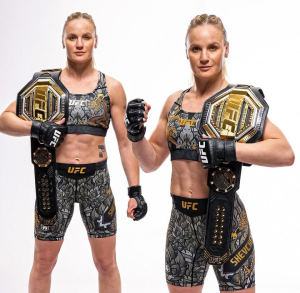
The Beginning: A Fighter’s Childhood in Kyrgyzstan
On March 7, 1988, Valentina Anatolievna Shevchenko was born in Frunze, Kyrgyz Soviet Socialist Republic (now Bishkek, Kyrgyzstan). This was near the end of the Soviet era, a time of significant political and social change across the region. Growing up in Kyrgyzstan, a mountainous Central Asian nation, Valentina was exposed to a culture that valued toughness, resilience, and physical prowess.
But what truly shaped Valentina’s path wasn’t just her environment—it was her family. Her mother, Elena Shevchenko, was a highly accomplished martial artist and the president of Muay Thai Association of Kyrgyzstan. This wasn’t just casual involvement in martial arts; Elena was deeply embedded in combat sports culture and believed strongly in the value of martial arts training for discipline, self-defense, and personal development.
Valentina has a sister, Antonina Shevchenko, who would also become a professional mixed martial artist and fighter. The two sisters trained together from childhood, pushing each other, competing with each other, and supporting each other through the demanding journey that martial arts requires. Their bond as sisters and training partners has been a constant throughout their careers.
From an extremely young age—just five years old—Valentina began training in Muay Thai under her mother’s guidance. This early start is crucial to understanding her fighting style. While many fighters come to martial arts in their teens or twenties, Valentina has been practicing striking since before most children learn to ride bicycles. By the time she was a teenager, she had accumulated more training hours than many adult fighters.
The training wasn’t casual or recreational. Under her mother’s strict guidance, Valentina learned Muay Thai the traditional way—endless repetitions of techniques, focus on proper form, respect for the art, and gradual progression through increasingly difficult challenges. This foundation in traditional Muay Thai would become the bedrock of her fighting style, evident in every fight she would later compete in.
The Muay Thai Champion: Valentina Shevchenko Building a Foundation
Before Valentina ever stepped into an MMA cage or UFC octagon, she was already an elite combat sports athlete. Her achievements in Muay Thai are staggering and often overlooked when people discuss her MMA career. Valentina became a multiple-time Muay Thai world champion, winning titles across various organizations and weight classes.
Her Muay Thai record is exceptional—over 60 professional fights with the vast majority being victories. She competed internationally, traveling to Thailand (the birthplace of Muay Thai), across Europe, and throughout Asia to test herself against the best female Muay Thai fighters in the world. She won gold medals at the IFMA World Championships, became a multiple-time champion in various Muay Thai organizations, and established herself as one of the most technically proficient female strikers in combat sports.
What’s remarkable about Valentina’s Muay Thai career is the level of technical mastery she achieved. Muay Thai, known as “the art of eight limbs,” utilizes punches, kicks, elbows, and knees in combination with clinch work. It requires exceptional timing, distance management, power generation through proper technique, and the ability to seamlessly transition between different striking tools. Valentina mastered all of these elements, developing a striking game that was both devastatingly effective and artistically beautiful to watch.
She also trained extensively in kickboxing, competing in K-1 and other kickboxing promotions. This added another dimension to her striking, as kickboxing rules differ from Muay Thai in ways that require strategic adjustments. The ability to compete at elite levels in both Muay Thai and kickboxing demonstrated her versatility and deep understanding of striking fundamentals that transcend any single ruleset.
This extensive striking background is what separates Valentina from most MMA fighters. While many fighters learn striking as one component of MMA training, Valentina was already a world-class striker before she ever considered mixed martial arts. When she eventually transitioned to MMA, she brought a level of striking sophistication that few in the sport could match.
The Transition to Mixed Martial Arts
Around 2003, Valentina began training in mixed martial arts, recognizing that this rapidly growing sport offered new challenges and opportunities. However, she didn’t abandon her striking roots; instead, she added new dimensions to her game. She began training in Brazilian Jiu-Jitsu, wrestling, and ground fighting, understanding that MMA success required competence in all ranges of combat.
Her approach to learning MMA was methodical and intelligent. Rather than trying to become a specialist in multiple martial arts simultaneously, she used her elite striking as a foundation and gradually built competence in other areas. She trained with high-level grapplers, learned submission defense, developed takedown defense that would make it difficult for opponents to bring the fight to the ground where her striking advantages would be neutralized.
Valentina made her professional MMA debut in 2003, and from the beginning, her technical superiority was evident. She won her first fight and continued building an impressive record through regional promotions. What stood out wasn’t just that she was winning, but how she was winning—with technical striking, intelligent distance management, and increasing confidence in handling any situation the fight presented.
As her MMA skills developed, Valentina competed in various organizations including K-1 (which had added MMA events), Strikeforce (one of the major MMA promotions before being absorbed by UFC), and other regional shows. She faced tough competition and continued refining her game, learning the nuances that separate good MMA fighters from great ones—cage craft, timing takedowns, defending against wrestling, managing different fight rhythms.
Arrival in the UFC: Valentina Shevchenko Entering the Big Leagues
In 2015, Valentina Shevchenko made her UFC debut, signing with the world’s premier MMA organization. This was the moment when casual fight fans would discover what those following kickboxing and regional MMA already knew—that Valentina was special, a fighter whose technical abilities and fight IQ set her apart.
Her UFC debut came against Sarah Kaufman in September 2015 at UFC 196. Valentina won via unanimous decision, displaying the technical striking and fight control that would become her trademark. But it was her second UFC fight that truly announced her arrival as a title contender.
In April 2016, Valentina faced Amanda Nunes, who would later become the UFC bantamweight champion and widely considered one of the greatest female fighters in MMA history. This fight was contested at UFC 196, and it was an instant classic. Valentina showcased incredible technical skill, outstriking Nunes in several rounds and demonstrating that she belonged at the absolute highest level. The fight went the distance, with Nunes winning by unanimous decision, but the closeness of the fight and Valentina’s performance established her as a legitimate contender in the bantamweight division.
What this fight revealed was Valentina’s composure under pressure, her ability to implement technical gameplans against aggressive opponents, and her toughness in absorbing shots from one of the hardest hitters in women’s MMA. Even in a losing effort, she earned tremendous respect from fans, media, and fellow fighters.
Valentina Shevchenko Building Towards Championship Gold
Following the close loss to Nunes, Valentina went on an impressive winning streak. She defeated Holly Holm (a former UFC bantamweight champion and boxing world champion) via unanimous decision in a technical striking battle that showcased Valentina’s superior technique and fight IQ. She then defeated Julianna Peña (who would later become bantamweight champion herself) via armbar submission in the second round, demonstrating that her grappling skills had developed significantly.
In 2017, Valentina faced Amanda Nunes in a rematch, this time with Nunes’ bantamweight title on the line. The fight was again competitive and technical, with Valentina showing improvements from their first encounter. However, Nunes again won by split decision in a fight that many observers felt could have gone either way. Some media outlets and fans scored the fight for Valentina, making this one of the most controversial decisions in UFC title fight history.
These close losses to Nunes were significant in Valentina’s career trajectory. They demonstrated she was elite-level but also suggested that the bantamweight division, where she was significantly smaller than many opponents, might not be her optimal weight class. Valentina typically fought around 135 pounds (bantamweight), but she was noticeably smaller in frame and stature than many bantamweight opponents who cut significant weight to reach that limit.
Valentina Shevchenko Flyweight Champion: Finding Her Kingdom
In December 2017, the UFC created a women’s flyweight division at 125 pounds, and this proved to be the perfect weight class for Valentina. She immediately became a top contender and faced Joanna Jędrzejczyk (the former UFC strawweight champion) for the inaugural flyweight title in December 2018 at UFC 231.
This fight was a technical masterpiece. Valentina defeated Jędrzejczyk via unanimous decision in a performance that showcased every aspect of her evolved game—striking superiority, takedown defense, fight IQ, and championship composure. She became the UFC flyweight champion, and it was immediately clear that this division would be her domain.
From that moment, Valentina has been nothing short of dominant. She has defended her flyweight title multiple times against the division’s top contenders, dispatching each challenger with technical superiority that often makes the fights look easier than they actually are. Let me walk you through some of her most notable title defenses:
Jessica Eye (June 2019): Valentina defended her title with a stunning head-kick knockout in the second round, one of the most highlight-reel finishes in UFC history. The perfectly timed head kick connected cleanly, immediately ending the fight and demonstrating Valentina’s knockout power when opportunities present themselves.
Liz Carmouche (August 2019): In a rematch of their earlier fight, Valentina dominated with technical striking and grappling control, winning via unanimous decision and never appearing threatened.
Katlyn Chookagian (February 2020): Valentina controlled the entire fight with superior striking, winning via third-round TKO and again making a top contender look outmatched.
Jennifer Maia (November 2020): This fight was notable because Maia briefly caught Valentina in an armbar submission attempt in the first round—the closest anyone has come to finishing Valentina in the UFC. However, Valentina escaped and went on to dominate the remainder of the fight, winning via unanimous decision.
Jessica Andrade (April 2021): Against a former strawweight champion and one of the most dangerous strikers in women’s MMA, Valentina delivered a technical clinic, winning via second-round TKO with ground and pound after taking Andrade down.
Lauren Murphy (September 2021): Valentina dominated completely, winning via fourth-round rear-naked choke submission, demonstrating her well-rounded skills by finishing via submission.
Taila Santos (June 2022): In one of her most competitive title defenses, Valentina faced a tough challenge from Santos but won via split decision, showing her ability to win even when not at her best.
Alexa Grasso (September 2023): In a shocking upset, Valentina lost her title to Grasso via rear-naked choke submission in the fourth round. This ended her long championship reign and was considered one of the biggest upsets in UFC history.
Alexa Grasso Rematch (September 2023): Valentina fought Grasso in an immediate rematch that ended in a controversial split draw, with many observers believing Valentina had done enough to reclaim her title.
Alexa Grasso Third Fight (September 2024): In their trilogy fight, Valentina reclaimed her flyweight title by defeating Grasso via unanimous decision, demonstrating adjustments and reclaiming her throne.
Valentina Shevchenko Fighting Style: The Science of Striking
What makes Valentina Shevchenko special isn’t just that she wins—it’s how she wins. Her fighting style is a masterclass in technical mixed martial arts, particularly striking. Let me break down what makes her so effective:
Elite Striking Fundamentals: Valentina’s Muay Thai background is evident in every exchange. Her striking utilizes proper form, optimal weight transfer, and efficient movement. She doesn’t waste energy on wild, looping punches or telegraphed kicks. Every strike is thrown with technical precision and maximum efficiency.
Distance Management: One of Valentina’s greatest skills is controlling the distance in fights. She keeps opponents at the range where her strikes are effective while staying out of range of theirs. She uses footwork, lateral movement, and her understanding of range to frustrate opponents and create openings for her offense.
Fight IQ: Valentina is exceptionally intelligent as a fighter. She identifies patterns, exploits weaknesses, and adjusts strategies mid-fight. She rarely makes the same mistake twice and consistently finds ways to solve whatever problems opponents present.
Complete Game: While known primarily for striking, Valentina has developed competent grappling and submission skills. She has solid takedown defense, can work effectively from top position when fights go to the ground, and has secured submissions when opportunities present themselves.
Composure: Even in difficult moments, Valentina remains calm and technical. She doesn’t panic, doesn’t abandon her gameplan, and trusts her training and skills to navigate challenges.
Versatility: Valentina can fight in multiple styles depending on what the opponent presents. She can fight at range with kicks, in the pocket with punches and knees, in the clinch with Muay Thai techniques, or on the ground with grappling. This versatility makes her difficult to gameplan against.
Valentina Shevchenko Beyond Fighting: The Complete Person
Outside the octagon, Valentina Shevchenko is a fascinating individual with diverse interests and pursuits. She’s multilingual, speaking Russian, English, Spanish, and Kyrgyz fluently. This linguistic ability reflects her international background and the time she’s spent living and training in different countries.
Valentina is an accomplished dancer, having trained in various dance styles including ballroom and Latin dancing. She’s competed in dance competitions and has spoken about how dance training complements her martial arts by developing rhythm, balance, footwork, and body control. Watching her movement in the octagon, you can see the influence of this dance background in her fluid, graceful footwork and positioning.
She’s also an accomplished marksman and gun enthusiast, regularly training in firearms handling and competitive shooting. She’s participated in shooting competitions and has spoken about the mental discipline and focus required in shooting sports, which she finds complementary to martial arts training. The precision and concentration required in marksmanship align with her overall approach to mastery and excellence.
Valentina is close with her sister Antonina, who has also competed in the UFC and other MMA organizations. The sisters continue to train together, with Antonina often serving as Valentina’s training partner and cornerperson for fights. Their relationship represents a unique bond—not just siblings but training partners, professional colleagues, and mutual supporters throughout their fighting careers.
She splits her time between Peru and the United States for training, having spent significant time living in Lima, Peru, where there’s a strong Muay Thai community and training facilities. She trains at Tiger Muay Thai in Thailand periodically, returning to the birthplace of Muay Thai to sharpen her skills with world-class instructors and training partners.
Valentina Shevchenko Legacy and Impact on Women’s MMA
Valentina Shevchenko’s impact on women’s mixed martial arts extends beyond her championship reign and impressive record. She represents something important in the evolution of women’s combat sports—the idea that technical mastery and martial arts excellence can compete with and often surpass raw athleticism and aggression.
In an era when much of MMA discourse focuses on knockout power, aggressive fighting styles, and entertainment value, Valentina demonstrates that technical fighting can be equally effective and, for those who appreciate martial arts craft, even more impressive. She’s shown that traditional martial arts training, when applied intelligently within MMA contexts, remains highly relevant and effective.
For young fighters, particularly women entering combat sports, Valentina provides a template for development—start with strong fundamentals in a core discipline, develop well-rounded skills, train intelligently and consistently, and approach fighting as a science and art form rather than just physical competition.
She’s also helped elevate the flyweight division, bringing credibility and championship-level competition to a weight class that was initially questioned by some in the MMA community. Her reign demonstrated that flyweight could produce technical, exciting fights and championship-caliber fighters.
Valentina Shevchenko Challenges and the Road Ahead
Valentina’s recent loss to Alexa Grasso and the subsequent controversial draw in their rematch presented challenges to her legacy and raised questions about her continued dominance. The loss itself, particularly coming via submission when she was controlling the fight, was a reminder that even the most dominant champions can have moments of vulnerability. The controversial draw, where many felt she had clearly won the rematch, sparked discussions about judging in MMA and the difficulties champions face in reclaiming titles.
However, her victory in the trilogy fight demonstrated her ability to adapt, evolve, and reclaim her championship—a testament to her mental toughness and skill development. Champions are defined not just by their dominance but by how they respond to adversity, and Valentina’s response showed championship character.
As she continues her career, questions remain about how long she’ll continue competing at the highest level. She’s in her mid-30s, an age where many fighters begin declining physically, though technical fighters often age better than those who rely primarily on athleticism. Her emphasis on technique, intelligence, and skill rather than raw physical attributes suggests she could potentially compete at a high level for several more years.
There’s also the question of legacy—where does Valentina rank among the greatest female fighters in MMA history? She’s clearly in the conversation, with her technical excellence, title reign longevity, and dominance over contenders making strong arguments for her place among the all-time greats. Her losses to Amanda Nunes complicate direct comparisons, but her body of work speaks to sustained excellence over a long career.
The Broader Context: Women in Combat Sports
Valentina’s career exists within the broader evolution of women’s combat sports, which has experienced explosive growth over the past two decades. Women’s MMA went from being virtually non-existent in major promotions to being a significant part of the UFC and other organizations. Champions like Ronda Rousey opened doors, fighters like Amanda Nunes and Valentina elevated technical standards, and now a new generation of skilled female fighters is emerging.
Valentina’s emphasis on technical mastery has helped shift perceptions about women’s fighting. Early women’s MMA sometimes suffered from comparisons to men’s fighting or was evaluated primarily on entertainment value rather than technical merit. Fighters like Valentina have demonstrated that women’s MMA can showcase martial arts excellence at the highest levels, with technical sophistication that would be appreciated regardless of gender.
She’s also navigated the challenges of being a professional fighter from a relatively small country (Kyrgyzstan) without the massive training infrastructure or promotional resources available to fighters from the United States, Brazil, or other MMA powerhouses. Her success demonstrates that excellence can emerge from anywhere and that dedication, intelligent training, and technical focus can overcome resource disadvantages.
Valentina Shevchenko Training Philosophy and Approach
Understanding Valentina’s approach to training helps explain her sustained success. She trains with purpose and intelligence, not just accumulating hours but focusing on skill development, technical refinement, and strategic preparation. Her training camps are reportedly structured and professional, with specific goals and measurable progress toward those goals.
She emphasizes drilling—repetitive practice of techniques until they become automatic. This Muay Thai training methodology, where techniques are practiced thousands of times until they can be executed without conscious thought, is evident in her fighting. Her combinations, counters, and defensive reactions show the kind of automaticity that only comes from enormous volumes of intelligent practice.
She also approaches fighting intellectually, studying opponents extensively, identifying patterns and tendencies, and developing specific strategies to exploit weaknesses. She watches film, discusses strategy with coaches, and enters fights with detailed gameplans that she can adjust as needed during competition.
Physical conditioning is clearly a priority, as evidenced by her ability to maintain high output and technical precision deep into five-round championship fights. She combines strength training, cardiovascular conditioning, and sport-specific training in ways that develop fight-ready fitness rather than just general athleticism.
Perhaps most importantly, she trains continuously, viewing martial arts as a lifelong pursuit rather than just preparation for specific fights. Even between fight camps, she maintains training, working on skills, staying sharp, and continuing her martial arts education. This approach reflects her background in traditional martial arts, where training is a lifestyle rather than just job preparation.
Conclusion: The Bullet’s Continuing Flight
As I reflect on Valentina Shevchenko’s career and contributions to mixed martial arts, several themes emerge. She represents technical excellence in an era that sometimes prioritizes aggression over precision. She embodies the idea that traditional martial arts training, when applied intelligently, remains highly effective in modern combat sports. She demonstrates that sustained excellence requires not just physical gifts but intelligence, discipline, and continuous learning.
Her nickname, “Bullet,” captures multiple aspects of her fighting identity. There’s the speed—the explosive quickness of her striking that catches opponents off-guard. There’s the precision—the accuracy that allows her to hit targets consistently while avoiding wasted movement. There’s the penetrating power—the ability to break through defenses and find openings. And there’s the directness—the straight-line efficiency with which she approaches problems, whether in fighting or life.
Watching Valentina fight is to witness martial arts practiced at the highest level. It’s seeing years of training, thousands of hours of practice, and deep understanding of combat principles applied in real-time against elite opposition. For those who appreciate technical fighting, she provides a masterclass with every performance. For those who prefer aggressive, finish-seeking styles, she might seem cautious or conservative. But for those who understand fighting as a complex art requiring the integration of multiple skills, she represents excellence.
Her story also resonates beyond just fighting success. It’s about a girl from Kyrgyzstan who, through her mother’s guidance and her own dedication, became world champion in multiple combat sports. It’s about someone who didn’t take shortcuts, who built her success on fundamental excellence, who approached mastery as a long journey rather than a destination. It’s about technical brilliance in a world that often overlooks craft in favor of flash.
As Valentina Shevchenko continues her career, having reclaimed her championship, the question becomes not whether she’s great—that’s already established—but how her legacy will ultimately be evaluated among the all-time greats of mixed martial arts. Championship reigns end, records get broken, and new generations emerge. But the impression of technical excellence, the memory of beautiful technique executed under the highest pressure, the example of how to approach martial arts with intelligence and dedication—these things endure.
The bullet continues its flight, and combat sports is better for having witnessed its trajectory.
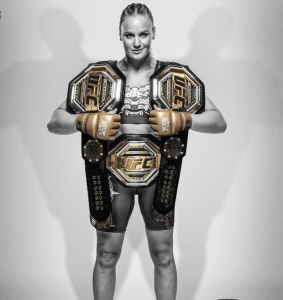
Frequently Asked Questions About Valentina Shevchenko
Who is Valentina Shevchenko and what are her major achievements?
Valentina Anatolievna Shevchenko, nicknamed “Bullet,” is a Kyrgyzstani-Peruvian professional mixed martial artist born on March 7, 1988, in Bishkek, Kyrgyzstan. She is the current UFC Women’s Flyweight Champion, having reclaimed the title in 2024 after a brief loss. Before MMA, Valentina was a multiple-time Muay Thai world champion with over 60 professional kickboxing and Muay Thai fights, demonstrating elite-level striking skills that form the foundation of her MMA success. She began training in Muay Thai at age five under her mother Elena Shevchenko, who was president of the Muay Thai Association of Kyrgyzstan. Valentina’s major achievements include winning the UFC Flyweight Championship in 2018, successfully defending it multiple times against top contenders, and establishing one of the most dominant title reigns in women’s MMA history. She’s known for her technical striking precision, fight IQ, and well-rounded MMA skills. Beyond her championship success, she’s a complete martial artist who speaks multiple languages, is an accomplished dancer and marksman, and represents technical excellence in a sport that sometimes prioritizes aggression over precision.
What makes Valentina Shevchenko’s fighting style so effective?
Valentina’s fighting style is built on a foundation of elite-level Muay Thai striking developed over decades of training since childhood. What makes her so effective is the combination of technical precision, exceptional distance management, and high fight IQ. Her striking utilizes proper form and efficient movement, with every technique thrown with maximum effectiveness and minimal wasted energy. She excels at controlling range, keeping opponents at distances where her strikes are effective while staying out of their range, using superior footwork and spatial awareness. Her fight IQ allows her to identify patterns, exploit weaknesses, and make mid-fight adjustments that consistently solve whatever problems opponents present. Beyond striking, she’s developed solid takedown defense, competent ground fighting, and submission skills that make her well-rounded and difficult to gameplan against. Her composure under pressure means she rarely makes mistakes or abandons her strategy even in difficult moments. The technical sophistication she brings from her Muay Thai and kickboxing background—where she competed at world championship levels—gives her a striking advantage that few MMA fighters can match. She approaches fighting as both science and art, combining traditional martial arts discipline with modern MMA strategy.
How did Valentina Shevchenko become UFC Flyweight Champion?
Valentina’s path to the UFC Flyweight Championship involved years of development across multiple combat sports. After establishing herself as a Muay Thai and kickboxing world champion, she transitioned to MMA in the early 2000s, gradually building her skills in wrestling, Brazilian Jiu-Jitsu, and other aspects of mixed martial arts. She joined the UFC in 2015, initially competing at bantamweight (135 pounds) where she faced Amanda Nunes twice in extremely close fights, losing narrow decisions that many observers felt could have gone either way. These fights revealed that while Valentina was elite-level, she was significantly smaller than many bantamweight opponents who cut substantial weight. When the UFC created the women’s flyweight division (125 pounds) in 2017, it proved to be Valentina’s optimal weight class. She fought Joanna Jędrzejczyk, the former strawweight champion, for the inaugural flyweight title at UFC 231 in December 2018. Valentina won via unanimous decision in a technical masterpiece that showcased her striking superiority and well-rounded skills. From that moment, she dominated the division with multiple successful title defenses against top contenders, establishing herself as one of the most dominant champions in UFC history until a surprising loss to Alexa Grasso in 2023, which she later avenged to reclaim her championship.
What is Valentina Shevchenko’s background outside of fighting?
Beyond her fighting career, Valentina is a remarkably well-rounded individual with diverse interests and accomplishments. She’s multilingual, speaking Russian, English, Spanish, and Kyrgyz fluently, reflecting her international upbringing and time spent training and living in different countries including Kyrgyzstan, Peru, Thailand, and the United States. She’s an accomplished dancer with training in ballroom and Latin dance styles, having competed in dance competitions. She views dance as complementary to martial arts, developing rhythm, balance, footwork, and body control that enhance her fighting movement. Valentina is also a skilled marksman and firearms enthusiast who regularly trains in competitive shooting, appreciating the mental discipline, precision, and focus required, which she finds similar to martial arts. She maintains an extremely close relationship with her sister Antonina Shevchenko, who is also a professional MMA fighter; they train together and Antonina often corners Valentina during fights. Valentina splits her time between Peru and the United States for training, and periodically returns to Thailand to train at Tiger Muay Thai, staying connected to the roots of her striking foundation. Her diverse interests and accomplishments reflect someone who approaches life with the same dedication and pursuit of excellence she brings to fighting.
How does Valentina Shevchenko rank among the greatest female MMA fighters of all time?
Valentina Shevchenko is widely considered among the greatest female mixed martial artists in history, though her exact ranking is debated within the MMA community. Her case for all-time great status includes multiple factors: her extended championship reign with numerous successful title defenses at flyweight, her technical excellence and striking mastery that many consider unmatched in women’s MMA, her accomplishments in Muay Thai and kickboxing before even entering MMA, and her ability to dominate elite-level competition consistently. She’s demonstrated sustained excellence over a long career spanning multiple combat sports. However, her legacy is complicated by her competitive losses to Amanda Nunes (widely considered the greatest female MMA fighter ever), which some use to place Nunes definitively above her in all-time rankings. Supporters argue that these were extremely close fights where Valentina was competing at an unfavorable weight class against a larger opponent, and that her dominance in her proper weight class demonstrates her true elite status. Most MMA analysts place her in the top tier of female fighters alongside names like Nunes, Ronda Rousey, Joanna Jędrzejczyk, and Cris Cyborg, though exact ordering varies based on what factors are weighted most heavily—championship longevity, level of competition, technical skill, or cross-division success. What’s undisputed is that Valentina represents technical martial arts mastery at the highest level and has been one of the most dominant champions in UFC history regardless of gender.
Leave a Reply